
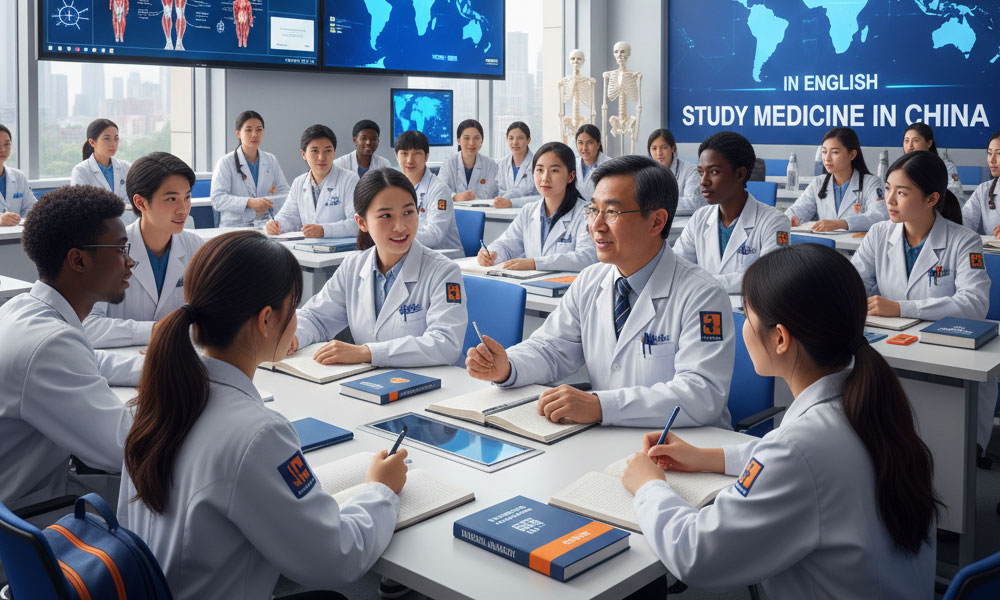
The idea of study medicine in English in China has become a highly sought-after option for medical aspirants worldwide, and China is no exception. The country has witnessed tremendous growth and advancements in medical sciences, along with state-of-the-art infrastructure and a combination of conventional and non-conventional medical practices.
The country offers an opportunity to pursue a globally accepted MBBS course (Bachelor of Medicine, Bachelor of Surgery), entirely conducted in English. As we approach 2026, pursuing medical studies in China and China medical scholarships become even more appealing.
For medical aspirants from countries like India, Pakistan, Africa, and other parts of the world, China is an attractive choice to pursue quality education without breaking the bank, as is usually the case in Western countries. The following article by an admissions institute discusses the basics of cost of study medicine in China.
Study medicine in China
The education system in China for medicine is overseen by the Ministry of Education (MOE), thus providing quality education. There are only 45 universities approved to run English-medium MBBS courses for international students. The quality of education is prioritized over quantity. The duration of the course is six years, including a one-year internship.
The course curriculum is in line with international requirements, including those stipulated by the World Health Organization (WHO) and various national medical councils. The doors to a wide range of career prospects across the world are open to graduates, as they can take the USMLE, PLAB, or FMGE exams. The practical experience, combined with access to a massive patient base, gives the student a competitive advantage. In addition, the research focus in China, as seen in its collaboration with Johns Hopkins, means you’ll be at the forefront of emerging trends in oncology, virology, and more.

Requirements for Studying in China
To begin this journey, it is important to meet the study requirements. The medical universities in China place great emphasis on academic performance, health, and language proficiency to guarantee the student’s performance in the challenging program.
1. Educational requirements
To begin with, the applicant should be between 18 and 30 years old by the time they enroll in the program and should have a high school diploma or equivalent qualification. A minimum aggregate of 60-70% in Physics, Chemistry, and Biology (PCB) from the senior secondary level is a requirement, although some universities, such as Jilin University, require a minimum aggregate of 70% in PCB.
Mathematics may also be considered, although the results in Biology are given greater importance. For example, the Capital Medical University requires the applicant to meet the qualifying grades in mathematics, physics, chemistry, and PCB.
2. Language Proficiency
The language proficiency also differs. While English is used as a medium of instruction, it is not mandatory to give any of the language proficiency tests like IELTS or TOEFL. Native English speakers or high school graduates from English-medium high schools are exempted.
However, institutions like Tianjin Medical University or Tongji University china require IELTS (a minimum of 6.0-6.5) or TOEFL (a minimum of 80-85) for non-native English speakers. It is important that the student is able to understand lectures, texts, and communicate with patients. There is no requirement for Chinese language initially, but during the internship, basic Chinese (HSK Level 4) is required to be able to communicate with patients.
3. Additional Requirements
In addition, health and character checks are a requirement and cannot be compromised. This means the candidate has to be in good health and of good character. This is done by conducting a medical test, including a chest X-ray, ECG, and blood test. Also, the candidate should not have a criminal record, which can be obtained by obtaining a police clearance certificate.
Some of the universities, such as Guangzhou Medical University, require the China Scholastic Competency Assessment (CSCA) in mathematics and chemistry, and English test papers for the MBBS course. This test is conducted by the China Scholarship Council and is a requirement for the candidate to be eligible to pursue undergraduate studies.
4. Financial Requirements
Lastly, financial stability is also required by the universities, although this is not a direct requirement. This is done by asking the candidate to present a bank statement indicating that they have the required funds ($5,000 minimum) to study in China.
In addition, for minors under the age of 18, guardianship documents have to be provided. This ensures a smooth transition to the rigorous Chinese curriculum, which includes theory, laboratory, and clinical training in the third year and beyond.

Documents Required for Medical Admission in China
The preparation of proper documents is a very important part of the process. Universities generally accept documents through online applications like CUCAS or their own platforms, and it’s very important to ensure that documents are correct to avoid rejection.
1. Basic Documents
The basic documents include a valid passport with at least six months’ validity and sufficient pages to attach the visa, and a recent passport-sized photograph on a white background.
Academic documents are a very important part of the process, and this includes scanned versions of high school documents, diplomas, or pre-graduation documents for students who are still in the process.
2. Health-related documents
Health-related documents include a very detailed process, and this includes a Physical Examination Record for Foreigners valid for six months, which includes basic checks, hepatic function, and includes X-rays and other tests.
Specific forms are provided by universities to be followed in this regard.
3. Personal Components
Personal components also play a crucial role, which include a personal statement (150-1,000 words) that covers your motivations, goals, and plans after graduation. Some, like Tongji University, also require a study plan or a proposal. Letters of recommendation from your teachers or professionals can also support your application, especially for scholarship applications.
4. Financial and Legal Proofs
On the other hand, financial and legal proofs require a bank statement with a minimum of $5,000, a police clearance certificate, and sometimes a no-objection certificate from your previous institutions, especially if you’re transferring. For those who took the CSCA, upload your results. Lastly, a self-introduction video of at least three minutes is becoming a requirement, which tests your communication skills.
5. Visa
To support your application for a visa after being admitted, the JW202 Form (Visa Application for Study in China) and your university’s admission letter are required. Make sure to scan these clearly, as they will be verified upon arrival. Note that incomplete or false information can lead to automatic disqualification.
Best Medical Universities in China
China offers world-class medical universities with English medium MBBS courses. The universities approved by the MOE ensure quality. Here are some of the top universities in China to consider study Medicine in English in China:
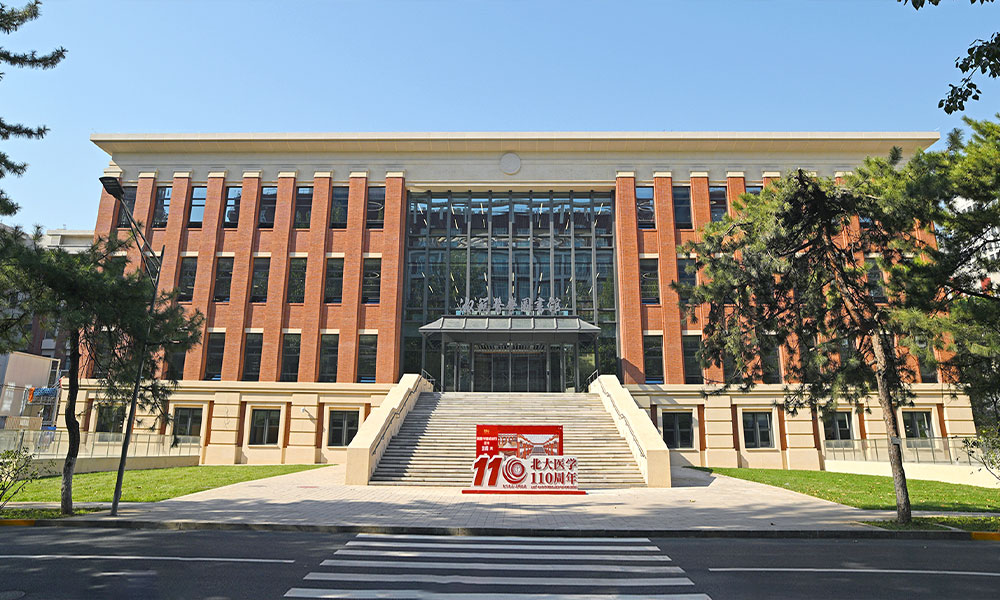
1. Peking University Health Science Center
Peking University Health Science Center is one of the top universities in China. The QS rankings show that Peking University Health Science Center excels in clinical medicine and oncology. The university is affiliated with top hospitals such as Peking University People’s Hospital. The tuition fees are around 48,000 RMB/year.
2. Fudan University Shanghai Medical College
Fudan University of Shanghai Medical College is another top-ranking university in China. The QS rankings show that Fudan University excels in immunology and neuroscience. The English medium MBBS course at Fudan University focuses on global health. The tuition fees at Fudan University are around 45,000 RMB/year.
3. China Medical University
China Medical University in Shenyang was the first to introduce English-medium courses in 2008. The university offers 50 seats to international students. The practical experience at China Medical University comes through its affiliated hospitals that treat millions of people. The tuition fees at China Medical University are around 40,000 RMB/year.
4. Other Universities
Capital Medical University, located in Beijing, is known for its urban location and partnerships, and offers 100 seats with a fee of 50,000 RMB/year. Nanjing Medical University offers 60 seats and is known for its research in endocrinology and oncology, with a fee of 34,000 RMB/year and a good environment for internationals.
Dalian Medical University offers 120 seats and focuses on coastal issues, with a fee of 42,000 RMB/year. Jilin University offers 100 seats at a reasonable fee of 33,000 RMB/year and specializes in biochemistry. Shihezi University and Ningxia Medical University offer a good option for students looking for a cheaper option in western China, with English language courses starting in 2002 and a fee of 30,000-35,000 RMB/year, along with a success rate in licensing exams.
All these universities offer a good environment and state-of-the-art facilities, making them a good option for students who wish to succeed in their medical careers.

Best Universities to study MBBS in English in China
Choosing the right university to study medicine in English in China is the most critical decision in your medical journey. With over 45 MOE-approved institutions offering English-taught MBBS programs, finding the perfect fit can feel overwhelming. To simplify your research, we have created a side-by-side comparison of the top medical universities in China. This table highlights not just tuition fees, but also location advantages, seat availability, and the unique competitive edge of each institution—insights you won’t easily find on university brochures.
| University | location | Approx.Tuition (RMB/Year) | International student acceptance | Language test required | Competitive edge |
| Peking University | Beijing | ¥48,000 | Highly Competitive | IELTS/TOEFL + Interview | Globally ranked, ideal for students seeking prestige and research opportunities. |
| Fudan University | Shanghai | ¥45,000 | Limited | IELTS/TOEFL | Strong in immunology & global health, with an excellent international network. |
| China Medical University | Shenyang | ¥40,000 | 50 | University-specific test | The oldest English-medium program in China, with a vast and supportive alumni network. |
| Capital Medical University | Beijing | ¥50,000 | 100 | Math, Chemistry (CSCA) | Access to top-tier hospitals in Beijing for unmatched clinical rotation experience. |
| Dalian Medical University | Dalian | ¥42,000 | 120 | University-specific test | Beautiful coastal city, lower living costs, and a large international student community. |
Last updated 2/15/2026
Cost of Study Medicine in China
Affordability is one of the major attractions of pursuing medicine in China. The cost of study medicine in English in China is between 20,000 RMB ($2,900) and 50,000 RMB ($7,200) per year, depending on the university. For example, Hunan University of Chinese Medicine charges 20,600 RMB, including hostel, which is a cheaper option. Peking University, which is a high-end university, charges 48,000 RMB. This cost would be between 120,000 RMB and 300,000 RMB for six years.
Accommodation costs 4,000 RMB to 5,000 RMB per year, depending on whether one prefers a shared hostel with facilities like Wi-Fi and laundry.
cost of living in China including food, transport, and utilities, would cost 1,000 RMB to 2,000 RMB monthly. Meals are also very cheap, with meals ranging between 10 RMB and 20 RMB. Compulsory health insurance costs 800 RMB.
Internship year fees are often half tuition (e.g., 14,900 RMB at Ningxia) and are conducted in affiliated hospitals. Miscellaneous costs like books (500-1,000 RMB/year), visa extensions (800 RMB), and application fees (1,000 RMB) add up.
Overall, annual costs total 30,000-60,000 RMB ($4,300-8,600), far less than in the US or UK. For a full degree, expect 200,000-400,000 RMB, excluding scholarships.

scholarships
Scholarships in China can greatly reduce costs. The Chinese Government Scholarship (CSC) provides full coverage, which includes tuition, accommodation (700-1000 RMB/month stipend), stipend (3000 RMB/month for undergrads), and insurance. The application can be done through the embassy or university (Type A/B). The provincial scholarships include Jasmine Jiangsu, which provides 30,000-50,000 RMB/year.
The university-specific scholarships include the Silk Road Scholarship of CMU, which provides tuition and stipend for Belt and Road countries. The MBBS scholarships are scarce under CSC, but can include partial scholarships. The application deadline is early (January-March 2026), with strong academic performance and CSCA required.
Conclusion
In conclusion, choosing to study medicine in English in China in 2026 offers an exceptional blend of quality education, cultural immersion, and affordability that few destinations can match. With rigorous yet accessible study requirements, straightforward document processes, and a selection of prestigious universities like Peking, Fudan, and Capital Medical leading the way, aspiring doctors gain hands-on experience in world-class facilities amid a vast patient population.
The cost of study medicine in China remains remarkably low—often $4,000–$8,000 annually, including living expenses—while generous China medical scholarships, from CSC full awards to university-specific grants, make this dream even more attainable for talented international students. This pathway not only delivers a globally recognized MBBS degree aligned with WHO standards but also equips graduates to excel in licensing exams worldwide and launch rewarding careers.
If medicine calls to you, China in 2026 presents a transformative, cost-effective opportunity—apply early, prepare diligently, and step confidently into a future of healing and discovery. For additional information, contact us.
FAQS:
1. Do I need IELTS or TOEFL to study MBBS in English in China?
No, IELTS or TOEFL is not always mandatory. Many universities waive formal English tests for non-native speakers if you can demonstrate proficiency through an interview, high school English-medium education, or other means. However, some top institutions (like Tongji or Capital Medical University) require a minimum IELTS 6.0–6.5 or TOEFL 80–85. Always check the specific university’s guidelines for the 2026 intake, as requirements vary.
2. What are the typical costs of studying medicine in China, and how can scholarships help?
The cost of study medicine in China is highly affordable compared to Western countries. Annual tuition for English-taught MBBS programs ranges from 20,000–50,000 RMB ($2,900–$7,200), with living expenses (accommodation, food, etc.) adding 15,000–30,000 RMB per year. Total annual costs often fall between $4,300–$8,600. China medical scholarships like the Chinese Government Scholarship (CSC) can cover full tuition, accommodation, a monthly stipend (around 3,000 RMB for undergraduates), and insurance—significantly reducing or eliminating expenses for eligible high-achieving applicants. Apply early via Type A (embassy) or Type B (university) channels.
3. Is an MBBS degree from China recognized internationally, and what career options follow graduation?
Yes, degrees from MOE-approved English-medium programs (only 45 universities) are listed in the World Directory of Medical Schools (WDOMS) and recognized by WHO. Graduates can pursue licensing exams like USMLE (USA), PLAB (UK), FMGE/NEXT (India), or others worldwide. Many return home for practice, while others pursue residencies abroad or in China (requiring HSK Chinese proficiency for patient interaction). The program’s six-year structure, including a one-year internship in affiliated hospitals, provides strong clinical exposure for global careers.

No comment