
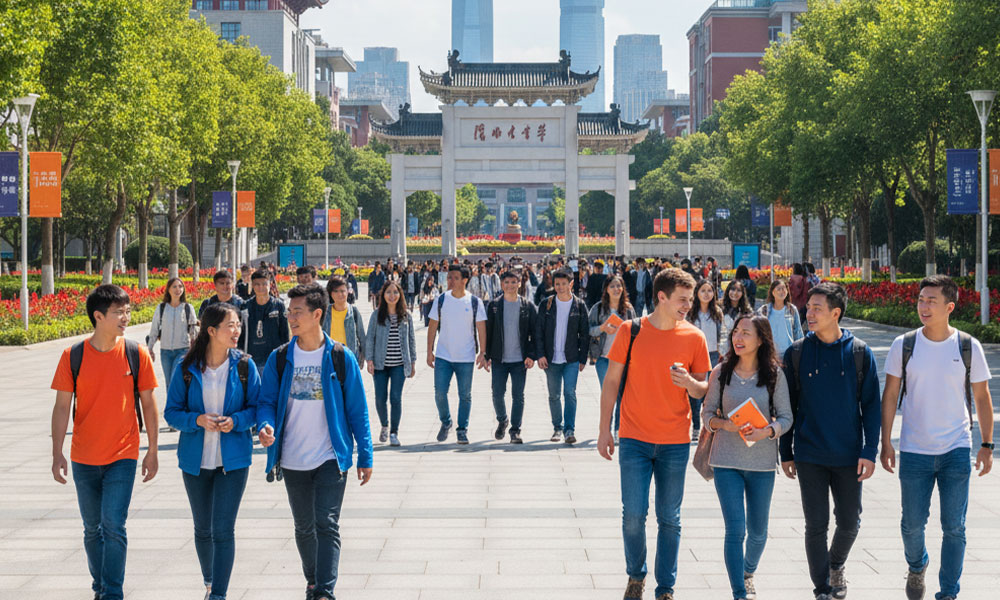
Guangzhou, the bustling heart of Guangdong Province, has long been a gateway to China’s dynamic south. With its humid subtropical climate, vibrant street food scene, and a skyline dotted by towering skyscrapers like the Canton Tower, this city of over 18 million pulses with energy. To international students eyeing opportunities in 2025, study in Guangzhou universities brings to the table much more than just a commercial powerhouse with the world’s largest trade fair.
It is also fast emerging as an educational beacon in the Greater Bay Area, combining traditional Cantonese culture with cutting-edge innovation—a blend of ancient temples, modern subways, and endless dim sum stalls. But beyond the postcards, what atracts over 7,000 international students to Guangzhou universities admission requirements each year? It’s the promise of world-class universities that blend rigorous academics with real-world application, all at a fraction of the cost compared to the West. This guide from admission institute unpacks the essentials: navigating admissions to Guangzhou universities tuition fees for that perfect bowl of congee.
Why Guangzhou?
As China increases its international drive, study in Guangzhou universities in 2025 means accessing scholarships in China, English-taught programs, and partnerships with other institutions such as the National University of Singapore. From the high school graduate with big dreams of engineering to the working professional looking for that edge with an MBA, the over-80 higher education institutions in this city will have something suitable for everyone. Drawing from official sources, we’ll explore why Guangzhou isn’t just a study destination-it’s a launchpad for careers in Asia’s economic engine.
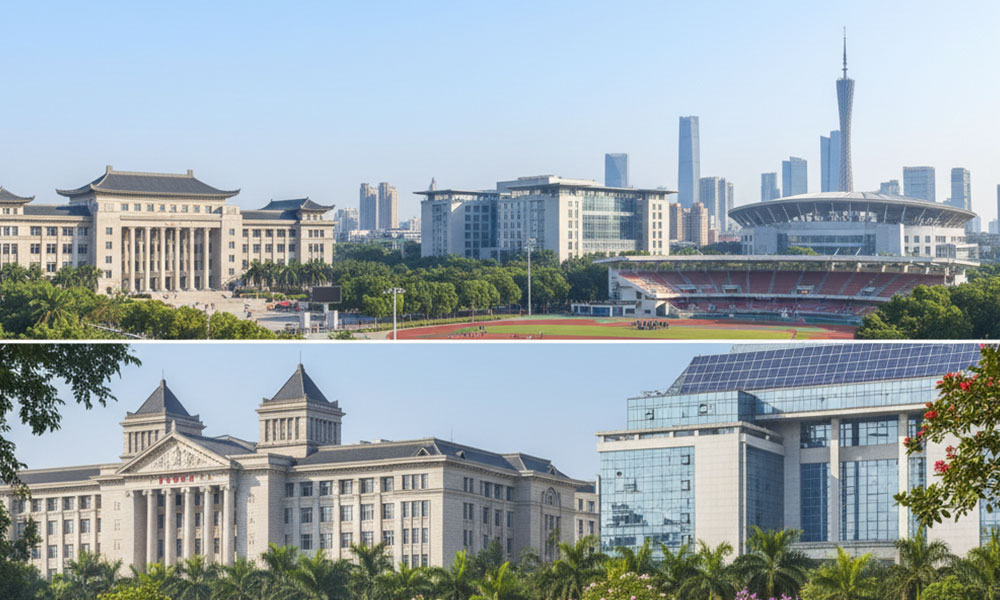
Guangzhou’s best Universities
Guangzhou’s universities form a mosaic of excellence, from historic powerhouses to nimble innovators.
| university | type | Approx.tuition 2025 (RMB/Year) | Popular English taught Programs | Key Scholarship Availability |
| Sun Yat-sen University | Public | 20.000-33.000 | MBBS, Business, Computer Science, International relations | CSC full, Guangdong Gov’t, SYSU President Scholarship |
| South China University of Technology | Public | 26.000-30.000 | Engineering (all branches), Architecture, MBA | CSC full, SCUT international Scholarships |
| Jinan University | Public | 22.000-34.000 | Clinical Medicine (MBBS), Pharmacy, Economics, Journalism | CSC full, Jinan Overseas Chinese Scholarships |
| Guangzhou Medical University | Public | 30.000-40.000 | MBBS (6 Years), Nursing, Public Health | CSC full, GMU Presidental Scholarship |
| Uuangdong University of Foreign Studies | Public | 18.000-25.000 | International Business, Translation & interpreting (28 Languages), Law | CSC ful, Guangdong Gov’t Outstanding Student |
| South China Normal Univetsity | Public | 18.000-26.000 | Education, Phsychology, Computer Science | CSC, Guangdong Provincial Scholarship |
| Guangzhou University | Public | 20.000-28.000 | Civil Engineering, AI & Data Science, Art & Design | CSC, GZHU International Student Scholarships |
Updated 12/2/2025
1. Sun Yat-sen University
At the top sits Sun Yat-sen University, or SYSU, founded in 1924 and named after the revolutionary leader who helped birth modern China. Sprawling across five campuses in Guangzhou, Zhuhai, and Shenzhen, SYSU enrolls over 50,000 students, strong in medicine, business, and environmental sciences. Its Haizhu campus, right on the Pearl River, buzzes with research labs where students collaborate on projects like sustainable urban planning-fitting for a city that’s China’s greenest metropolis.
2. South China University of Technology
Then there’s South China University of Technology, or SCUT, an engineering juggernaut established in 1952. Located in Tianhe District amid tech parks, the 381 Wushan Road campus feels like a Silicon Valley outpost, with alumni powering giants like Huawei and Tencent. It belongs to the elite Project 985 initiative, boasting over 30,000 students with partnerships at MIT for joint labs. Imagine dissecting AI algorithms in a facility that helped design the Hong Kong-Zhuhai-Macao Bridge-just that is SCUT’s edge.
3. Jinan University
Jinan University, built upon the overseas Chinese educational hub founded in 1906, is strong in international relations and in biomedicine. Shipai Campus in Tianhe is home to 50,000 students, many of whom are from the diaspora community, ranking within the top 100 in Asia for life sciences. For the student with a passion in global health, the programs at Jinan draw on Guangzhou’s role as a Belt and Road hub, offering fieldwork in tropical medicine amidst the humid vibe of the city.
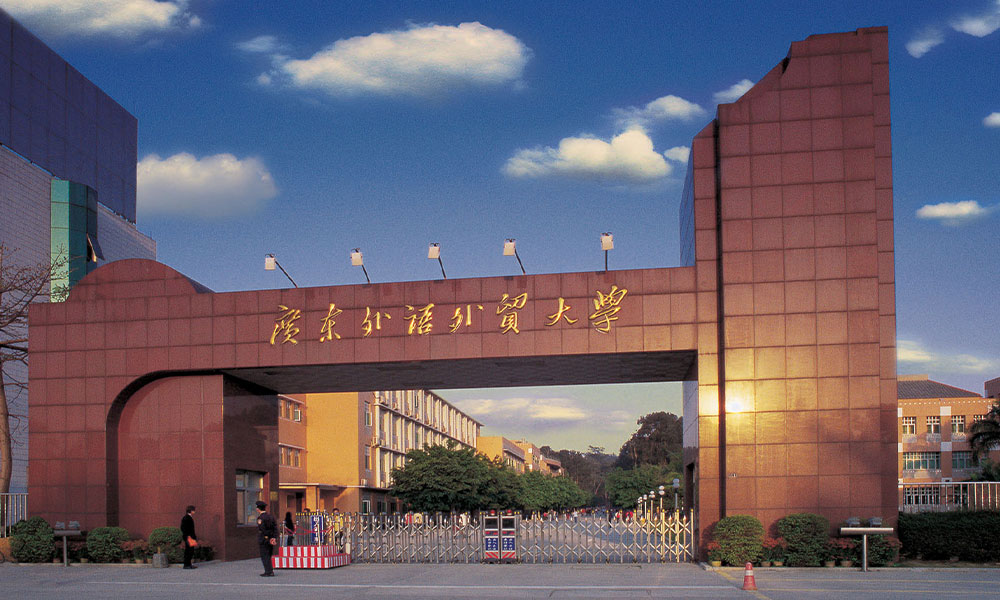
4. Guangdong University of Foreign Studies
Do not bypass Guangdong University of Foreign Studies, established in 1965 as a linguistic powerhouse. Offering 28 languages, its two campuses, Baiyun and Panyu, immerse 20,000 students in cross-cultural studies. The motto of GDUFS, “pursuit of integrity, practice and cross-cultural learning”, reverberates through its simulation sessions of the UN, where debates on trade wars are vociferously conducted in Cantonese-accented English.
5. South China Normal University
Rounding out the stars: South China Normal University for education and psychology, with its lush Shipai campus evoking a botanical garden; Guangzhou Medical University, a 1958-founded med school excelling in clinical training; and Guangzhou University, a 2000 merger that’s climbed to 98th globally in ARWU rankings for computer science. These aren’t ivory towers – they are engines of the Bay Area’s US$1.6 trillion economy, with graduates snapping up jobs at Alibaba or BYD.
What makes Guangzhou universities special?
That “Double First-Class” status-eight here, more than anywhere south of the Yangtze-means heavy investment in research. SYSU alone pumps out 10,000 papers yearly, while SCUT’s innovation hubs incubate startups. For 2025, expect expanded English tracks, especially in AI and biotech, aligning with China’s 14th Five-Year Plan. Campuses like the Higher Education Mega Center in Panyu-a 12-university island paradisefoster a collegiate vibe, with lakeside jogs and inter-school fests. But it is the human scale that hooks: professors who remember your name, AC dorms for those steamy summers, and advisors who guide you through visa quirks. In Guangzhou, studying feels personal, not procedural.
Guangzhou Universities Admission Requirements
To secure a place in one of the universities in Guangzhou for 2025, students need to prepare in advance, but the whole process is pretty simple if one acts in accordance with official recommendations. Most institutions adhere to the basic Ministry of Education framework: academic merit, language skills, and health checks. Start early because deadlines tend to be between March and June for fall intakes.
1. Undergraduates
For undergraduates, a high school diploma or equivalent is baseline. At SYSU, expect to submit transcripts showing strong STEM grades for engineering tracks, plus an HSK Level 5 (180+ score) for Chinese-taught programs or IELTS 6.0 for English ones. Non-fresh grads need a resume detailing gaps. GMU’s MBBS is a six-year English program with no entrance examination but needs a 70% plus in high school sciences, a valid passport good till December 2025, and a notarized guardian letter if one is under 18 as of October. The age limit is 25 years for most undergraduate programs; SYSU adds a four-year foreign residency rule for those of Chinese heritage.
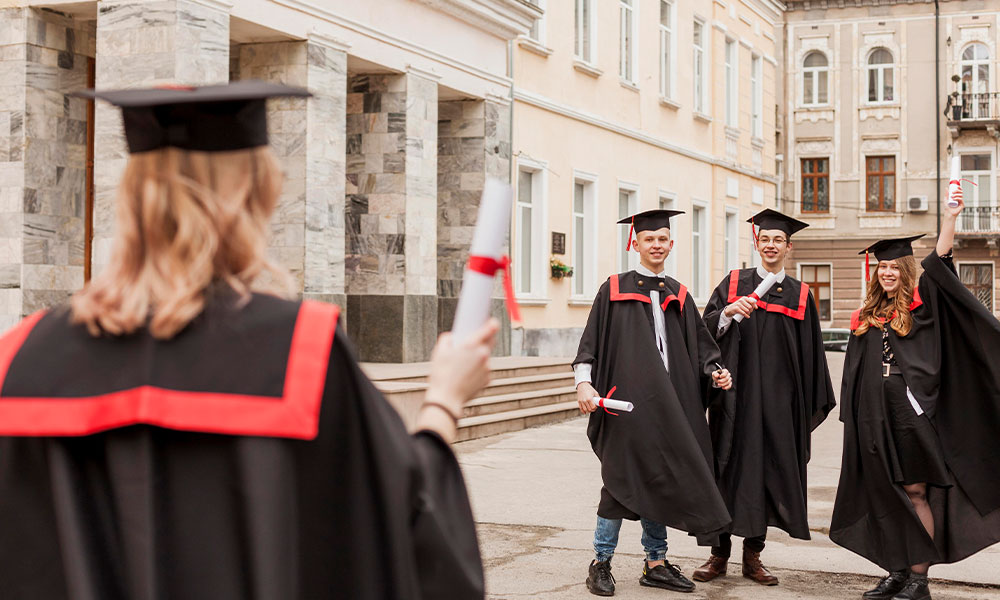
2. Postgraduates
Postgrads face steeper hurdles. Master’s applicants need a bachelor’s in a related field, HSK 4-6 depending on the program, such as 180+ on Level 4 for GMU clinical tracks, and often GRE/GMAT equivalents. SCUT’s engineering MS demands research proposals; interviews probe your fit. PhDs? A master’s thesis, publications, and supervisor endorsement-Jinan prioritizes those with overseas experience. All require physical exams via the Foreigner Physical Examination Form, proving no infectious diseases.
3. Applocation Process
Applications go digital: SYSU’s portal at iso.sysu.edu.cn, GDUFS via gdufs.at0086.cn. Fees range from 400 to 800 RMB, not refundable. Applicants who are mainland/HK/Macau/Taiwan returnees have to prove that they held foreign nationality before May 2021 and have lived two years abroad since then. To get the visa: Get JW202 form from the university, then apply for an X1 or X2 visa at the nearest embassies.
Pro tips? Tailor essays to Guangzhou’s Bay Area focus; mention Canton Fair internships. Deadlines: GMU MBBS by October 20; GDUFE postgrads by June 1. Rejections sting, but appeals work if docs are crisp. Once in, orientation eases the jet lag, with WeChat groups linking you to alumni. Admissions aren’t gatekept; they’re gateways, rewarding persistence with a spot in one of Asia’s hottest academic scenes.
Guangzhou Universities Tuition Fees
Affordability is Guangzhou’s ace card-tuition here undercuts its global peers and offers top value.
1. Undergraduate Tuition Fees
For 2025, undergrad fees run from 15,000-30,000 RMB yearly, or about $2,100-$4,200 USD, depending on the program and language.SYSU is a benchmark: 20,000 RMB for humanities, up to 33,000 for MBBS in English. SCUT’s engineering tracks run 26,000 RMB, while business is at 28,000-a steal, considering the labs sport 3D printers and VR sims. Jinan life sciences? Try 22,000 RMB, fieldwork stipends included. GDUFS really shines in languages: 18,000-25,000 RMB, cheaper if you bundle with Mandarin immersion.
2. Postgraduates Tuition Fees
Postgrads? Master’s at GZHU average 25,000 RMB/year for two years; PhDs climb to 30,000 but often waive for scholars. GMU’s clinical MS: 34,000 RMB, covering simulations in its 10 affiliated hospitals. English programs add 2,000-5,000 RMB for materials, but many include free Mandarin electives. Hidden gems: Public unis like SCNU cap at 18,000 RMB for education majors. Private spots like Guangdong Baiyun University nudge 25,000-35,000, but with smaller classes. All factor inflation minimally—China’s 2% cap keeps hikes tame. Pay via bank transfer post-admission; installments ease the load for some.
Compared to NYU’s $60,000 tab, Guangzhou’s fees free up cash for Pearl River cruises. Yet, it’s not just low-it’s leveraged. Fees fund state-of-the-art digs, like SYSU’s AI centers or SCUT’s robotics arenas. For budget hawks, community colleges like Guangzhou College of Commerce start at 15,000 RMB, ladders to transfers. In 2025, as Bay Area subsidies grow, fees might dip further for STEM. Bottom line: Quality without the quarter-life crisis debt.
Popular Majors in Guangzhou
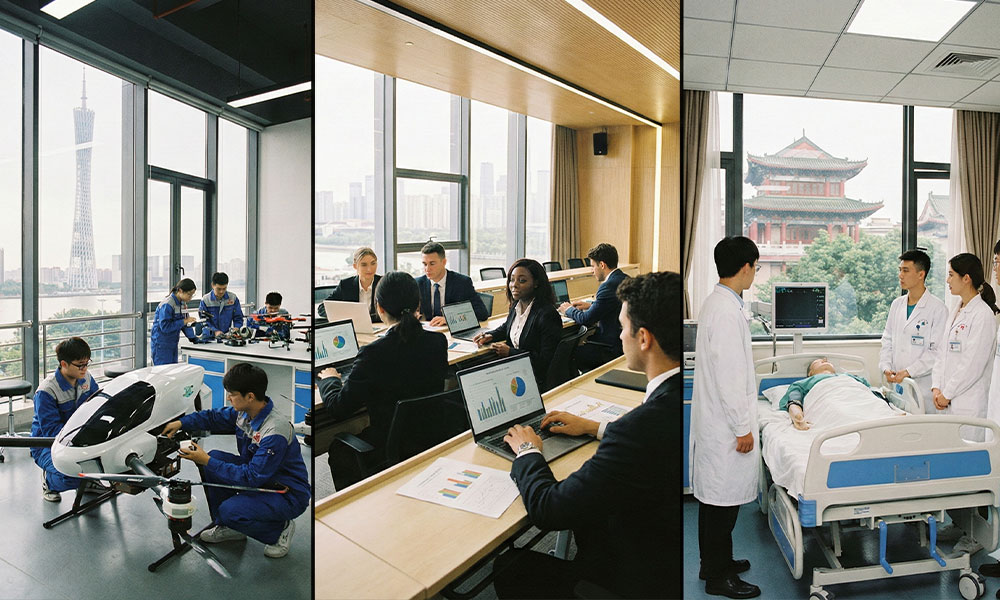
Guangzhou’s majors mirror its mashup of heritage and hustle-think engineering the next mega-bridge while decoding global trade pacts.
1. Engineering Programs
Engineering reigns supreme, with SCUT leading in mechanical and civil tracks. Over 40% of its 30,000 undergrads dive into programs like automation, where hands-on projects build drones for urban delivery. SYSU complements with environmental engineering, tackling Pearl River pollution via fieldwork in Baiyun Mountain reserves. These aren’t desk jobs; grads land at China State Construction, earning 100,000 RMB starting salaries.
2. Business and Economics
Business and economics surge next, powered by the $50 billion buzz of Canton Fair. Jinan’s international trade major-with its diaspora focus-packs lecture halls as simulations of Belt and Road deals are carried out, interning at Alibaba’s nearby hub. GDUFE’s digital economy MS blends fintech with e-commerce, drawing 20,000 applicants yearly for courses on blockchain in supply chains. Picture case studies about Shein’s viral rise-all for less than 25,000 RMB.
3. Medicine
Medicine thrives amid a health boom in Guangzhou. GMU’s MBBS has been English-taught since 2006 and graduates 500 internationals annually, putting emphasis on tropical diseases suited to the humid clime. Pair it with SYSU’s pharmacology-top 1% globally-for drug discovery labs mimicking Pfizer’s pace.
4. Langauge and Culture
Languages and culture? GDUFS owns this-with 28 tongues from Arabic to Zulu. The Asian studies major weaves Mandarin mastery with K-pop diplomacy, ideal for diplomats eyeing ASEAN posts. Arts lag but sparkle: SCNU pedagogy crafts teachers for China’s 250-million kids, while the music programs of Xinghai Conservatory echo in Cantopop charts.
5. Other Programs
The rising stars: AI at GZHU, ranked 98th by ARWU, educates coders for Tencent; biotech at Jinan for combating pandemics. And popularity soars with employability-90% placement rates, according to official statistics. In 2025, green energy majors are foreseen to increase, thus moving toward the carbon-neutral goals. Choose this? It’s not just a degree-it’s a ticket to shaping China’s next chapter.
Guangzhou Universities Scholarships
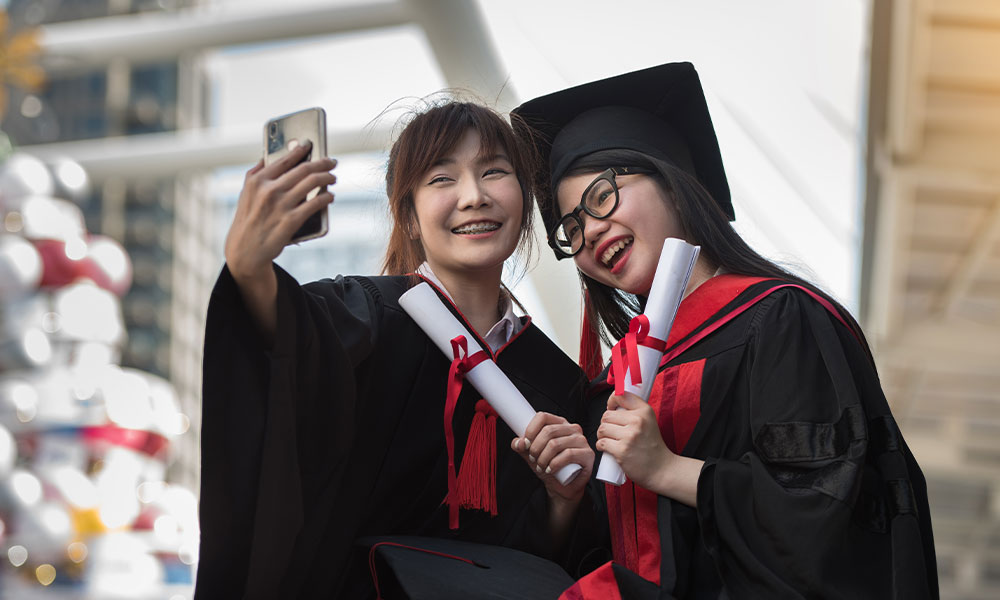
Guangzhou dreams become affordable with scholarships, and the pot will exceed 500 million RMB province-wide in 2025. The crown jewel is the Chinese Government Scholarship through campuschina.org, covering tuition, dorms, and 2,500-3,500 RMB monthly stipends for undergraduate to PhD candidates. SYSU also snaps up 1,000 slots each year; apply by April, acing HSK and interviews.
Guangdong Provincial Scholarship: 20,000-40,000 RMB one-off, targeting excellence; GDUFS version, 50-100% fees waiver for top language recruits. Jinan’s diaspora fund adds 10,000 RMB for overseas Chinese, not cumulative with CSC.
University-specific privileges abound. SCUT Merit Awards: tuition fee and 1,000 RMB per month for engineering geniuses. GZHU International Scholarship: 2,000-3,800 RMB stipend to cover insurance. GMU MBBS Scholarship: 8,000 RMB tuition discount for high achievers.
Costs of Living in Guangzhou
Study in Guangzhou universities living costs are around 4,000 to 6,000 RMB monthly for students, cheaper than Shanghai’s frenzy with room for noodle-budget hacks. Dorms anchor affordability: SYSU’s doubles at 1,200 RMB/year, yes, yearly, AC-equipped for 90% humidity. Off-campus, Tianhe studios run between 2,000 to 3,000 RMB, walkable to class.
Food is a steal: street stalls serve wonton noodles for 10 RMB, markets sell rice and veggies for 20 RMB per day, university cafeterias feature 5 to 15 RMB plates of mapo tofu. Dim sum brunches cost 50 RMB; Haidilao hotpot costs 100 RMB. Monthly total: 800-1,500 RMB, with lower totals possible when mixing in home-cooked congee.
Transportation? Metro’s king: 2-7 RMB/ride, a 50 RMB card lasts weeks. Bikes via Mobike: 1 RMB/30 mins. Taxis add 20 RMB for late-night runs. Total: 200-400 RMB.
Utilities and misc: 300 RMB in dorms for water/electricity/WiFi; laundry 50 RMB. Books/supplies: 500 RMB/semester.
Entertainment-Pearl River cruises: 50 RMB; temple visits: free, fits 500 RMB. Health insurance is a mandatory 800 RMB/year.
Frugal formula: Dorm + canteen + metro = 3,000 RMB. Lavish? Shared flat + Deliveroo + KTV = 5,500 RMB. Inflation’s tame at 2%, but apps like Meituan slash 20% via coupons. Part-time gigs-English tutoring at 150 RMB/hour-pad pockets legally on F/M visas. Guangzhou rewards savvy spenders with fresh markets for mangoes that cost only 10 RMB and free university gyms.
Conclusion
study in Guangzhou 2025 is an excellent opportunity for international students. From the labs of SYSU to street-side strategy sessions, it equips you with skills, networks, and stories that echo far beyond the Pearl. When China eyes global leadership, Guangzhou Universities Admission Requirements extends an invitation to claim your chapter. World-class universities, generous scholarships, reasonable Guangzhou Universities Tuition Fees, and living costs that leave room for exploration make the city unbeatable for ambitious students. Take the step, your global future starts where the Pearl River meets tomorrow’s opportunities. For additional information and expertise consultation, contact us.
1. How much money do I really need yearly in order to study comfortably in Guangzhou in 2025?
The total 70,000-100,000 RMB for a typical international student is sufficient to live comfortably, with tuition accounting for 20,000-35,000 RMB and living costs at 4,000-5,500 RMB/month × 12. With a full CSC or university scholarship, the out-of-pocket cost can fall below 30,000 RMB/year.
2. Do I have to know Chinese in order to study in Guangzhou?
No. Top universities like SYSU, SCUT, Jinan, GMU, GDUFS, etc., offer hundreds of full-English bachelor’s and master’s and PhD programs, particularly in medicine, engineering, business, and international studies. Chinese is only required for Chinese-taught programs, usually HSK 4–6.
3. When should I apply for fall 2025 intake and scholarships?
Most universities open applications from December 2024 to March/April 2025. Chinese Government Scholarship Deadlines normally come in late February to early April through the university, Type B. The earlier you apply, the better-avoid missing out on popular programs and full scholarships.


No comment