

As global connections continue to grow stronger, studying abroad has become more than just an academic decision—it is a life-shaping experience. China stands out as one of the most compelling destinations for international students planning to study abroad in 2026.
With its rapid economic development, deep cultural roots, and internationally ranked universities, China has become home to nearly half a million international students from Asia, Africa, Europe, and the Americas. What make requirements of study in China particularly attractive is its unique balance. Costs of study in China are significantly lower than in many Western countries, and a wide range of scholarships helps reduce financial pressure even further.
Whether you are planning to pursue an undergraduate degree in engineering, a master’s in business, or a PhD in environmental science, China offers thousands of programs taught in both English and Chinese. This guide from admission institute walks you through the key requirements, costs, types of scholarships in China, visa steps, and degree-level details so you can plan your journey with confidence—and potentially build a future career in one of the world’s fastest-growing economies.
Requirements, Costs, and Scholarships for Studying in China in 2026 (Quick Overview)
In 2026, international students can study in China with tuition fees ranging from 15,000 to 60,000 RMB per year, monthly living costs of 4,000–6,000 RMB, and access to fully funded scholarships such as the CSC. Admission requirements include academic qualifications, language proficiency, and a valid student visa (X1 or X2).
| Category | Key Details (2026) | Notes for International Students |
| Citizenship Requirement | Non-Chinese citizenship with valid passport | Former Chinese citizens may need extra documents |
| Academic Background | High school (Bachelor), Bachelor’s degree (Master), Master’s degree (PhD) | GPA 3.0+ improves chances at top universities |
| Age Limits | Under 30 (Bachelor), Under 40 (Postgraduate) | Exceptions possible for strong candidates |
| Language Requirements | IELTS 6.0 / TOEFL 80+ / Duolingo 105+ (English-taught) | HSK 4–6 required for Chinese-taught programs |
| Additional Exams | CSCA (for some undergraduate programs starting 2026/27) | Not required by all universities |
| Tuition Fees | 15,000–60,000 RMB per year | Many programs under 30,000 RMB |
| Living Costs | 4,000–6,000 RMB per month (major cities) | Smaller cities are significantly cheaper |
| Accommodation | 800–2,000 RMB/month (on-campus dorms) | Most economical option |
| Health Insurance | Around 800 RMB per year | Mandatory for all international students |
| Scholarships (CSC) | Full tuition + accommodation + stipend | Highly competitive, GPA 3.3+ recommended |
| Provincial Scholarships | Up to 30,000 RMB/year | Less competitive than CSC |
| Student Visa | X1 (long-term) / X2 (short-term) | X1 must convert to residence permit |
| Part-Time Work | Up to 8 hours per week | Limited but helpful for expenses |

Requirements for Study in China
Understanding the requirements for study in China starts with meeting a set of clear but reasonable eligibility criteria. These conditions are designed to ensure students are academically prepared and capable of adapting to life and study in a new cultural environment.
1. Overall Requirements
First, applicants must be non-Chinese citizens with a valid passport and be in good physical and mental health. This is a standard requirement across Chinese universities, including top institutions such as Tsinghua University and the University of Science and Technology of China. Applicants who previously held Chinese citizenship may need to provide additional documentation to confirm their foreign status.
2. Academic Requirements
Academic qualifications are central to the admission process. Undergraduate applicants are generally required to have completed high school or an equivalent qualification. Master’s applicants must hold a recognized bachelor’s degree, while PhD candidates need a master’s degree.
Many universities also apply age limits—typically under 30 for bachelor’s programs and under 40 for postgraduate studies—although exceptions may be granted to outstanding candidates. A competitive GPA, usually around 3.0 or higher on a 4.0 scale, greatly improves admission chances, especially for top-tier universities.
3. Language Proficiency
Language proficiency is another essential requirement. For English-taught programs, commonly offered in fields such as engineering, business, and medicine, universities usually ask for IELTS (minimum 6.0), TOEFL (80+), or Duolingo (105+) scores, unless the applicant is a native English speaker or has completed prior education in English. Chinese-taught programs require HSK certification, typically level 4 to 6 depending on the discipline.
For students who need additional language preparation, many universities offer foundation or preparatory Chinese courses. Starting from the 2026/2027 academic year, some undergraduate programs may also require applicants to take the CSCA academic assessment.
4. Application Process
The application process itself is relatively straightforward but requires careful organization. Platforms such as CUCAS and China Admissions allow students to apply to multiple universities through a single system. Required documents usually include a passport copy, academic transcripts, a personal statement, recommendation letters, and a health certificate. PhD applicants must also secure a supervisor and submit a research proposal. While deadlines vary by university, most fall between January and April for September intake, and early applications are strongly encouraged—especially for scholarship consideration.
5. Other Requirements
Beyond formal requirements, Chinese universities value students who demonstrate cultural openness and a genuine interest in international exchange. Highlighting prior international experiences or cross-cultural involvement can strengthen an application. Once admitted, students must arrange health insurance and accommodation, both of which are often supported directly by the university. Overall, China’s study requirements balance accessibility with academic rigor, making it an excellent option for motivated international students.

Cost of Studying in China
One of the strongest reasons international students choose China is affordability. Compared to countries like the United States, the United Kingdom, or Australia, the cost of studying in China is significantly lower—without compromising educational quality.
1. Tuition Fees
For 2026, annual tuition fees for English-taught programs typically range from 15,000 to 60,000 RMB (approximately $2,100 to $8,400 USD), depending on the university and field of study. Many universities offer programs well below the upper range. For example, institutions such as China University of Mining and Technology and Jiangsu Normal University offer bachelor’s programs starting under €2,000 per year. Even elite universities like Tsinghua University Beijing remain far more affordable than comparable Western institutions.
2. Living Costs
Cost of living in China vary by city. In major metropolitan areas like Beijing and Shanghai, students should expect monthly expenses of around 4,000 to 6,000 RMB ($560–$840 USD), covering accommodation, food, transportation, and utilities. On-campus dormitories are the most economical option, typically costing between 800 and 2,000 RMB per month.
In smaller cities such as Chengdu or Ningbo, off-campus housing can be as low as 2,000 RMB per month. Daily expenses are also budget-friendly. University canteens and local restaurants offer meals for as little as 10 to 30 RMB, and monthly grocery expenses often stay under 1,500 RMB. Transportation is inexpensive thanks to efficient public transit systems and bike-sharing services, usually costing less than 300 RMB per month.
3. Additional Expenses
Additional expenses include application fees (200–800 RMB), mandatory health insurance (around 800 RMB per year), and textbooks or study materials (500–1,000 RMB per semester). Altogether, an international undergraduate student in a mid-sized city can expect total annual costs of approximately 50,000–80,000 RMB ($7,000–$11,200 USD), including tuition—dramatically lower than in most Western countries.
Costs may vary by program level. PhD students often receive stipends through research funding, significantly reducing personal expenses, while MBBS and laboratory-intensive programs may cost more. Types of Scholarships in China and limited part-time work opportunities (up to 8 hours per week) further help manage costs, making China a high-value destination for international education.
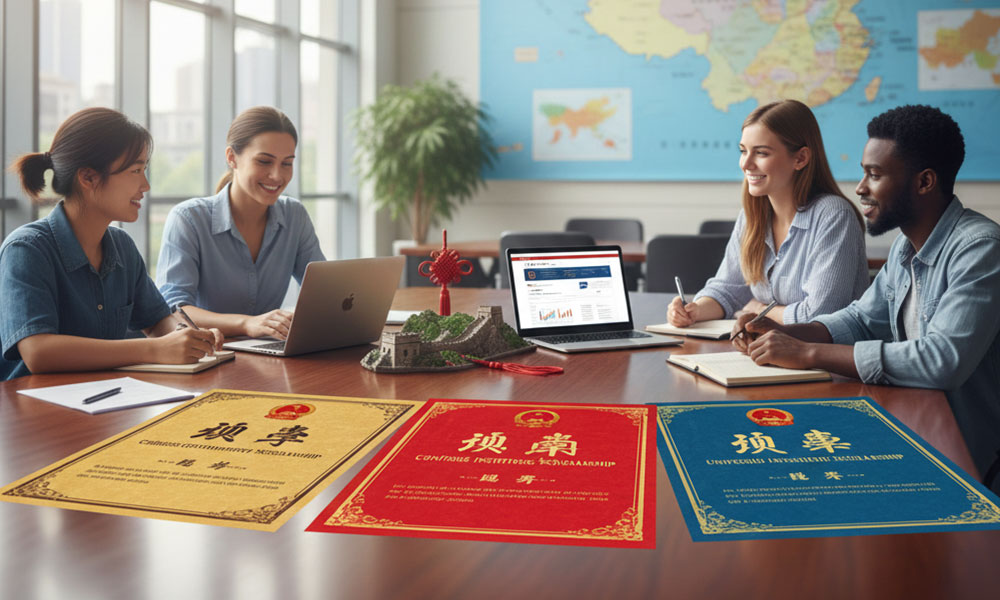
Types of Chinese Scholarships
China offers a wide and well-structured scholarship system designed to attract talented students from around the world. These scholarships range from fully funded awards to partial tuition support.
1. CSC Scholarships
The most prominent option is the Chinese Government Scholarship (CSC), administered by the Ministry of Education. In 2026, CSC scholarships typically cover full tuition, accommodation, medical insurance, and a monthly stipend—2,500 RMB for undergraduates, 3,000 RMB for master’s students, and 3,500 RMB for PhD candidates. Applicants must demonstrate strong academic performance (usually a GPA of 3.3 or higher), good health, and non-Chinese citizenship. CSC scholarships are competitive and generally exclude programs like MBAs and most MBBS degrees.
CSC scholarships are divided into three main categories: Type A (applied through embassies), Type B (applied through universities), and Type C (partial funding for existing students). Applications are submitted via the CSC online portal, typically between January and March.
2. Provincial and Municipal Scholarships
In addition to CSC, provincial and municipal scholarships—such as the Shanghai Government Scholarship or Jiangsu Jasmine Scholarship—aim to attract students to specific regions. These scholarships are often less competitive and can cover tuition and living expenses up to 30,000 RMB per year.
3. University Scholarships
Many universities also offer their own merit-based scholarships. Institutions such as Peking University and Xiamen University provide multiple scholarship tiers, ranging from partial tuition waivers to full funding. In many cases, students are automatically considered upon admission.
4. Other Scholarships
Other options include Confucius Institute Scholarships for Chinese language studies and research-focused awards such as the CAS-ANSO Scholarship for science and technology students. Some private and international organizations also offer supplemental funding.
Successful scholarship applicants typically apply early, submit well-prepared documents, and apply for multiple funding options simultaneously. These scholarships not only reduce financial strain but also provide valuable academic and professional networking opportunities within China.
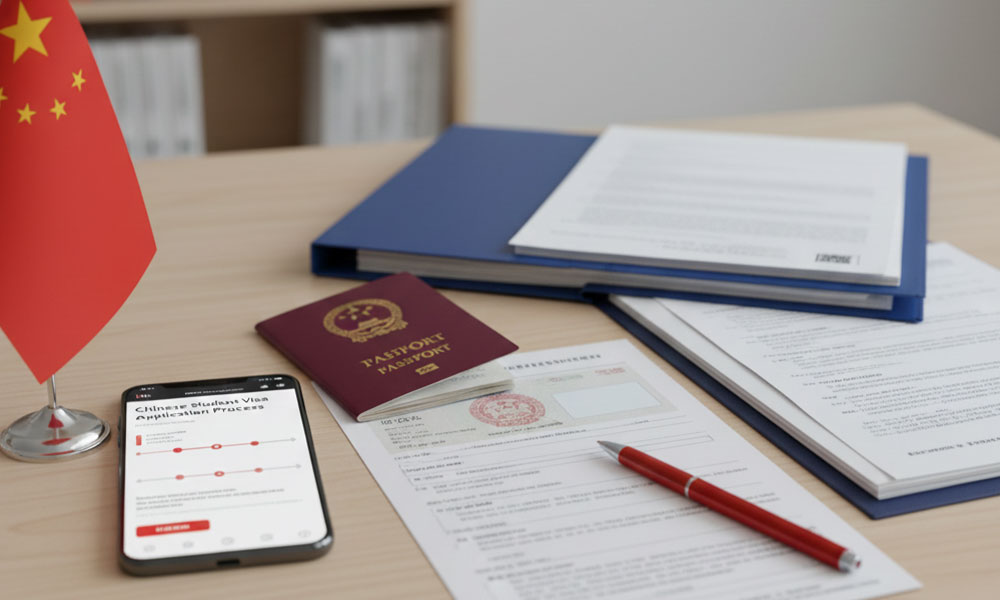
Steps to Obtain a Chinese Student Visa
Obtaining a Chinese student visa is a structured process that requires attention to detail. Students studying for more than 180 days must apply for an X1 visa, while short-term students apply for an X2 visa.
After receiving an official admission notice and the JW201 or JW202 form from the university, applicants must complete the China Online Visa Application (COVA) form and schedule an appointment through the official visa system. Applicants then submit their documents in person at a Chinese embassy or consulate.
Required documents include a valid passport, a recent photograph, the signed visa application form, and the admission notice. X1 visa applicants must also submit the original and a copy of the JW form. Fingerprints and facial biometrics are usually collected unless the applicant qualifies for an exemption.
Visa processing typically takes around four working days, with fees varying by nationality. After entering China, X1 visa holders must apply for a residence permit within 30 days at the local Exit-Entry Administration Bureau. Careful document review and early preparation help avoid common delays or rejections.
Undergraduate, Master’s and PhD Studies in China
China offers a wide range of study options at the undergraduate, master’s, and PhD levels, with over 10,000 programs available to international students—many taught entirely in English. Undergraduate programs usually last four to five years and focus on building strong foundational knowledge. Popular fields include engineering, medicine, computer science, and humanities. Master’s programs typically take two to three years and emphasize advanced coursework and research, making them ideal for career progression.
PhD programs last three to four years and are heavily research-oriented, often supported by stipends and grants. Leading universities such as Shanghai Jiao Tong University, Peking University, and the University of Chinese Academy of Sciences offer interdisciplinary and globally recognized programs. Admission requirements vary by level but generally include academic qualifications, language proficiency, health clearance, and a clean criminal record. English-taught programs do not require HSK certification.
With rising global rankings and expanding research output, China continues to strengthen its position as a major center for higher education.
This guide is based on updated 2026 admission policies and practical experience supporting international students applying to Chinese universities across multiple degree levels.
Conclusion
In 2026, China remains one of the most practical and rewarding destinations for international students. Affordable costs of study in China, globally respected universities, and generous scholarship opportunities make requirements for study in China both accessible and strategic. Whether you aim to complete an undergraduate degree, pursue a specialized master’s, or conduct advanced PhD research, China offers a powerful combination of academic quality, cultural exposure, and long-term career potential.
With clear admission requirements and a manageable visa process, now is an excellent time to take the first step toward studying in one of the world’s most dynamic countries. For personalized guidance about types of China scholarships, you may contact our counselors.
FAQS:
1. What are the main costs of studying in China in 2026, and how affordable is it compared to Western countries?
Tuition fees for international students generally range from 15,000 to 60,000 RMB per year for English-taught programs, with many quality options below 30,000 RMB. Monthly living costs average 4,000–6,000 RMB in major cities and even less in smaller ones. In total, a full year of study often costs between 50,000 and 80,000 RMB—far lower than in Western countries, where tuition alone frequently exceeds $20,000–$40,000 USD. Scholarships can further reduce or fully eliminate these expenses.
2. What are the most popular types of scholarships available for 2026, and who is eligible?
The Chinese Government Scholarship (CSC) is the most popular, offering full financial coverage and monthly stipends. Other common options include provincial scholarships, university-specific merit awards, and specialized scholarships such as Confucius Institute funding. Eligibility typically requires strong academic performance, good health, non-Chinese citizenship, and language proficiency. Early applications and strong documentation significantly improve success rates.
3. What are the key steps to get a Chinese student visa after university admission?
After admission, students receive an official admission notice and JW form, which are required for visa application. Applicants complete the online visa form, book an embassy appointment, submit required documents, and attend biometric collection. X1 visa holders must convert their visa into a residence permit within 30 days of arrival in China. Careful preparation and adherence to embassy guidelines ensure a smooth process.


No comment