

Cost of living in China for students shines as the go-to destination for ambitious learners in search of academic excellence and economic feasibility. By 2025, it annually hosts over 300,000 international students, bolstered by attractive programs and a robust network of universities ranked within the world’s top 100, including Tsinghua University Beijing and Peking University. Yet for many prospective applicants, the path ahead can feel cloudy: navigating visa protocols, deciphering fee structures, estimating monthly budgets in a foreign currency-the renminbi (RMB). This guide from admission institute aims to demystify requirements of study in China, and cotsts of Study in China.
Admission Requirements for Studies in China-2025
Before estimating the cost of living in China for international students, it is important to understand the basic admission requirements. Requirements of study in China needs clear understanding of both academic requirements and administrative formalities, a process further streamlined in 2025 to allow efficiency with online platforms while keeping the standards high. Basically, eligibility centers on two things: nationality and health-applicants should be non-Chinese citizens in possession of a valid foreign passport, with no criminal records, and in good physical and mental health, according to the Ministry of Education and reiterated across university guidelines.
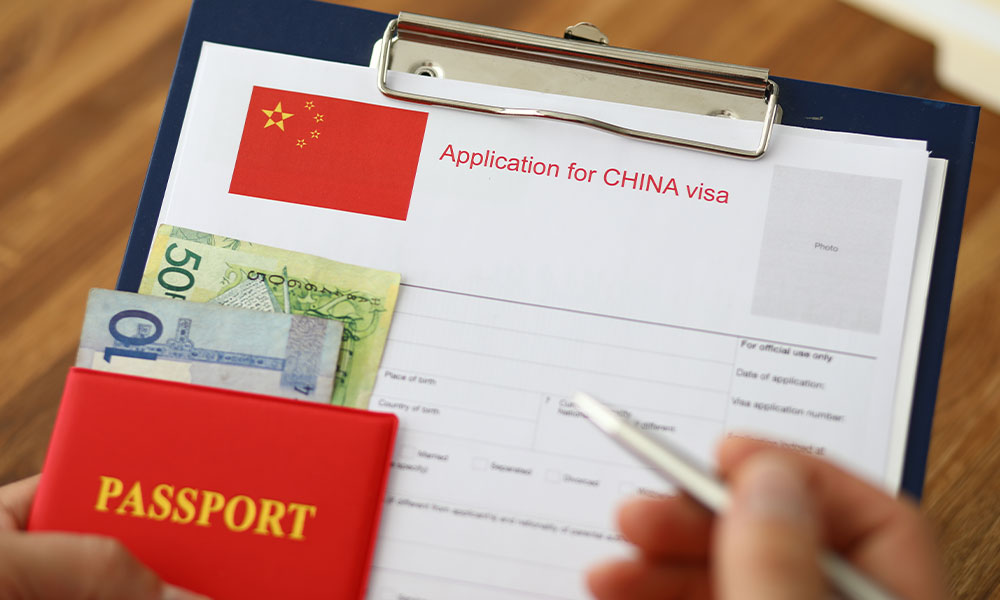
1. Application Requirements
Undergraduates must have a high school diploma or equivalent; typically, a minimum GPA is required, more or less equivalent to 70-80% in the applicant’s home system. Graduate students shall have obtained a bachelor’s degree or higher from an accredited institution. An applicant for a master’s course should hold a bachelor’s degree from an accredited college or university.
2. Language Proficiency
Another pillar is the language ability. Chinese-taught programs require HSK certification: Level 4 for undergraduate studies, rising to Level 5 or 6 for graduate degrees-a test of listening, reading, writing, and speaking in Mandarin. There is an increasing number of English-taught options in STEM and business fields that require an IELTS score between 6.0-6.5 or a TOEFL iBT score between 80-90; the very top universities such as Tsinghua require 7.0/100.
3. application documents
In addition to the basic credentials, other elements include an application document called the study plan-800-1,200 words that express motivation and career goals-two letters of recommendation for graduate applications, and sometimes entrance exams or interviews via Zoom. Most deadlines fall on December 31, 2025, for the September 2026 intake; applications can be submitted-for example, via CUCAS or directly through university websites.
4. Visa Application
After admission, the visa procurement follows in bifurcation of X1 (long-term, over 180 days) and X2 (short-term). The X1 is for degree seekers and allows an entry permit for 30 days, which can then be turned into a residence permit after arrival.
5. Required Documents
Documents required include the JW201/JW202 form, issued by the university after acceptance to show proof of sponsorship; admission notice; physical examination from an approved clinic, which is valid for six months; and proof of finances like bank statements showing coverage of 30,000-50,000 RMB. Fees are at 650 RMB, approximately $90 USD, and will take 4-7 days to process at Chinese embassies or Visa Application Service Centers.
6. Residence Permit
After arrival, X1 holders must report to the local Exit-Entry Administration within 30 days for a residence permit, which is renewable annually and linked to your program duration, up to five years for PhDs. X2 users merely register temporary stays. Universities like Sun Yat-sen university provide orientation sessions to guide this, mitigating common pitfalls like expired exams.

Tuition Fees in China for International Students 2025–2026
Tuition fees and cost of living in China for international students is a cornerstone of its educational affordability, subsidized heavily by the state as part of its effort to attract global talent in the push for “world-class universities.” In 2025, public institutions dominate, and their tuition is calibrated based on program level, language of instruction, and disciplinary focus.
1. Tuition Fees
Fees range broadly but are generally competitive-usually 20-50% of their Western equivalents. Undergraduates studying arts or social sciences pay 18,000-28,000 RMB ($2,500-$3,900 USD) annually for Chinese-taught tracks at schools like China University of Petroleum, rising to 22,000-40,000 RMB for English versions at Tsinghua. STEM fields, including engineering and computer science, push higher at 20,000-35,000 RMB because of lab resources, while clinical medicine asks for 40,000-65,000 RMB per year, reflecting clinical training mandates.
Postgraduate fees increase with specialization, and for that, non-MBA master’s programs at Zhejiang University China range from 25,000 to 45,000 RMB in Chinese and 35,000 to 80,000 in English, while MBAs top 50,000 to 120,000 RMB for their executive networks. PhD candidates fare better, ranging from 30,000 to 50,000 RMB, often bundled together with research stipends. Private or Sino-foreign ventures like Xi’an Jiaotong-Liverpool University charge premiums of 93,000 RMB at the base, offset by 10% early-bird discounts, yet deliver hybrid curricula. Geographical variance also exists: institutions in Beijing and Shanghai add 10-30% on top of their sticker prices for prestige, per Peking University’s 2025 handbook; options in Nanjing and Chengdu shave costs by 15-20%, ideal for budget-conscious applicants.
2. Scholarships
Scholarships dramatically change this equation, and the Chinese Government Scholarship is the flag-bearer of programs under the Ministry of Education. For 2025-2026, CSC Type B-University Nominated, covers tuition, on-campus dorm, medical insurance, and monthly stipend of 2,500 RMB for undergraduate, 3,000 RMB for master’s, 3,500 RMB for PhD, sometimes amounting to up to 200,000 RMB over four years. Application opens in November 2025 and application deadline: by December 31 via csc.edu.cn, priority given to Belt-and-Road nations and STEM areas. Provincial variants, such as Jiangsu Jasmine-20,000-50,000 RMB partials-and university-specific awards, such as Fudan’s 100% waivers for top scorers, fill in the gap and grant more than 65,000 slots every year. One 2025 innovation: EU Window CSC has added 500 spots targeted at European applicants looking for research with an emphasis on sustainability studies.
These are the mechanisms that guarantee access; for example, a Kenyan undergraduate student at Huazhong University of Science and Technology self-funds 25,000 RMB in the first year but gets CSC mid-year, cutting net costs to just stipends. Official fee schedules-updated October 2025 on different admission websites-include incidentals such as 500-1,500 RMB for materials, excluding living expenses. Critics point out rising 5% annual hikes pegged to inflation; yet, subsidies do place caps on them. In brief, tuition here does not hinder but rather strategically invests in using over 2,000 higher education institutions of China to democratize elite education.
Cost of Living in China for Students: Data for 2025
Daily life in China, for international students, hinges on mastering the ebb and flow of urban expenses, from state-subsidized amenities blending with market-driven prices to create a spectrum that ranges from frugal to flexible.
| Expense Category | Tier-1 Cities (Beijing, Shanghai) | Tier-2 Cities (Chengdu, Xi’an, Wuhan) | Notes |
| Accommodation | 1,500 – 4,000 RMB (dorm/shared flat) | 600 – 2,800 RMB (mainly dorms) | University dorms are the most cost-effective option |
| Food | 1,500 – 2,400 RMB | 1,200 – 2,000 RMB | Campus canteens reduce costs by up to 30% |
| Transportation | 200 – 400 RMB | 150 – 300 RMB | Student metro cards and bike rentals lower expenses |
| Utilities & Internet | 200 – 400 RMB | 100 – 300 RMB | Often free or subsidized in dormitories |
| Health Insurance | 70 – 85 RMB (monthly avg.) | 70 – 85 RMB | Mandatory university insurance (800–1,000 RMB/year) |
| Personal & Leisure | 600 – 1,300 RMB | 500 – 1,000 RMB | Includes mobile plans, entertainment, short trips |
| Total Monthly Cost | 4,800 – 8,500 RMB | 3,000 – 5,500 RMB | Excludes tuition fees |
Updated 12/20/2025
Based on aggregated 2025 data from Chinese public universities and international student offices, tier-2 cities reduce monthly living costs by up to 40% compared to Beijing and Shanghai. The cost of living in China for international students, per month, would be 3,800 to 5,000 RMB ($530-$700 USD), excluding tuition, taken from aggregated 2025 surveys from university international offices and cost indices, but the devil lies in the city tiers. In tier-1 hubs, like Beijing and Shanghai, it pushes up to 4,800-8,500 RMB, driven by real estate premiums, where in tier-2 like Hangzhou or Xi’an, it decreases to 3,000-5,500 RMB, offering comparable quality at lowered thresholds.
1. Accommodation
Accommodation anchors budgets at 25-40% of totals. University dorms, preferred for internationals, range 600-2,500 RMB: Tsinghua’s quad rooms at 1,200 RMB include utilities and Wi-Fi; Fudan’s Shanghai setups hit 1,500-2,000 RMB with shared baths. Off-campus shared flats via apps like Ziroom cost 2,000-6,500 RMB—Beijing’s Haidian district nears 3,500 for a twin, Guangzhou’s Yuexiu dips to 2,800—offering greater privacy but carrying the risk of disputing deposits. Homestays, at 2,500 RMB, fully immerse in local customs, according to Shanghai University’s guide.
2. Food & transportation
Food is consuming 20-30%: canteen staples, such as rice bowls or dumplings, cost 8-15 RMB per meal, amounting to 1,200-2,400 RMB monthly if combined with home cooking-groceries range from 800-1,200 RMB at wet markets-and eating out. In Beijing, you can find noodles for 20 RMB from hutong vendors; in Shanghai, the fusion restaurants increase the prices to 50-80 RMB for any Western dishes. Guangzhou has plenty of vegetarian and halal options, which one can get well within 1,500 RMB. Transportation utilizes efficiency to the fullest: 200-400 RMB for an unlimited subway pass; Didi rides, 20-40 RMB; bikes, 1 RMB/hour-the sprawl of Chengdu caps at 150 RMB, while the grid of Beijing does at 300.
3. Utilities and Sundries
Utilities and sundries add 300-600 RMB: bundled internet/phone plans 100-200 RMB, electricity/water 100-300 (dorms often free). Compulsory insurance, 800-1,000 RMB yearly via uni, covers 70% of outpatient needs. Leisure varies: free temples and parks, 40 RMB cinema tickets, 500 RMB high-speed rail jaunts to Xi’an. A Chengdu student might have a great time on 3,200 RMB-dorm 800, food 1,300, transport 150, misc 950-whereas in Shanghai, it is 5,500: flat 4,000, food 1,800. Inflation at 2% pushes the 2025 figure 3-5% above that of the preceding year, but student discounts -50% on museums- and WeChat group bargains moderate things. Realities emerge in anecdotes: an Indian PhD in Wuhan budgeted 3,500 RMB, supplementing with freelance translation.
Realistic Annual Budget Scenarios (2025–2026)
This is an annual budget to study in China, built on adding tuition fees and cost of living in China for international students, factoring in scholarships, and buffering for exigencies like holidays or health flares-yielding scenarios from lean to loaded, all rooted in 2025 official projections:
1. Undergraduate
Baseline self-funded undergraduate study, tier-2 city, Chinese-taught arts: tuition 22,000 RMB, dorms 7,200 (600/month), living 36,000 (3,000/month for food/transport/misc): total 65,200 RMB ($9,100 USD), or 5,400 monthly. To this may be added 1,000 RMB for books/insurance, pushing to 66,200 RMB, which is arguably feasible on parental support or part-time tutoring at 100 RMB/hour, visa-permitted.
2. Master
By comparison, a Beijing English-taught STEM master’s: 45,000 RMB tuition, 18,000 dorms (1,500/month), 72,000 living (6,000/month in high-rent Haidian)-grand total 135,000 RMB ($18,900), demanding 11,250 monthly. Off-campus elevates to 168,000 RMB with 48,000 rent, suiting those prioritizing independence.
3. PhD
PhD at Shanghai Jiao Tong? Tuition 40,000, but CSC slashes to zero, leaving 48,000 living (4,000/month) offset by 42,000 stipend (3,500/month)-net surplus of -6,000 RMB, or free rein.
Family scenarios double basics: a spouse adds 30,000-50,000 RMB, child 20,000 more, per Fudan estimates, though unis rarely accommodate. Savings tactics abound: communal cooking trims food 20%, student metro cards halve transport, secondhand via Xianyu apps cut gear 30%. A 2025 CSC undergrad from Pakistan at Wuhan University exemplifies: an initial 80,000 RMB projection shrank to 30,000 post-scholarship, tuition and dorm waived, stipend 30,000, with rail passes for Lahore visits budgeted at 5,000. Alipay trackers enforce discipline: 15% of his money is wasted on impulse snacks. Variables loom—northern heating 500 RMB winter, southern typhoon delays—but 10% contingency covers it, 6,000 RMB. These blueprints, aggregated from university data, help illustrate China’s advantage: even unsubsidized, totals less than $20,000 annually versus $60,000 abroad, to empower some of the most unlikely cohorts to thrive.
Conclusion
Studying in China in 2025 remains a practical choice rather than a speculative one. When the numbers are laid out clearly—tuition fees, accommodation, food, transportation, and insurance—it becomes evident that China offers a level of affordability that few major study destinations can currently match. For many international students, especially those considering public universities and Chinese-taught programs in tier-2 cities, the overall cost of living in China for students stays within a manageable and predictable range. What ultimately determines the real cost, however, is not just the city or the university, but the decisions students make after arrival. Living on campus, using student discounts, and understanding how daily expenses vary across regions can reduce annual spending significantly. For scholarship recipients, particularly under the Chinese Government Scholarship, the financial pressure is often minimal, allowing students to focus almost entirely on academics and research. That said, studying in China does require planning. Application timelines, visa procedures, and realistic budgeting should be addressed early, ideally several months before the intended intake. Exchange rate fluctuations and city-specific costs can also affect final expenses, making a small financial buffer essential. For additional information about requirements of study in China, conract us.
1. Is it possible to study in China for less than US$10,000 per year?
Yes, in 2025, thousands of students achieve this through CSC or provincial scholarships covering tuition, dorm, and living stipend, or by enrolling in Chinese-taught programs in tier-2 cities with on-campus housing. Self-funded students in Chengdu, Xi’an, or Wuhan usually spend from $7,700 to $10,500 per year, including all expenses.
2. Is part-time working allowed on a student visa?
No, work for pay in 2025 is still not allowed on the X1/X2 visas. A university can make arrangements for small on-campus research allowances or approved internships, 800–2,000 RMB/month, but regular work is illegal and may result in fines or deportation. Budgets should assume zero income from work.
3. How much bank balance is needed for a student visa?
It depends on the embassy. Normally fully-funded students need none, or just $2,000 to $3,000. Self-paying applicants are normally requested to show $5,000 to $8,000 – though some embassies still request $10,000 to $12,000 for the X1 visa. Always confirm the exact figure on the local Chinese Visa Application Service Center website.



No comment