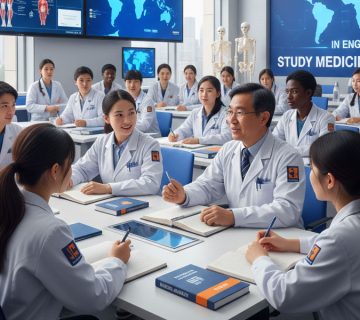
The high academic reputation of Chinese universities, along with their modern educational, research, and student-support facilities, as well as the wide range of academic programs available, has significantly increased the demand for studying in China. In recent years, China has become one of the most attractive and reliable destinations for international students, drawing thousands of applicants each year. Favorable admission requirements—such as flexible age and GPA criteria—as well as affordable tuition and living costs, have all contributed to the growing popularity of studying in China.

Advantages of Studying in China
After several decades of continuous economic and scientific development, China has become a global leader in both fields. The Ministry of Education has made substantial investments in improving the quality of universities, modernizing infrastructure, and elevating academic standards. High-quality educational, research, cultural, and welfare facilities, diverse academic programs, and extensive international research collaborations are among the key advantages of studying in China.
Additionally, both the Chinese government and universities offer various scholarships to qualified international students. Compared to Western countries, the admission process in China is generally more flexible, which has further increased students’ motivation to study there.
Study Requirements in China
Like any country, applicants wishing to pursue higher education in China must meet certain requirements. The first step is obtaining an admission offer from a recognized Chinese university. Applicants must visit the university’s official website, download the admission form, and submit complete information including personal details, academic background, and program choice from among the many available fields of study in China.
The main requirements for studying in China include:
- Admission offer from an accredited Chinese university
- Officially translated academic transcripts and certificates
- Official translation of identification documents
- University admission letter
- Proof of financial capability
- Chinese student visa
- Medical fitness certificate
- Academic résumé
- Police clearance certificate (criminal record check)
- Proof of language proficiency (Chinese or English)
In addition to the above, age limits and minimum GPA requirements may apply, especially for medical programs and public universities. Another condition newly introduced for 2026 admissions is the CSCA entrance exam, which is mandatory for undergraduate applicants starting in that year.
Academic Programs in China
Chinese universities offer a wide range of programs at all academic levels in both English and Chinese. Not all programs are available in both languages, so applicants should verify language-of-instruction details before applying. The most popular fields of study in China include:

- Medical and Health Sciences
Programs such as Medicine, Dentistry, Pharmacy, and Allied Health Sciences attract large numbers of students each year. Many Chinese medical universities are highly ranked in Asia and worldwide, offering top-tier education. Renowned institutions include Wuhan University, Peking University, Fudan University, Zhejiang University, Shanghai Jiao Tong University, and China Medical University.
Age limits and GPA requirements are especially important for medical programs. Tuition fees for medical fields are generally higher than for other disciplines.
- Engineering Programs
China is rapidly advancing as an industrial and technological hub, making engineering fields highly in demand. Chinese engineering programs are globally recognized and often involve participation in major international research projects. Leading institutions include Tsinghua University, Zhejiang University, Shanghai Jiao Tong University, and Peking University.
Popular engineering majors include Electrical and Electronic Engineering, Computer Science, Mechanical Engineering, Civil Engineering, Chemical Engineering, Aerospace Engineering, and Materials Science.
- Humanities and Social Sciences
Another major group of academic programs in China includes the humanities and social sciences, which offer broad and diverse study opportunities. Popular majors include Sociology, Chinese Language and Literature, English Language and Literature, Law, Psychology, Social Sciences, History, Hospitality Management, and Tourism Management. Top universities in this field include Peking University, Fudan University, Beijing Normal University, Renmin University, and Nanjing University
- Management Programs
Although some management degrees fall under the humanities, the wide variety of programs justifies placing them in a separate category. Business and management programs are highly diverse and benefit from China’s strong presence in global markets, which creates excellent career opportunities. Popular majors include Business Administration, Tourism Management, Industrial Management, and Communication Management.
Top universities for management studies include Tsinghua University, Peking University, Shanghai University, and Fudan University. Programs such as MBA may require relevant work experience.
- Natural Sciences
Natural science programs—such as Physics, Chemistry, Biology, Mathematics, and Geology—have received significant government investment in recent years, supporting China’s path to scientific excellence. Leading institutions in these fields include Peking University, Tsinghua University, the University of Science and Technology of China, and Zhejiang University.

- Architecture
Architecture is among the most popular and appealing fields of study in China, offering excellent career prospects both locally and internationally. Top universities for architecture include Tongji University, Tsinghua University, Tianjin University, and Shanghai Jiao Tong University.
Tuition and Study Costs in China
Affordable tuition fees are one of the most notable advantages of studying in China. Costs vary depending on the university, academic level, language of instruction, and chosen field. Average annual tuition fees for public universities are:
- Undergraduate programs: USD 2,500–5,000
- Master’s programs: USD 3,000–7,000
- Doctoral programs: USD 4,000–8,000
Tuition at private universities typically ranges from USD 8,000 to 30,000 per year. Medical programs usually have higher tuition rates.
Examples of tuition fees for medical programs in selected Chinese universities:
| University |
Program |
Annual Tuition (USD) |
| Peking University |
Medicine |
10,000–15,000 |
| Fudan University |
Medicine |
10,000–14,000 |
| Tsinghua University |
Dentistry |
13,000–18,000 |
| Zhejiang University |
Pharmacy |
12,000–15,000 |
| Shanghai Jiao Tong University |
Dentistry |
12,000–16,000 |
| Wuhan University |
Pharmacy |
10,000–12,000 |
| Nanjing University |
Dentistry |
10,500–14,000 |
| Shandong University |
Medicine |
11,000–13,000 |
| Sichuan University |
Pharmacy |
9,000–11,000 |
| Guangzhou University |
Medicine & Dentistry |
13,000–17,000 |
Engineering tuition fees in selected universities:
| University |
Annual Tuition (USD) |
| Tsinghua University |
8,000 |
| Peking University |
1,500 |
| Shanghai Jiao Tong University |
5,500–12,500 |
| Fudan University |
8,500–11,500 |

Scholarships in China
International students studying in China may apply for several scholarship programs, provided they demonstrate strong academic performance, a solid résumé, or recognized research achievements. Scholarships cover all or part of tuition and living expenses. Major scholarship categories include:
- Chinese Government Scholarship (CSC): Covers tuition, accommodation, living expenses, and monthly stipends for all academic levels
- Local/Provincial Scholarships: Cover tuition and offer living stipends (excluding housing costs)
- University Scholarships: Many universities offer full or partial tuition waivers and monthly living allowances
- Confucius Institute Scholarship: For students studying Chinese-taught programs; covers tuition, housing, and living expenses
- MOFCOM Scholarship: Offered by the Ministry of Commerce, available to master’s and PhD students
- BRI Scholarship: Covers tuition and provides living stipends, with higher support for postgraduate students
Conclusion
China offers a vast range of academic programs, affordable tuition fees, flexible admission requirements, and highly reputable universities. Medical fields such as Medicine, Dentistry, Pharmacy, and Allied Health Sciences remain top choices among international students. Engineering programs—including Electronics, Civil Engineering, Mechanical Engineering, and Computer Science—are offered at world-class universities. Humanities, Social Sciences, Management, and Natural Sciences are also widely available with strong academic facilities.
Leading universities such as Peking University, China Medical University, Tsinghua University, Fudan University, Wuhan University, Shanghai Jiao Tong University, and Sichuan University hold strong global reputations. Tuition fees vary depending on major, academic level, language, and institution. Studying in China is an excellent option that provides the best educational and career opportunities for those interested. Choosing China as a study destination paves the way for you to enter international markets. For more information, contact us.