Currently, studying abroad has become the key to immersing oneself in different cultures, developing skills, and thinking outside the box. Among all the countries, China, which has been developing rapidly economically and has a long history, is a notably attractive option for students around the world. The Chinese university programs range from the common ones in other countries to the niche ones, including artificial intelligence and sustainable development. The attractive aspect about pursuing education in China is the affordability and quality of the courses being offered in addition to being able to learn from the best and most exciting economy in the world. The process, however, requires consideration and knowledge of the key aspects that the programs involve, including courses, admission requirements of China, and scholarships. This article from admission institute will discuss this in depth and from the best sources to form the comprehensive guidelines that the target students may require.
Taking a Deeper Look at Chinese University Programs
The higher education system in China is quite diverse, ranging across more than 3,000 institutions, which serve both local and overseas students.
| Program Type |
Popular Universities |
Language of Instruction |
Duration |
Key Admission Requirements |
Scholarship Availability |
| Engineering & Technology |
Tsinghua University, Shanghai Jiao Tong University, Zhejiang University |
English / Chinese |
4 years (UG) |
High school diploma, strong GPA, IELTS/HSK |
CSC, University Scholarships |
| Computer Science & AI |
Tsinghua University, USTC, Zhejiang University |
English / Chinese |
4 years (UG) / 2–3 years (PG) |
GPA, IELTS 5.5+ or HSK 4–5 |
CSC, Research-based funding |
| Business & Economics |
Jiangnan University, Zhejiang University |
English |
4 years |
High school diploma, IELTS 5.5+ |
CSC, Provincial Scholarships |
| Medicine (MBBS) |
Tsinghua University, Sichuan University |
English |
5–6 years |
High school diploma (science background), IELTS |
CSC (limited), University grants |
| Chinese Language Programs |
Beijing Language and Culture University, Sichuan University |
Chinese |
1–2 years |
HSK Level 4–5 |
CSC, Short-term scholarships |
| Short-term Study Tours |
Various universities in Beijing & Shanghai |
English / Chinese |
2–8 weeks |
High school diploma |
Usually, self-funded |
Updated 12/21/2025
1. Popular Chinese university programs
For undergraduates, the academic curriculum lasts for four years, although in specializations like architecture and medicine, it may be five or more. At the postgraduate or doctoral levels, this trend continues. Based on various rankings by credible agencies, the best institutions, including Tsinghua University and Peking University, lead the way across the world, especially within the STEM education segments. At Tsinghua University, for instance, bachelor’s programs exist in engineering, sciences, and humanities, emphasizing interdisciplinary education for the global context.
2. Other popular Chines university programs
Other popular Chinese university programs pursued by international students are in the fields of business administration, economics, medicine, as well as Chinese language programs. Many universities offer English language study options catering to those with less than fluent Mandarin-speaking capabilities, making China study opportunities available despite limited Chinese language abilities. Jiangnan University in Wuxi, for example, offers an English language Business Administration program specifically for foreign students, integrating theoretical concepts and internships. The University of Science and Technology of China (USTC), on the other hand, offers physics and computer science courses through its affiliation with the Chinese Academy of Sciences, offering superior research facilities.
From direct applicant feedback, English-taught programs in business and economics tend to have smoother academic adaptation compared to English-taught medical or engineering programs. Several students admitted to English-medium MBBS programs reported challenges in clinical communication during internships, where Mandarin proficiency became essential despite the program being advertised as fully English-taught. As a result, universities with structured Mandarin support courses showed higher student satisfaction rates.
3. Top Rated universities programs
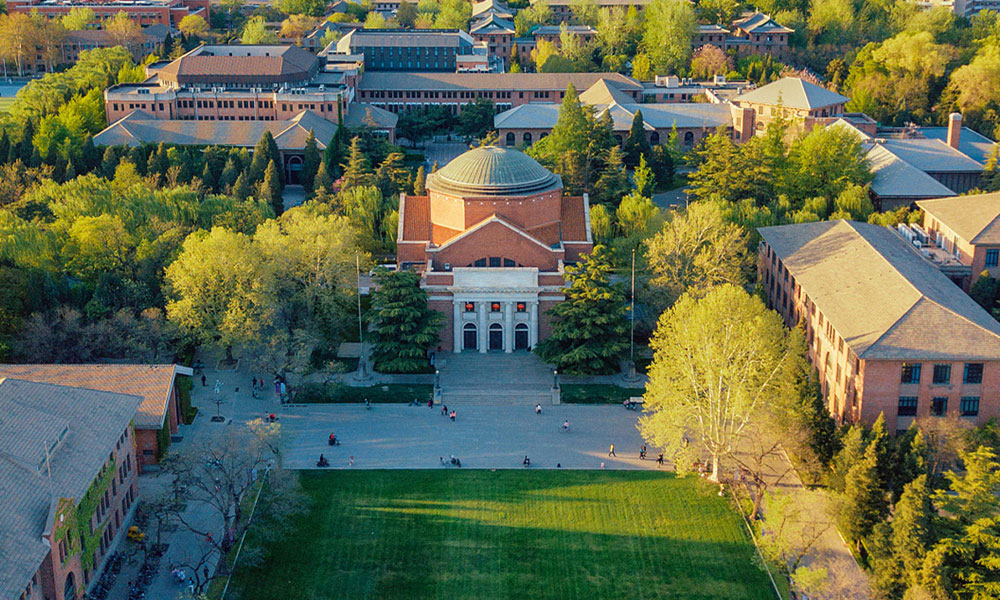
The presence of top-rated schools dominates the sector. Tsinghua university of Beijing and Peking University, both located in Beijing, lead through their rigorous programs and connections that produce world leaders. Zhejiang University of Hangzhou, based in Hangzhou specializes in agriculture and biosciences, while Shanghai Jiao Tong University stands out in engineering and management. Based on our direct admission cases in 2024–2025, students applying to engineering programs at Zhejiang University faced stricter GPA screening compared to business programs at Jiangnan University. These institutions also occupy top spots in discipline-wise rankings; for instance, Tsinghua tops the list in the field of engineering and computer science, which mirrors the Chinese Government’s focus on developing self-reliance in technology. Aside from the top universities, a hub institution such as Sichuan University offers specializations in disciplines such as environmental science.
4. Up to date Courses
The attractiveness of Chinese universities programs is that they are abreast with international trends. Courses such as artificial intelligence, biotechnology, and international trade are most popular, with initiatives such as the “Double First-Class” project, whereby certain chosen universities are earmarked for international-class programs. International students are also offered special courses such as the “Study Tour China” courses, where educational hours are combined with cultural visits to Beijing or Shanghai, among other locations. These courses are usually of a temporary nature, with the student spending only a couple of weeks learning Chinese immersion, field trips to historical locations, and learning about sustainable development, among other areas. Those wishing to take deeper learning will find degree courses in international economics, finance, and marketing very useful for jobs with major global companies with bases in Asia.
5. Collaborative programs with international universities
Furthermore, innovation in Chinese university programs can also be seen in their collaborative programs with international universities. Joint ventures, like the one between the University of Nottingham Ningbo China and the UK university, enable dual-degree programs that bring together both the Eastern and Western views of the world. Such a harmonious mix not only ensures better placement but also equips the student with the skills needed in a multicultural work setting. Since China has been heavily participating in the development of higher education, with the Ministry of Education actively involved in the development of engineering excellence, the student gets modern lab facilities, industry engagement, and a lively college life.

Navigating Study Requirements in China
Starting a university life in China means that the student has to overcome various academic, language, and administrative obstacles that are in place to prepare the students for the university life. The admission requirement to study in China in any university differ depending on the course and the level of study.
1. Academic Requirements
The minimum requirement for an undergraduate program is that the applicant should have a high school diploma. The graduate programs require the applicant to have a bachelor’s degree. Prestigious universities such as Tsinghua Universities have comprehensive admission processes.
2. Language proficiency
Language skills are a basic requirement in study requirements. Chinese programs always require HSK certification, and Level 4 or 5 is usually required for undergraduate programs and above for postgraduate studies. Sichuan University, for example, requires a score of 180 in the HSK Level 5 test for Chinese programs. English programs, common in top-tier universities, require IELTS, TOEFL, and other test results. USTC, for example, requires IELTS 5.5 and TOEFL 80 for English programs, but native speakers or students of English-speaking countries can be exempted from the test. Others, such as Beijing Language and Culture University, require a requirement of 5.5 in IELTS for some colleges. The results of the tests above can be valid for a maximum of two years, and all applicants must provide certified copies of the test results.
3. Visa Procedures
Visa procedures are equally essential. Most foreign students apply for X1 visas for long-term education or X2 for short-term stays, which demands an admission and JW201 or JW202 form from the university. There are some colleges that are authorized for the issuance of these documents for language courses, making the process less cumbersome. After arrival, the X1 visa is changed into a residence permit. The necessary documents for admission are health insurance, medical check-ups, and proofs of finance. For non-degree courses such as language training, the admission needs only a high school diploma with less stricter education standards.
Based on student arrival experiences, delays most commonly occurred during the residence permit conversion process rather than the initial visa issuance. Students arriving late or without complete medical examination records faced extensions of up to three weeks before receiving their residence permits. Universities with on-campus international offices significantly reduced these delays by coordinating health checks and police registration directly.

4. Other Requirements
Other factors that would be considered are age restriction (age ranges may be set between 18-35 years for undergraduate students), and health checks would be conducted. Requirements in some universities like Jiangsu University would also include proofs of proficiency in English, such as IELTs and TOEFl, in their application procedure. The application period would take place between October and June. One would also gain adaptation to culture since part of the program may involve interactions with Chinese society.
Chinese Scholarships
Financial constraints might prevent students from pursuing international learning experiences. However, due to China’s comprehensive scholarship programs, this is no longer an obstacle. The Chinese Government Scholarship (CSC) program is China’s premier scholarship program. It is managed by China’s Scholarship Council. The program supports international students who are pursuing undergraduate, masters’, or doctoral degrees. The scholarship encompasses payment of fees, living costs, allowances, as well as health insurance. It is offered as full or partial support.
The CSC’s Chinese University Program focuses on particular institutions, where direct applications can be made for admission into particular universities. Applicants must satisfy the following criteria: hold non-Chinese citizenship, in good health, and of high academic qualification. Under the 2026 intake, the China Scholastic Competency Assessment (CSCA) will be required for the admission of undergraduate degree-seekers.
Other scholarships, for instance, from provinces or universities, also work hand-in-hand with the CSC. Tsinghua University’s scholarship supports gifted students for research purposes, focusing on international exchange. Apart from solving funding problems, these scholarships also ensure cultural diplomacy, as these students usually become representatives of China after graduating.
Conclusion
Attending institutions of higher learning in China is not just about education; it’s an investment in the future of globalization. Whether it’s the exciting programs offered by top institutions or the helpful scholarships and guidelines set forth to help international students, the offer that China presents is one of growth and exploration. As the country moves forward in terms of achieving its education objectives, the end product is well-rounded students well-equipped not just with knowledge but also with the reach and vision that knows no boundaries. Whether for the appeal of Beijing’s rich history or the exciting vista of the skyscrapers of Shanghai, what students find in China is the best of old and new. Contact us for additional information about Chinese university programs.