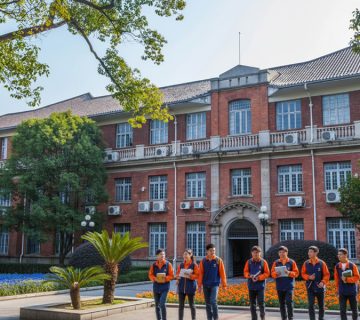
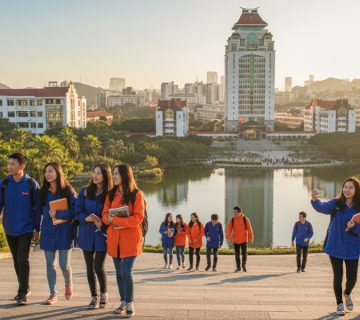
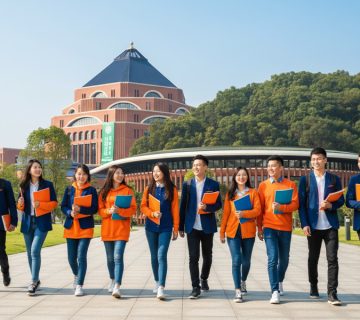
In an era where global mobility defines career trajectories, studying abroad has evolved from a luxury to a strategic necessity. China has become one of the most practical destinations for international students thanks to its growing number of English-taught programs, modern campuses, and comparatively affordable tuition. According to China’s Ministry of Education, nearly half a million international students enrolled in Chinese universities in 2024. However, the admission process can be confusing for many applicants, especially because requirements differ from one university to another and deadlines vary by program. This article from admission institute delves into the essentials of Chinese universities admission requirements, spotlighting study requirements in China and the pivotal role of Chinese university scholarships. Whether you’re eyeing a degree in medicine or engineering, understanding these nuances is key to unlocking doors in one of the world’s fastest-growing economies.

Why Study in China?
“Chinese universities mainly evaluate applicants based on academic performance, language proficiency, and the specific admission criteria set by each institution. From language proficiency tests to scholarship eligibility, every step demands precision. For Iranian students, for instance, selecting institutions approved by the Ministry of Health ensures seamless degree validation back home. Similarly, European aspirants benefit from programs recognized across the continent, facilitating post-graduation opportunities. This guide, aims to demystify the process, offering actionable insights for a successful application. This guide helps you understand the essential steps so you can decide whether studying in China aligns with your academic goals.
The Current Landscape of Studying in China
Study in China today is a dynamic fusion of rigorous academics and immersive experiences. With campuses boasting state-of-the-art labs—think Tsinghua University Beijing sprawling innovation hubs—and ancient pavilions for reflection, the environment fosters both intellectual growth and personal resilience. International students often describe it as a “crash course in adaptability,” where high-speed rail whisks you from bustling Shanghai to serene mountain retreats in a matter of hours. Post-pandemic, China has streamlined its approach to welcome global talent. Universities now emphasize hybrid learning models, with many English-taught programs to ease transitions. Daily life revolves around a structured rhythm: morning tai chi sessions, afternoon seminars, and evenings exploring night markets. Challenges like navigating language barriers or dense urban living are offset by robust support networks—dedicated international offices, peer mentorships, and subsidized healthcare. For many, the real draw is the exposure to China’s economic miracle; internships at tech giants like Huawei or Alibaba are commonplace, bridging classroom theory to real-world impact. Yet, this vibrancy comes with expectations.

Requirements of study in China
Study requirements in China demand discipline: expect 20-25 hours of weekly lectures, group projects emphasizing collaboration, and a cultural ethos of perseverance. Extracurriculars, from debate clubs to martial arts, are integral, building soft skills prized by employers. As one alumnus from Spain shared in a Campus China forum, “It’s not just about the degree; it’s about emerging bilingual, bicultural, and bold.” In 2025, with China’s GDP projected to surpass $20 trillion, graduates leave equipped for a borderless job market.
Decoding Admission Requirements: A Step-by-Step Blueprint
Securing a spot in a Chinese university starts with clarity on the basics. “Most universities assess applicants based on their academic records, language test results (HSK or IELTS/TOEFL), and required health documentation.
1. Admission Requirements
For undergraduates, a high school diploma with strong grades (typically 70-80% aggregate) is non-negotiable. Transcripts must be notarized and translated into English or Chinese. International exams like SAT, ACT, or IB scores bolster applications, especially for competitive fields. Language is the gatekeeper. For Chinese-taught programs, the HSK (Hanyu Shuiping Kaoshi) test is mandatory—Level 4 for undergrads, escalating to Level 6 for postgrads. English-taught options, proliferating in STEM disciplines, require TOEFL (80+) or IELTS (6.0+). Deadlines cluster around March for autumn intake (September start) and October for spring (March start), though top universities like Peking fill slots by January.
2. CSCA
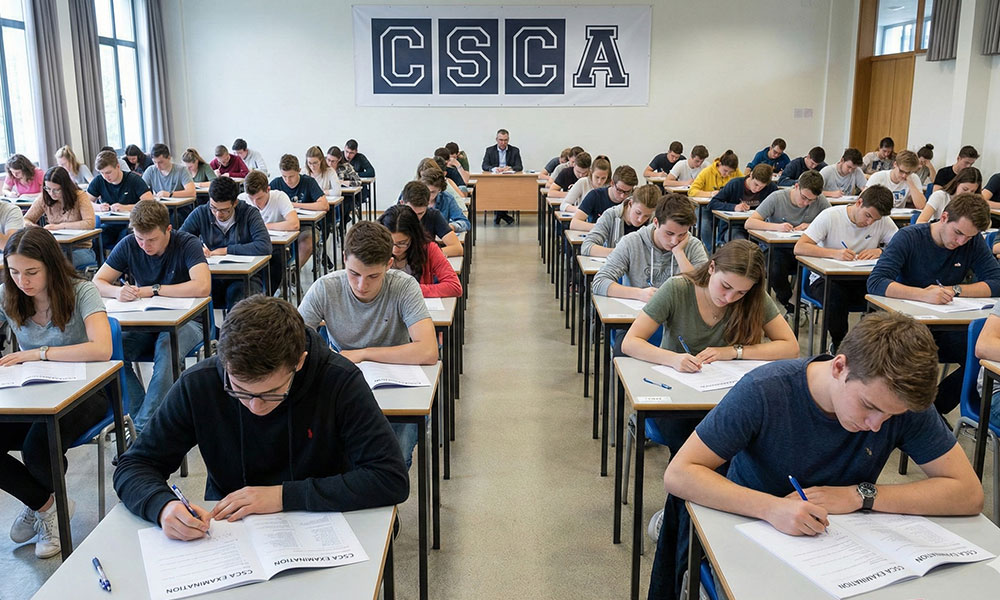
A pivotal shift looms for 2026: the introduction of the CSCA (Chinese Scholarship Council Assessment) exam for undergraduate CSC applicants. This standardized test, akin to a SAT for scholarships, evaluates aptitude in math, science, and critical thinking. Official CSC guidelines mandate it for bilateral program hopefuls, with registration opening in early 2026 via dispatching authorities. Outside China, proctored centers in major cities will administer it, ensuring fairness. This move aims to standardize selections, favoring well-rounded candidates over rote memorizers.
3. Other requirements
Health and character checks round out the dossier. A Foreigner Physical Examination Form, valid for six months, covers chest X-rays and blood tests. No criminal record is a must, verified via embassy affidavits. Applications funnel through portals like CUCAS or university-specific systems, with fees around 400-800 RMB ($55-110).
Pro tip: Apply to three institutions to hedge bets, as acceptance rates hover at 20-30% for internationals. For specialized fields, requirements intensify. Medicine demands biology and chemistry prerequisites; engineering, physics and math. Iranian applicants must cross-reference with the Ministry of Health’s approved list to avoid degree invalidation. Europeans, meanwhile, can leverage Bologna Process alignments for credit transfers. In essence, preparation is your superpower—start 12-18 months ahead.
Chinese University Scholarships: Fueling Dreams Across Borders
No discussion of Chinese universities admission requirements is complete without spotlighting scholarships, the great equalizers.
| Scholarship Type |
Coverage |
Monthly Stipend (RMB) |
Who Can Apply |
Application Method |
Age limit (undergrad) |
| CSC Type A |
Full (tiotion + accomodation + insurance, stipend) |
2.500 |
All nationalities (via home-country embassy) |
Thruogh your country’s Chinese embassy/consulate |
Under 25 |
| CSC Type B |
Full (same as Type A) |
2.500 |
All nationalities |
Directly to university (agency number required) |
Under 25 |
| Beijing Government Scholarships |
Full or partial Tuition |
Varies (0-2.500) |
All nationalities |
Through Beijing Universities |
Under 30 |
| Shanghai University Scholarships |
Full or partial tuition + Living allowance |
2.500 – 3.000 |
All nationalities |
Through Shanghai Universities |
Under 25 |
| Jiangsu Jasmine Scholarships |
Full Tuition + accommodation + insurance |
1.500 – 2.000 |
All nationalities |
Through Jiangsu Universities |
Under 25 |
| Tsinghua University Presential/ International Scholarship |
Full tuition + Stipend |
3.000+ |
Outstanding applicants |
Direct to Tshinghua |
Under 25 |
| Peking University Scholarship (PKU) |
Full or Partial |
Up to 3.000 |
All nationalities |
Direct to PKU |
Under25 |
Updated 12/3/2025
1. CSC
Chinese university scholarships, particularly the Chinese Government Scholarship (CSC), transform barriers into bridges. Administered by the China Scholarship Council, CSC covers tuition, accommodation, stipends (2,500-3,500 RMB monthly), and insurance for over 50,000 recipients annually. Type A (bilateral, via home embassies) suits government-nominated students; Type B (university-direct) empowers self-applicants. For 2026, CSC’s undergraduate arm introduces the CSCA exam as a qualifier, testing readiness for China’s academic rigor. Successful candidates, often from Belt and Road nations, gain full-ride access to 279 affiliated universities.
2. Government Scholarships
Beyond CSC, provincial gems like Jiangsu Jasmine or Shanghai Government Scholarships offer partial funding, prioritizing STEM excellence.
3. University Specific Scholarships
University-specific endowments, such as Tsinghua’s Schwarzman Scholars, target leaders with up to $50,000 packages. Eligibility mirrors admissions: strong academics, age caps (under 25 for undergrads), and a study plan outlining China contribution. Applications peak December-April, with results by July. Iranian students snag spots at approved med schools; Europeans tap EU-China mobility funds.
Spotlight on Excellence: Top Universities and Field-Specific Gems
China’s academic crown jewels shine brightest in medicine and engineering, where innovation meets tradition. High-ranked universities like Peking University (QS #14 globally) and Tsinghua (#20) dominate overall standings, per Times Higher Education 2025. These C9 League elites—China’s Ivy analogs—boast 90%+ employment rates, with alumni helming firms like ByteDance.
1. Best Universities to Study Medicine
For medicine, the elite quartet leads: Peking University Health Science Center excels in genomics, its MBBS program blending Western diagnostics with TCM. Shanghai Jiao Tong University, #1 in Asia for clinical medicine (US News), integrates AI-driven simulations. Fudan University of shanghai School of Medicine, with WHO nods, emphasizes global health equity. Zhejiang University of Hangzhou rounds out the top, its affiliated hospitals treating millions yearly. For Iranian students, 56 standouts like these are Ministry of Health-approved, ensuring repatriation ease. In Europe, recognition via WFME and ENIC-NARIC networks validates degrees for GMC or equivalent registrations.

2. Best Universities to Study Engineering
Engineering enthusiasts, rejoice: Tsinghua reigns supreme, birthing China’s space program via aerospace labs. Harbin Institute of Technology, a cold-weather engineering forge, tops robotics. Xi’an Jiaotong-Liverpool University, a Sino-British hybrid, offers ABET-accredited degrees seamless in Europe. Shanghai Jiao Tong and Zhejiang follow, their civil engineering cohorts pioneering high-speed rail tech. Iranian Ministry of Science greenlights over 100, including Tsinghua; European ties via Erasmus+ exchanges affirm portability. These aren’t ivory towers—they’re launchpads. A Peking med grad might collaborate on pandemic modeling; a Tsinghua engineer, on sustainable cities. Select wisely: alignment with your goals amplifies impact.
Conclusion
In an era of global opportunity, studying in China offers more than a degree—it delivers transformation. From navigating Chinese universities admission requirements to securing life-changing Chinese university scholarships, the path demands preparation but rewards ambition with world-class education, cultural depth, and career-launching networks. Whether pursuing medicine at Peking University, engineering at Tsinghua university of Beijing, or any field across Iran- and Europe-recognized institutions, 2026 marks a new chapter with the CSCA exam ensuring fairer access. For those ready to embrace challenge and growth, China is not just a destination—it is a launchpad. Our consultants are here to make your journey of studying in Chinese universities easier than ever. For additional information, contact us.