
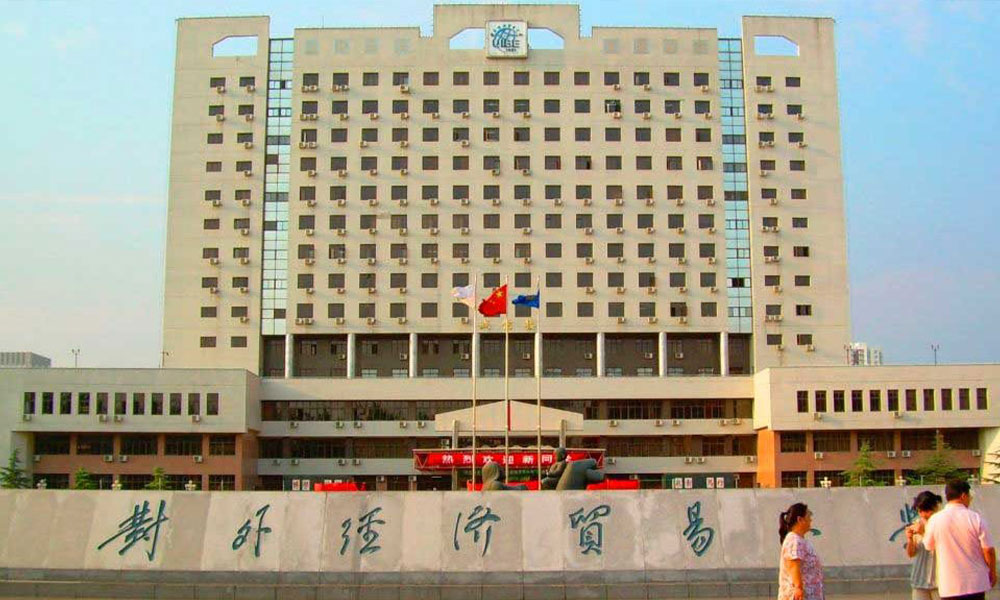
Located in the heart of Beijing, one of the most vibrant cities in the world, the University of International Business and Economics (UIBE), commonly known as Beijing University of International Trade and Economics, is a shining example for students who want to succeed in the globalized world of international business. Established in 1951, UIBE has grown into a top-notch university that focuses on economics, international trade, and business management.
With China’s emergence as a global economic power, UIBE is at the forefront of equipping students with the skills to succeed in the complex world of international markets, cross-border investments, and trade agreements. location in Beijing offers students unmatched opportunities to be a part of China’s political and economic centers, including multinational companies, embassies, and trade bodies.
In this article from Admission Institute, we will explore some of the most important aspects of UIBE education, such as Beijing University of International Trade and Economics tuition fees, UIBE majors that match international requirements, UIBE scholarships that can help alleviate expenses, living costs of study in Beijing universities, UIBE admission requirements, UIBE rankings that prove its prestige, and UIBE facilities that improve students’ university life. Compared to other business universities in Beijing, UIBE offers more specialized programs in international trade and has stronger partnerships with multinational corporations.
Beijing University of International Trade and Economics: Key Facts and Overview
The table below summarizes the key admission requirements, tuition fees, and living costs for international students applying to Beijing University of International Trade and Economics.
| category | details |
| Official Name | University of International Business and Economics (UIBE) |
| Common Name | Beijing University of International Trade and Economics |
| Location | Beijing, China |
| Established | Established |
| University Type | Public University |
| Specialization | International Business, Economics, Finance, Trade, Management |
| Global Ranking (QS World University Rankings) | 1201–1400 |
| Subject Ranking (Economics & Econometrics – QS) | Top 200 globally |
| Times Higher Education Ranking | 501–600 worldwide |
| Undergraduate Tuition Fees | 24,800 – 49,750 RMB per year |
| Master’s Tuition Fees | 29,800 – 115,000 RMB total |
| PhD Tuition Fees | About 29,800 RMB per year |
| Scholarships Available | Chinese Government Scholarship (CSC), Beijing Government Scholarship, UIBE Scholarships |
| Monthly Living Cost (Average) | 2,500 – 4,000 RMB |
| Language Requirements | IELTS 6.0+ / TOEFL 80+ / HSK 4 |
Last updated: 2/14/2026
Popular Majors
UIBE’s curriculum is designed to meet the demands of the global economy. It also emphasizes majors that are at the forefront of international trade and economics.
1. Business, Finance, and Economics
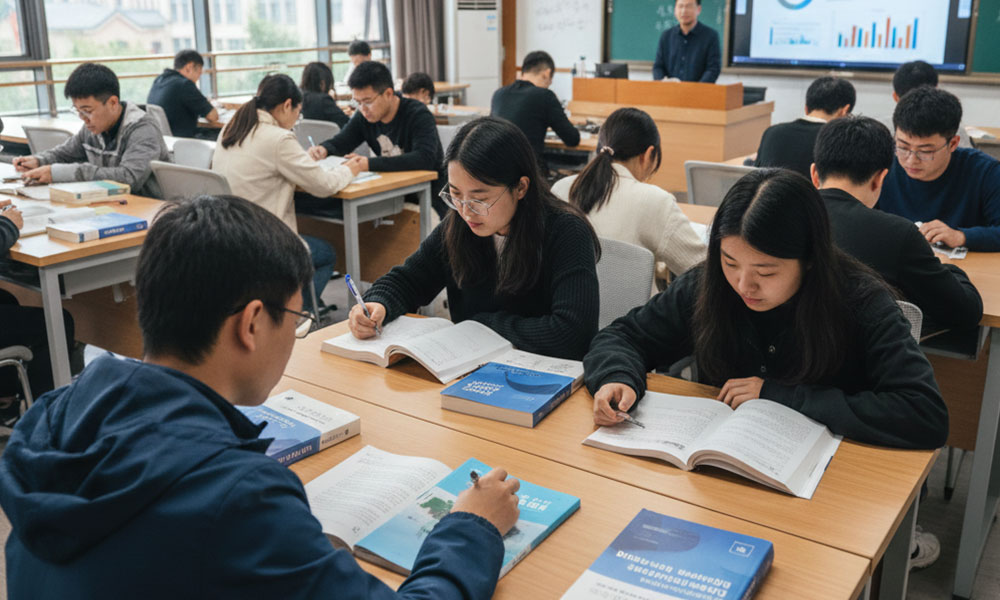
Among the most popular majors are international business, Finance, and economics. One of the most popular majors at UIBE is International Trade and Economics. It delves into subjects such as global supply chains, trade policies, and economic integration. Students are also taught about WTO regulations, bilateral trade agreements, and emerging markets, often through case studies of China’s Belt and Road Initiative. This major is for those who want to work for the World Bank or multinational companies.
Finance is another highly sought-after major, especially the English-language International Finance and Investment program. This major includes risk management, capital markets, and fintech developments, which mirror China’s increasing role in international Finance. Students who major in Finance can look forward to careers in banking, investment houses, or as financial analysts in Beijing’s bustling financial hub.
2. Business Administration, Marketing and Accounting
Business Administration, with concentrations in Marketing and Accounting, completes the list of most popular majors. These majors focus on management in international settings, with coursework in Asian consumer behavior and business ethics. Law majors, with a concentration in International Economic Law, are also very popular, as they can lead to careers in international trade litigation or corporate law.
3. Other Popular Majors
UIBE offers more than 50 majors for bachelor’s, master’s, and doctoral degrees, with many of them including internship and study abroad programs. For example, the MBA in International Business Management combines theoretical knowledge with practical projects in companies such as Alibaba or Huawei. This way, students are ready to enter the workforce as soon as they graduate, with many landing jobs at Fortune 500 companies.
Scholarships
However, the cost of pursuing higher education in a foreign country can be intimidating, but UIBE has a strong scholarship program in place to encourage international students.
1. The Chinese Government Scholarship
The Chinese Government Scholarship (CSC) is one of the most prestigious scholarships available, covering tuition, living expenses, a monthly allowance of about 3,000 RMB, and international medical insurance. The China Scholarship Council manages it and is applicable for undergraduate, master’s, and doctoral degrees. The requirements include good academic performance and application through the applicant’s country’s Chinese embassy by early April.
2. Beijing Government Scholarships
The Beijing Government Scholarships are another source of funding, offering partial or full tuition fee waivers for students pursuing degree or non-degree courses. These scholarships in China are suitable for students pursuing Chinese-taught courses, with awards of up to 40,000 RMB per year.
3. UIBE President’s Scholarship
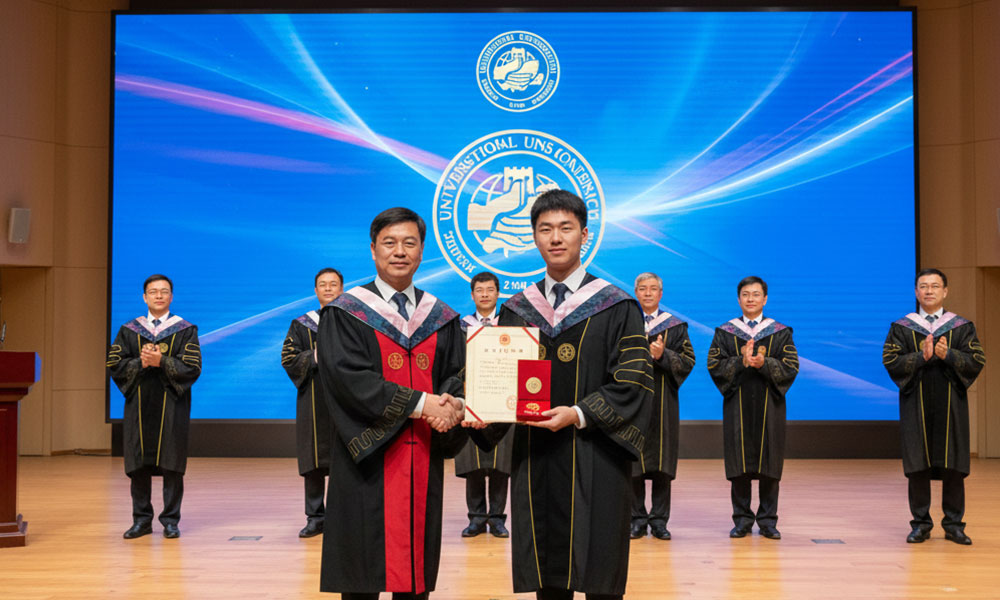
Scholarships exclusive to UIBE, such as the President’s Scholarship, offer awards for academic achievement and participation in campus activities. These scholarships can provide up to 50% tuition coverage and are renewable each year. There is also the Confucius Institute Scholarship, which assists students pursuing studies in the Chinese language and culture.
4. Other Scholarships
For those pursuing specialized degrees, there are scholarships such as the YES China Scholarship, which is open to Master’s students in international economic cooperation and provides full scholarships. Application procedures include submitting academic transcripts, letters of recommendation, and a plan to study in China. There are success stories to be found, as many students from Africa and Southeast Asia have used these scholarships as a springboard to careers in trade diplomacy or entrepreneurship.
Overall, these opportunities not only alleviate costs but also enhance resumes, signaling to employers a student’s merit and international outlook.
Cost of Living
Beijing, the capital of China, offers an exciting yet affordable experience for international students, especially compared to other global cities such as New York or London. Budgeting effectively is the key to having a great time without worrying about money.
1. dormitories
Housing is one of the biggest expenses. On-campus UIBE dormitories cost between 800 and 2,000 RMB per month and include basic facilities such as shared rooms and internet access. Off-campus apartments in neighboring districts, such as Chaoyang, cost between 2,000 and 4,500 RMB per month for a one-bedroom apartment, including utilities. Sharing with roommates can reduce this expense by half.
2. Food
Food is quite affordable. Eating at university canteens may cost 1,200-1,500 RMB per month, with dishes such as noodles or stir-fried meals costing 10-20 RMB each. Street vendors or local restaurants offer additional options without denting one’s wallet, while groceries for home-cooked meals cost around 600-800 RMB. Foreign cuisine, including Western fast food, may increase expenses to as much as 50 RMB per meal.
3. Transportation
Transportation is very efficient and affordable. The subway and buses in Beijing cost around 200 RMB per month with a transportation card. Cycling or using shared bicycles such as Mobike would be even cheaper. Then there are the utilities such as internet and electricity, which cost around 300-500 RMB.
4. Additional Expenses
Entertainment and miscellaneous spending, such as gym memberships, cinema, or weekend getaways, could amount to 500-1,000 RMB. Taking everything into account, a prudent student could live on 2,500-3,000 RMB per month, excluding tuition fees, while those who enjoy Beijing’s nightlife or travel could spend 4,000-6,000 RMB.
Tuition Fees
UIBE’s tuition is very competitive, given the quality of its education, which remains relatively affordable compared to Western universities.
For Chinese-language undergraduate programs such as Business Administration or Economics, tuition is 24,800 RMB per year. English-language programs like International Business cost 49,750 RMB per year, providing more flexibility for those who don’t speak Chinese.
The Master’ programs also have a similar pattern. Chinese-language MBAs cost 114,000 RMB per year, while English-language programs like International Business cost 115,000 RMB for two years. Specialized programs like Finance with a concentration in Actuarial Science cost around 109,880 RMB.
Doctoral courses, lasting four years, cost 29,800 RMB per year for most disciplines, such as International Trade or Law, with a slight rise for some specializations. Non-degree courses, such as language study, cost between 9,900 and 38,600 RMB per semester.
Beijing University of International Trade and Economics tuition fees cover the use of facilities such as libraries and laboratories. Still, additional fees for textbooks (500-1,000 RMB/year) and insurance (800 RMB/year) are also required. Tuition fees are usually paid per semester after an initial full-year payment. Scholarships can greatly offset these, making UIBE an excellent value for international education.
Admission Requirements
However, to be admitted to UIBE, careful preparation is required, with the university’s admission requirements focusing on academic and language abilities.
For undergraduate courses, admission requirements include a high school diploma or equivalent and a minimum GPA of 3.0.
For international students under 18, a notarized guardianship certificate is required. Language ability is also very important, with TOEFL (80+) or IELTS (6.0+) required for English-medium programs or HSK Level 4 for Chinese-medium programs.
For Master’s degree programs, applicants must have a bachelor’s degree in a relevant field, along with transcripts and recommendation letters. PhD applicants must have a master’s degree and a research proposal.
Applications are to be submitted online through UIBE’s website, with deadlines of June 30 for fall entry. A non-refundable application fee of 660 RMB is required. Successful applicants will be provided with a JW202 form for visa purposes. UIBE is a diverse institution, and personal statements about international experience can be beneficial.
Rankings
The excellent performance of UIBE in international rankings reinforces its position as a premier university for business and economics.
In the QS World University Rankings, UIBE is ranked 1201-1400 overall, with particular excellence in Economics & Econometrics (ranked 169th globally). Times Higher Education places it in the 501-600 range worldwide, leading in Business and Economics (251-300th).
US News & World Report ranks UIBE #693 worldwide and #97 in China, emphasizing its research productivity. EduRank ranks it 302nd in China, the best in International Trade (ranked 246th globally). Shanghai Ranking rates its Applied Economics program third in China.
These rankings demonstrate UIBE’s research excellence and alums achievements, which improve the employability of its graduates.
Student Facilities
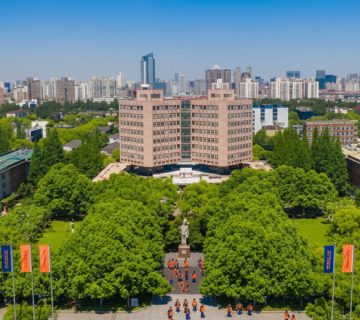
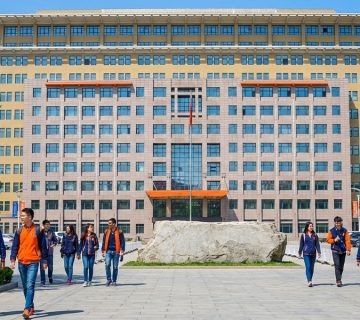
The UIBE campus has modern facilities that facilitate academic and personal development.
Housing options include Huibin, Huicai, and Huide Apartments, which have private bathrooms, Wi-Fi, and kitchen facilities, priced from 35 RMB/day. Sports lovers have access to an Olympic-sized swimming pool, gym, tennis courts, and football and basketball grounds.
The library contains a vast collection of resources on economics and trade, with online access. There are four cafeterias with varied food, as well as a clinic for medical requirements.
Conclusion
In summary, the University of International Business and Economics (UIBE), commonly known as Beijing University of International Trade and Economics, remains one of the top choices for individuals eager to succeed in the global economy. With its unique emphasis on international trade, Finance, and business, as well as its high-quality English-taught courses, attractive scholarships such as the Chinese Government Scholarship, and affordable Beijing University of International Trade and Economics tuition fees provides access to exceptional education in China’s vibrant capital.
Contemporary student amenities, an affordable cost of living in China, and a multicultural campus community add to the experience. For motivated students seeking skills, insights, and advantages in global business, UIBE provides more than an education—it provides a springboard to China’s significant presence on the global stage and beyond. As global trade continues to evolve, UIBE remains at the forefront of developing leaders who will help shape this future. Our admission experts can help you apply successfully to UIBE. Contact us for a free consultation.
1. What are the main Beijing University of International Trade and Economics admission requirements for international students?
Admission requirements vary by program level, but generally include a high school diploma (for bachelor’s) or relevant prior degree (for Master’s/PhD), good academic performance (often a minimum GPA of 3.0 or equivalent), and language proficiency. For English-taught programs, a valid TOEFL (minimum 86) or IELTS (6.0+) score is required; for Chinese-taught programs, HSK Level 4–5 or higher is typically required. Additional documents include transcripts, recommendation letters (for graduate levels), a personal statement, a passport copy, a health certificate, and, sometimes, a study plan or an interview. Applications are submitted online via UIBE’s portal, with deadlines often around June 30 for fall intake. Under-18 applicants may need a guardianship certificate.
2. What scholarships are available at UIBE, and how competitive are they?
UIBE offers several scholarships to support international students, including the prestigious Chinese Government Scholarship (CSC) – High Level Postgraduate Program (fully funded, covering tuition, accommodation, monthly stipend of ~3,000 RMB, and insurance; deadlines often early 2026 for 2026/2027 entry), Beijing Government Scholarships (partial or full tuition waivers), UIBE President’s/University Scholarships (up to 50% tuition coverage, renewable based on performance), and specialized ones like the Silk Road or YES-MIEC programs for fields such as international economic cooperation. These are competitive and prioritize strong academics, language skills, and a compelling application (e.g., a study plan and recommendations). Many are awarded annually or semi-annually to outstanding students.
3. How much are the Beijing University of International Trade and Economics tuition fees, and what is the approximate cost of living in Beijing?
Tuition fees depend on the program and language of instruction. For undergraduates, Chinese-taught programs cost about 24,800 RMB per year, while English-taught programs cost about 49,750 RMB per year. Master’s programs range from 29,800–40,000 RMB/year (Chinese-taught) to 99,160–128,640 RMB total over two years (English-taught, e.g., International Business or MBA). Doctoral programs are typically 29,800–33,000 RMB per year. Living costs in Beijing for students are affordable: on-campus dorms range from 800–2,000 RMB/month, food (cafeteria/street eats) about 1,200–1,500 RMB/month, transportation ~200 RMB/month, and total monthly expenses often 2,500–4,000 RMB (excluding tuition), making it manageable with scholarships or part-time options.

No comment