
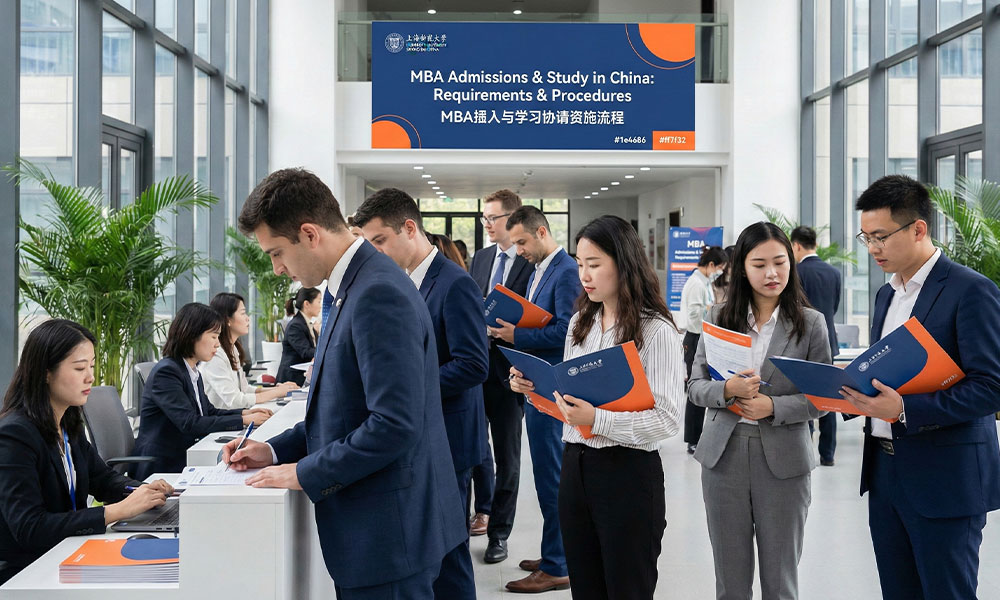
Studying MBA in China is a great opportunity to grow in one of the world’s fastest-growing economies. China is not just a manufacturer of goods today; it is shaping the future of technology, sustainability, and consumer markets on a scale that no other country can match. MBA opportunities in China provide international students with real-world experience in supply chains, digital innovation, and cross-cultural leadership.
A strong alum network, access to leading companies, and experience living in cities such as Shanghai and Beijing enhance students’ leadership skills, cultural adaptability, and strategic thinking. Join us in this article from Admission Institute’s series as we explore the best universities in China for an MBA.
Why is Studying MBA in China a smart choice?
A growing economy and unique opportunities to connect with the world’s largest manufacturers make studying in China a smart choice. Studying here will give you first-hand insight into the latest technological developments, the advancement of electric vehicles, or the global expansion strategies of large, reputable companies. MBA programs in China are offered in English and combine structured academic education with cultural learning and hands-on experience.
In addition, students are allowed to learn Mandarin to manage everyday situations and gain employment opportunities in multinational companies. Many MBA programs are offered by joint faculty from INSEAD, MIT, or European partners, allowing students to broaden their global perspectives.
Networking in China is extensive, and graduates often find roles in multinational companies operating in China or in Chinese companies expanding internationally. The affordable cost of tuition and living allows students to graduate without significant financial worries.

What are the admission requirements for an MBA in China?
Meeting the admission requirements for an MBA in China to gain admission to the country’s top universities involves academic, language, and administrative requirements. To Studying MBA in China, students need a bachelor’s degree from an accredited university (in a business or STEM field ). Having at least 2-3 years of full-time work experience after graduation can increase applicants’ chances of gaining admission.
A GMAT score (minimum 550-650 ) or equivalent is required for admission. Some universities conduct their own unique entrance exams. English language proficiency is another important requirement for studying an MBA in China. Students must have scores from recognized exams such as IELTS ( 6.5 ) or TOEFL (90).
Good physical and mental health and no criminal record are required to obtain a Chinese student visa. There is no strict age limit for admission, but based on the records of admitted students, most applicants are between 26 and 35 years old. Universities look for clear career goals, leadership experience, and a genuine interest in the Chinese market.
Required documents to apply for an MBA in China
The documents required to apply for an MBA in China vary depending on factors such as the type of university. Preparing documents early will prevent last-minute errors. Official sites such as CUCAS and university websites usually request the same original documents from students. The documents required to study an MBA in China include the following:
- Scanned copy of passport (valid for at least 6 months)
- Passport photo (new, white background)
- Official certificate of a bachelor’s degree
- Full transcripts
- resume or CV (maximum 2 pages)
- 2 or 3 letters of recommendation
- Motivation letter
- Official GMAT or GRE score report
- English language test results ( IELTS/TOEFL )
- Completed online application form with application fee (usually 600-1,000 RMB or $150)
- Proof of financial resources in some cases
- Standard medical examination form
Please note that some universities may request additional documents to ensure their eligibility. Always check the university website for detailed information on the documents required.
Best Universities in China for MBA
When people search for the best universities in China for an MBA, a few names always come out on top based on their reputation with global employers, research output, and alums success. Here are the best universities for studying MBA in China.
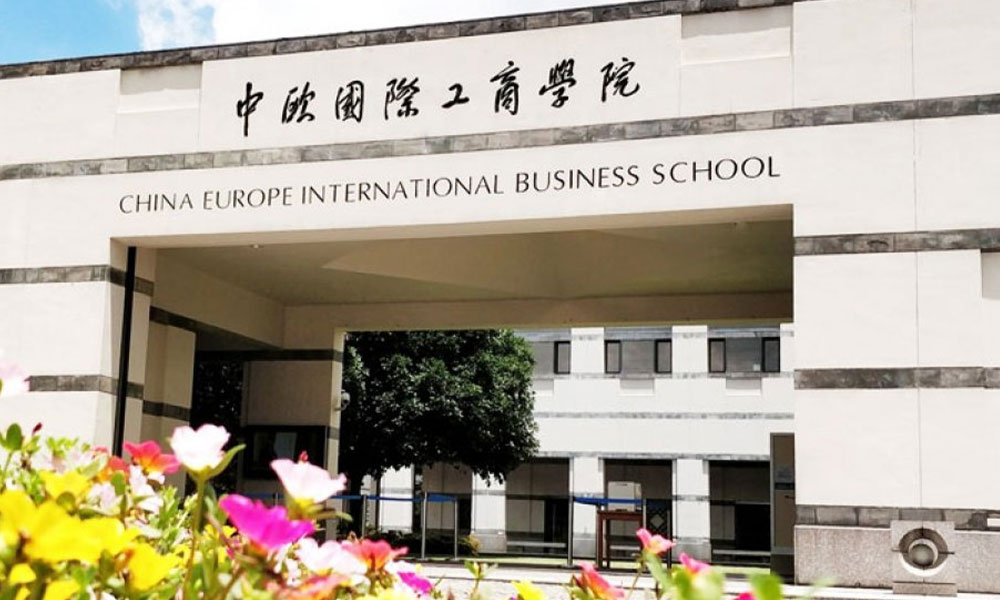
1. China-Europe International Business School ( CEIBS )
CEIBS is consistently ranked among the top MBA universities in China, ranked 12th in the world and 1st in Asia in the Financial Times rankings. It topped Asia for the 10th consecutive year in 2026. Its full-time MBA program typically lasts 16 months and is taught in English. Located in Shanghai, the university emphasizes depth of knowledge of Chinese alongside a global perspective.
need at least 2 years of relevant work experience, a good GRE/GMAT score, success in the CEIBS exam, and proficiency in English to be accepted to this university. CEIBS was founded in 1994 by the Chinese government and the European Union in partnership with Shanghai Jiaotong University, and has a special focus on global leadership, innovation, and entrepreneurship.
For students who are accepted to the program, it offers not only strong academic knowledge but also hands-on experience in the Chinese market. One of our students, accepted to CEIBS in 2024 with a GMAT of 630 and 4 years of IT work experience, received a 40% scholarship. He reported that the application process took about 5 months, and the interview focused on his ability to analyze the Chinese market.
2. Education MBAIn China: Tsinghua University
The MBA program at Tsinghua University, China, which is often offered in partnership with MIT, is among the most prestigious in China and Asia. The 21-month full-time program is offered in Beijing and focuses on building deep roots in China while benefiting from MIT’s global guidance. In the QS Global MBA Rankings 2025, Tsinghua University is ranked 29th in the world and No. 1 in China.
The program has been offered at the university since 1991 and is considered the most influential MBA in China. By studying at this university, students gain access to Beijing’s startup ecosystem, policymakers, and large technology companies. Beijing’s location allows students to connect with the center of China’s policy and innovation. Tsinghua University graduates often join leading Chinese or global companies.
3. Peking University, Guanghua School of Management
Guanghua School of Management is ranked 25th globally in the Financial Times 2025 rankings and is recognized as one of the best universities to study an MBA in China. The 22-month full-time program is offered in English. The MBA program at Peking University in China emphasizes a combination of rigorous case studies and real-world access to the political and economic heart of China.
Guanghua is recognized as one of China’s top management schools, offering strong tracks in finance, strategy, and public management. The Beijing location allows graduates to connect with policymakers, government agencies, and large corporations, making them ideal for roles related to China’s economic or financial policy. The program focuses on cultivating leaders who can operate in the complex environment of China and the world.

4. The best universities in China for MBA: Fudan University, School of Management
Fudan University Shanghai School of Management is regularly ranked among the top 30-35 global universities in the Financial Times rankings, and its MBA programs, especially the International MBA in collaboration with MIT, are highly regarded. The two-year, full-time MBA program is taught entirely in English and aims to cultivate professionals with an international outlook and an entrepreneurial spirit, attuned to the global needs of the Chinese and global economies.
After completing the coursework and thesis, applicants receive an MBA degree from Fudan University and a certificate from MIT. Graduates of an MBA program at Fudan University in China benefit from a wide network and often work in roles related to Asia-Europe trade or multinational corporations. The school offers one of the oldest and most influential MBA programs in China.
5. Other universities I see
Other top universities in China for an MBA include Shanghai Jiaotong University, Athenaeum College of Economics and Management, and Tongji University, School of Economics and Management. Both offer high-quality, industry-relevant programs.
The MBA program focuses on the direct application of knowledge to industry. Tongji University is also known for its engineering and sustainable management programs. These universities are a great option for students seeking an affordable, practical MBA in China.
To make your final choice, consider the university’s location, program specialization, and alums network. All of these universities offer comprehensive MBA programs for international students and provide excellent opportunities for professional growth.
What is the cost to study an MBA in China?
The cost of studying MBA in China is one of the most important factors students should consider before applying for admission. One reason China stands out among its Western competitors is its affordable tuition and living costs. Full tuition fees for MBA programs taught in English range from RMB 188,000 to RMB 488,000. The cost of studying an MBA in China at some of the best higher education institutions is as follows:
- Guanghonghua College: RMB 188,000
- Tsinghua University: 198,000 RMB
- CEIBS University: RMB 488,000
Monthly living expenses in Beijing or Shanghai typically range from RMB 4,500 to RMB 8,000 ($620 to $1,100), including university accommodation, food, and local transportation. The cost of living in smaller cities is 20 to 30 percent lower. Health insurance and visa fees also cost around RMB 800-1,500.
According to recent academic migration records, students report that the total cost of an MBA in China ranges from $40,000 to $85,000. Part-time internships during your studies can help offset some of the costs.
MBA Scholarship in China: Conditions and Types of Funds
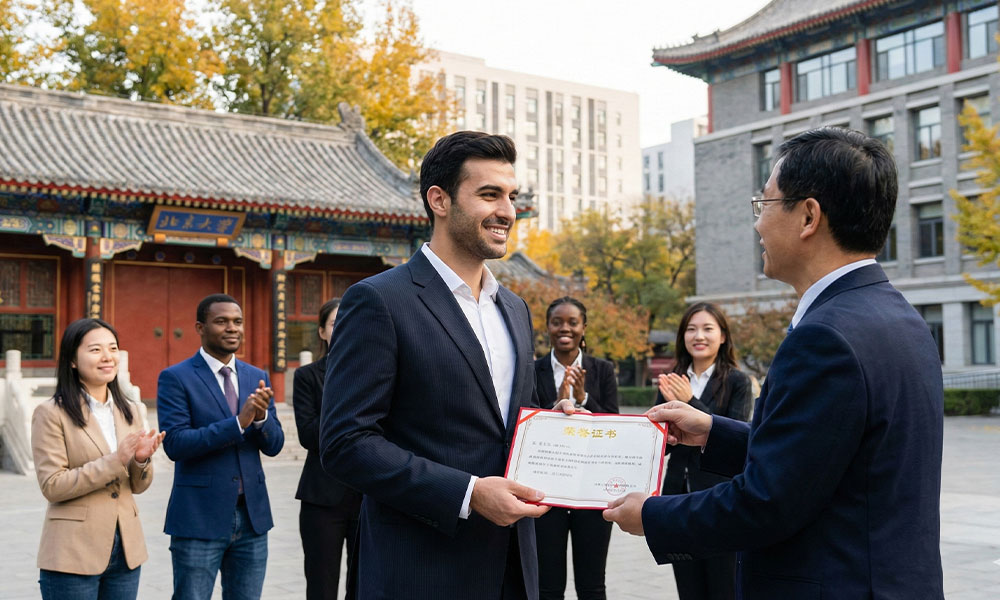
Studying for an MBA at a Chinese university is supported by generous scholarships and financial aid. These scholarships can cover all or part of the student’s tuition and living expenses. One of the main MBA scholarship options is the Chinese Government Scholarship (CSC), which is administered by Campus China. This scholarship usually provides students with tuition fees, free on-campus accommodation, a monthly stipend (around RMB 3,000 ), and comprehensive medical insurance.
Key requirements for this scholarship include being under 35, having a strong academic record, and having a clear study plan. In addition to this scholarship, Chinese universities offer many scholarships and grants to students based on academic merit. These scholarships include:
- CEIBS and Guangzhou University offer tuition waivers of 20-100 percent based on academic merit and professional achievements.
- Need-based grants and assistantships (teaching or research)
- Provincial scholarships from the Beijing or Shanghai governments
- Corporate scholarships sponsored by companies like Tencent or banks
Steps to Apply for an MBA in China (Step by Step)
Below, we will examine the steps to apply for an MBA in China step by step:
1. Evaluation and Research (9-12 months before starting): Before starting, visit CACUS and the websites of various universities. Consider 3-5 programs that align with your career and long-term goals.
Plan to take the TOEFL or IELTS English language test, as well as entrance exams such as the MRE/GMAT. Focus on high scores to get a scholarshipto study in China and increase your chances of admission.
3. Gather documents (4-6 months in advance): Have your educational and identification documents officially translated and certified. Prepare draft letters of recommendation, motivation letter, resume, etc.
Apply through the University of Mornazar or the CUCAS website. Pay the application fee and carefully follow up on the submission of documents.
5. Participate in an interview: Some universities usually conduct a 30-45-minute online or in-person interview to assess students’ abilities and knowledge.
6. Reception and acceptance: Universities usually notify applicants of the admission results via email after 4 to 8 weeks of reviewing the documents.
7. Scholarship Application and Visa Documents: Complete CSC forms for the Chinese Student Scholarship. Get an Admission Letter and JW201/JW202 Form.
8. Obtain a student visa: Apply for a student visa through the Chinese embassy by submitting your university acceptance letter and other required documents. The visa processing takes 4 to 6 weeks.
9. Preparation before traveling to China: Don’t forget student housing, buying insurance, and learning Mandarin.
10. Entry and registration: After entering China, apply for a residence permit and undergo medical examinations within 30 days.
What is the job market and career prospects like after an MBA in China?
According to recent reports, the employment rate at top MBA universities in China is 90-98% within 3 months of graduation. Starting salaries for MBA graduates in China range from 250,000 to 450,000 per year ($35,000 to $63,000). CEIBS and Tsinghua graduates often report earnings of over 600,000 in roles such as consulting, finance, and technology. Popular career paths for MBAs in China include:
- Multinational companies (Unilever, McKinsey, Goldman Sachs, etc.)
- Growing companies (Alibaba, Xiaomi, CATL )
- Entrepreneurship in Fintech, Green Technology, or Consumer Goods
- Roles in Belt and Road Initiative projects across Asia and Africa

Comparing China’s MBA with Europe and Canada
MBA studies depend on the students’ priorities. In the table below, we provide you with a clear comparison based on official reports in 2025-2026:
| Aspect | China | Europe (such as INSEAD , LBS , HEC ) | Canada (such as Rotman, Ivey ) |
| Duration of study | 16 to 24 months | 10 to 21 months | 12 to 24 months |
| Average total tuition | $26,000 to $68,000 | $60,000 to $140,000 | $45,000 to $90,000 |
| Annual cost of living | $7,500 to $13,000 | $18,000 to $30,000 | $15,000 to $25,000 |
| Post-graduation job options | Employer-sponsored Z visa (extendable) | 1 to 2 years depending on the country | PGWP up to 2 years |
| Language | Mainly in English | English or local (some bilingual) | English (some options French) |
| Global ranking power | Strong Asian leaders | Top 10 universities in international rankings | Strong mid-range global presence |
| Career focus | Immersion in the Chinese market, Asia | European and global networks | North America + Technology/Innovation |
| Migration route | The path from a work visa to possible long-term residency | Varies depending on country | After PR, a clear path depending on work experience |
| The best option in terms of | Value, speed, learning, expertise in Asia | Credit, shorter programs | Work experience + permanent residence |
Last updated: February 2026
Studying MBA in China stands out for its affordability and practical market access. Europe offers a shorter study period and a recognized EU degree, and Canada is a good option for long-term placement in North America.
Conclusion
Studying MBA in China is more than just a degree. The best universities in China for MBAs offer students a practical understanding of one of the world’s most dynamic economies, international networking, and the confidence that comes from navigating a complex business environment. In a country that drives the world’s second-largest economy and is a leader in areas such as artificial intelligence, green energy, e-commerce, and global supply chains, MBA graduates can stand out in the global marketplace.
Programs offered in English offer world-class education at a cost-effective price compared to Europe and the US. In this article, we aim to provide a comprehensive guide to the requirements for an MBA in China. If you are looking for a path that is both affordable, challenging, and future-proof, get in touch with our consultants to help you find the best path. For more information and expert advice, contact us.
Do we need Chinese language skills to study an MBA in China?
MBA programs at prestigious universities in the country are taught in English. However, learning basic Mandarin skills will help with everyday interactions and career opportunities, but it is not required.
2. What are the chances of success for MBA scholarships in China, and what conditions do they require?
Scholarships such as the CSC Scholarship or University Scholarships (20-100% tuition fee) are highly competitive. The main requirements include a high GPA, a strong GRE/GMAT score, relevant work experience, and a compelling motivation letter.
3. After graduating from an MBA in China, can I work in China?
Yes, the employment rate at top universities is 90-98% within three months of graduation. Graduates often work in multinational companies, Chinese companies, or Belt and Road projects. The Z (Employer Sponsored) work visa is renewable.


No comment