
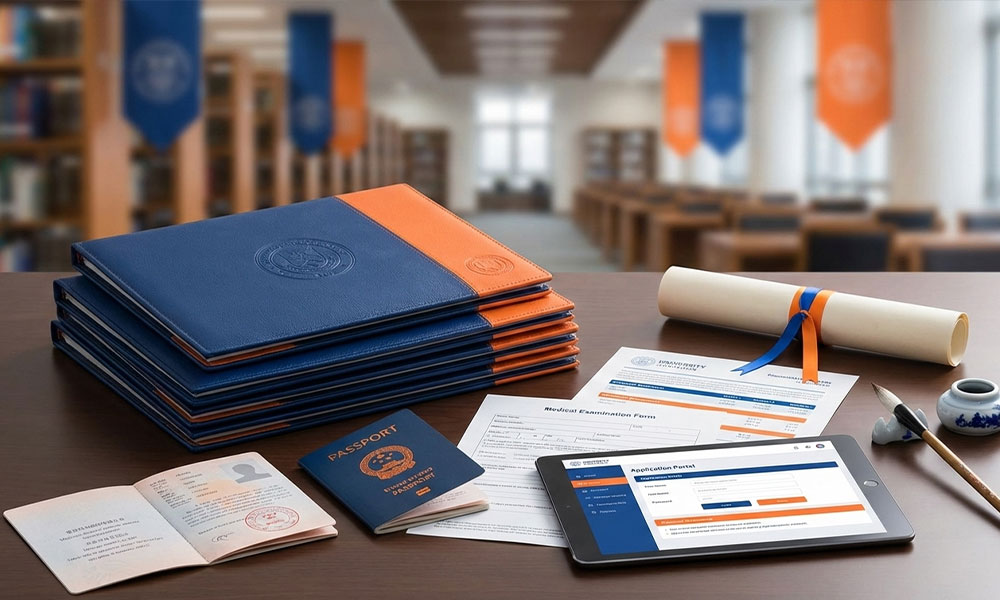
Based on our experience reviewing over 3,000 applications, the most common rejection reason is missing notarized transcripts or incorrect medical forms. Documents Required for Admission to Study in China, including academic transcripts, language certificates, medical forms, and identification records. Missing or incorrectly prepared documents can delay admission or lead to rejection. However, the key to getting admitted into a Chinese university is not just about having a high GPA or writing a good motivation letter.
It is all about having the right documents ready. This guide from Admission Institute outlines the official document requirements used by Chinese universities and scholarship programs such as the China Scholarship Council (CSC), based on current admission policies and university application portals.
General Documents Required for Admission to Chinese Universities
Most Chinese universities follow a standard set of requirements of study in China, although there can be slight variations. The trick is to get everything done early, scan documents clearly, and ensure proper translation and notarization.
Here are the requirements that are almost always necessary:

1. Valid Passport
A clear scan of the photo page. It needs to be valid for at least 12-18 months after your intended arrival. If your passport renewal is due shortly, make sure to indicate this on the application, as the new one needs to be included with your application for the visa.
Passport-Sized Photos: Recent photographs in both digital and sometimes physical formats, usually 2 inches with a white background.
2. Academic Transcripts and Certificates
The highest academic qualification for a bachelor’s program is a high school diploma, for a master’s program it’s a bachelor’s degree, and so on. These academic documents should be notarized and translated into English or Chinese if they’re not already in these languages. The prospective graduate can also provide a letter from their current school confirming their expected graduation date.
Personal Statement or Study Plan: his document explains your academic goals, reasons for choosing the program, and how the degree aligns with your future plans.For graduate programs, a research proposal is also expected.
3. Recommendation Letters
Usually two, and they should be from teachers, professors, or employers.
Language Proficiency Proof: This is covered in detail below.
4. Foreigner Physical Examination Form
A comprehensive medical report including blood tests, chest X-ray, and general well-being. You can download the official form from the university or CSC websites.
Non-Criminal Record Certificate: This is a police clearance from your home country, usually notarized.
5. Documents Required for Admission to Study in China :Financial Proof
A bank statement or guarantor letter to show that you (or your sponsor) have the means to pay your fees and living expenses, which should be a minimum of $5,000 to $7,000 USD.
Recommendation letters, a study plan, and sometimes a research proposal are also included in master’s and PhD applications. Always upload high-quality scans of documents in under 2MB each through the university’s online portal. Tools like China Admissions also provide free document check services. These can help catch small mistakes before they are submitted.
| Document | Required | Notarization |
| Passport | Yes | No |
| Transcript | Yes | Yes |
| Medical form | Yes | No |
Last update 2/15/2026
Age Requirements for Studying in China
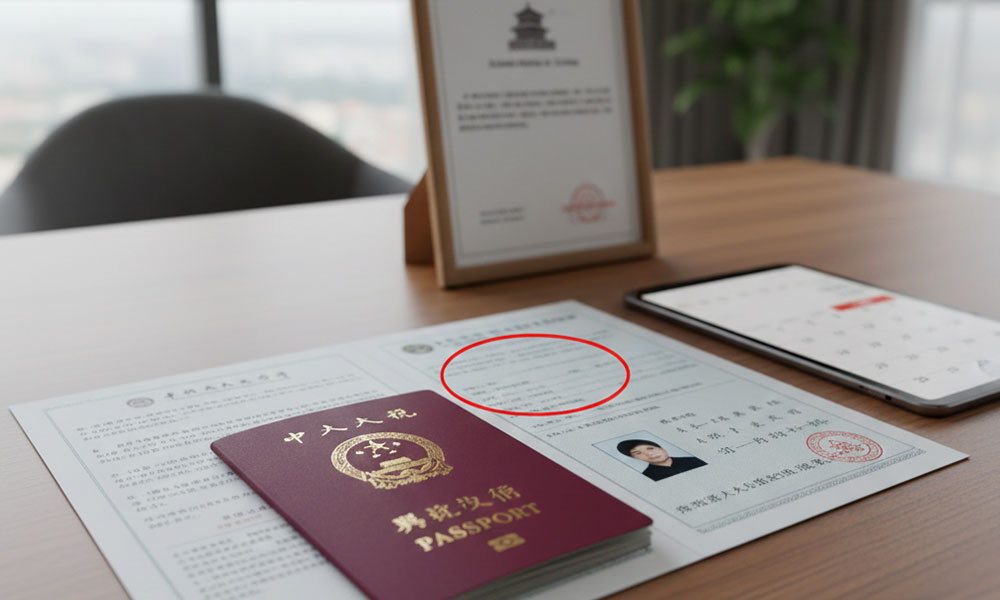
There are age requirements to ensure that students are mature enough to cope with independent life in a foreign country, and also to match the educational system of China. For studying in China, most universities require students to be at least 18 years old as of September 1, which is the beginning of the academic year.
For undergraduate courses, the age range is between 18 and 25 or 30 years old, depending on the course. For medicine and arts, the maximum age is 30 years, as the course duration is longer. For postgraduate courses, including master’s and PhD, the maximum age is 35 years, and for PhD, the maximum age is 40 years.
Students under 18 can sometimes apply to language programs or specific types of bachelor’s programs, but they need to provide a guardian in China, which is usually done through a letter from the parents to a responsible person in China. These requirements can vary depending on the Ministry of Education guidelines.
For example, at Tsinghua University, the requirements state that the student needs to be 18 or older, but if they are under 18, they need to provide extra documentation during the registration period. However, it is recommended that you check the specific requirements of each university, as they may vary for CSC scholarship holders.
If you are slightly above the age limit, do not lose all hope. Some universities may accept mature students on a case-by-case basis, especially if you are applying for a master’s program or have relevant work experience. The most important thing is to emphasize your readiness in your essay.
Is IELTS Required to Study in China?
The short answer: it depends on the language of instruction. For English-taught programs, which have become the norm in top Chinese universities such as Tsinghua university China, Peking University, and Fudan, the answer is: yes, you would be required to demonstrate your English proficiency. In most cases, the required IELTS level would be 5.5 to 6.5, while the required TOEFL and Duolingo English Test scores would be 80 to 95.
However, there are some exceptions. For instance, students who speak their native language (English-speaking countries such as the UK, the US, Canada, Australia, etc.) would not be required to demonstrate their English proficiency. Students who completed their previous level of education in English would be required to present an official letter issued by the relevant institution instead of taking the IELTS test, provided they completed their studies in English for two or more years.
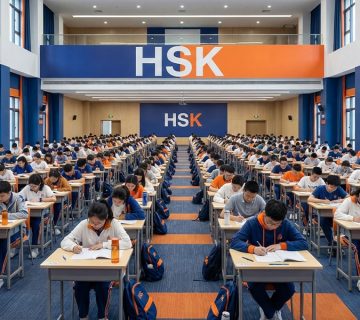
For Chinese-taught programs, the IELTS test is not required. In this case, students would be required to present their HSK certificate.
Most universities prefer standardized language test scores such as IELTS, TOEFL, or HSK to verify language proficiency during the admission process.
Language Certificate for Studying in China
One of the most important parts of your application is language requirements because it is a matter of whether or not you can actually succeed in the class.
- For Chinese-taught programs, the Hanyu Shuiping Kaoshi (HSK) is the “gold standard.” The traditional HSK test consists of six levels. The requirements for the HSK test for Chinese-taught programs are:
- Undergraduate programs: HSK Level 4 (180-210 points) for science/engineering programs; HSK Level 5 for humanities, business, or medicine programs
- Master’s and PhD: HSK Level 5 or 6, often with higher sub-scores in reading and writing.
The new HSK 3.0, rolled out gradually from 2022, now consists of nine levels with greater focus on practical competence, although the traditional 1-6 scale is still commonly used in references to the 2026 admissions cycle—be sure to verify the program requirements, as top institutions such as Peking University require HSK 6 for certain programs.
For English-taught programs, as mentioned earlier, IELTS/TOEFL/Duolingo applies.
Some universities offer a one-year Chinese language preparatory course if your HSK level is slightly lower than the required level. Passing the HSK exam not only gets you a seat in the university but also opens more opportunities for you to secure more scholarships in China and part-time job opportunities later on.
You can take the HSK exam at a local testing center in your country or take it online if available in your country. The results are valid for two years.
Documents Required for Medical Admission in China
China is a leading destination for MBBS (Bachelor of Medicine, Bachelor of Surgery) courses due to the English medium of instruction, modern facilities, and affordable fees compared to Western countries.
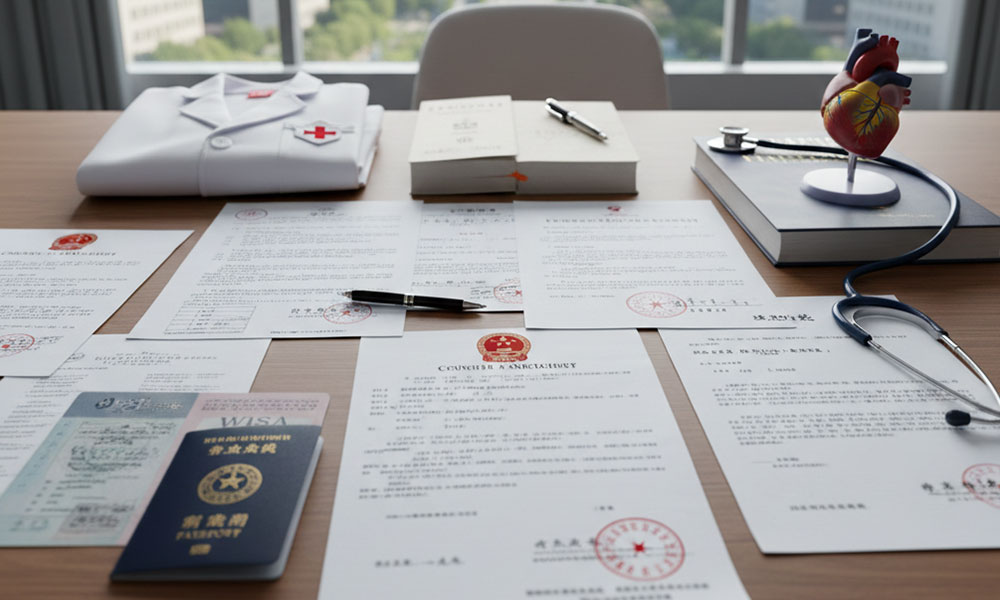
Similar requirements apply for admission to China as for general admissions, but more importance is placed on the student’s background in the sciences:
- Transcripts from high school showing high marks (60% or higher) in Biology, Chemistry, and Physics.
- Passport, Photos, Notarized Certificates.
- Physical examination form (particularly important for medical programs, which may involve HIV and Hepatitis tests).
- Non-criminal record.
- Sometimes a personal statement that focuses on why the student is interested in pursuing a medical degree.
- Sometimes proof of proficiency in English (IELTS 6.0 or higher for English-taught MBBS programs).
Top-tier institutions (such as Capital Medical University and Shandong University) require potential applicants to complete an online interview and/or sit an entrance exam.
If they are applying from outside China, Indian students generally need NEET scores (as per Indian government regulations, not because of Chinese rules) if they wish their medical qualifications to be recognized on returning home after training in China. Training lasts between 5 and 6 years (including the intern period), and students must meet specific mental and physical requirements at the outset Admission decisions are based on academic performance, required documents, and university-specific selection criteria.
Chinese government-sponsored scholarships (CSC) represent the most significant opportunity for many individuals as the award pays an individual’s full tuition, provides a place to stay, gives them a monthly stipend (2,500 – 3,500 RMB depending on the program) plus offers extensive medical coverage.
There are two different ways to apply:
- Type A = Through the Chinese embassy in your home country (more competitive).
- Type B = Directly to the university.
Numerous documents are required for the application process than in the case of typical admissions. Here are some of the documents that need to be submitted:
- An online application to the Canadian Scholarship Council (CSC)
- Your notarially executed diplomas/transcripts
- Two recommendation letters
- An exhaustive study plan (800 to 1000 words for graduate students)
- A language certificate (HSK or IELTS)
- A Foreign Physical Examination Form
- A copy of your passport
- An acceptance letter from your prospective supervisor (this is strongly recommended for PhD candidates)
There are also age limits on these types of applications: 25 years old and under for a bachelor’s; 35 years old and under for a master’s; 40 years old and under for a doctoral program. The application period is usually October through December for a September intake in the following year, and the timeframes will vary by consulate (February through March in many cases).
Cost of Study in China
Affordability is one of China’s greatest strengths. Cost of study in China for international students is much less compared to the U.S., UK, or Australia.
- Undergraduate programs: 20,000 to 45,000 RMB ($2,800 to $6,300 USD) annually.
- MBBS/Medical: 30,000 to 75,000 RMB ($4,200 to $10,500).
- Master’s: 25,000 to 65,000 RMB.
- PhD: 30,000 to 55,000 RMB.
- Chinese language programs: 10,000 to 20,000 RMB.
Living costs can also vary depending on the city. In Beijing or Shanghai expect to pay between 4,000 and 6,000 RMB ($560 to $840) per month including accommodation, food, travel, and utilities. In the smaller cities of Xi’an or Dalian you can expect to pay between 2,500 and 4,000 RMB. Chinese food is cheap and also very tasty; you can get some great street food for between 15 and 30 RMB.
When you factor in all costs staying in China for a year would realistically require an overall yearly budget of between 50,000 and 120,000 RMB ($7,000-$17,000), depending on what type of scholarship support you have. For many students in China, with the support of a CSC scholarship, they are paying very little out of their own pocket.
Ways to save money
Ways to save include living in university residences, eating foods that are prepared locally, relying on mass transportation such as buses and subways, and benefiting from student discount programs. If you are a new international student who has completed their first year of studies, you are eligible to work part-time, which is up to 8 hours per week, but you must get permission from the university first.
As you look for information regarding your specific program and your intake year, it is always a good idea to go directly to the university or CSC website to check for the latest changes, because policies may change. Document requirements remain largely consistent for 2026 admissions, although applicants should confirm specific requirements with their chosen university. The number of online applications is increasing; there are many degree programs now being offered in English; there are generous scholarships available (most of which are offered by CSC), including an assessment for bachelor students offered by the CSC, and the easiest way to travel to China is by applying through the new online application systems.
Conclusion
Success at elite universities begins with carefully collecting key papers; multiple records: A valid passport, notary’d academic record, proof of language ability, health clearence forms, and a strong written personal narrative all together demonstrate your success. The opportunities available for international students attending institutions outside of their home country are extensive and go beyond simply graduating from the institution’s program; the opportunity to immerse yourself in the local culture, develop connections on a global scale and live at an affordable cost.
If you are planning to study abroad in another country like China, you should begin your application and planning process early, check all the details related to them using official university portal web pages or Campus China, or other forms relating to your chosen school, and pursue the whole process with earnestness to achieve your goals. To apply successfully to a Chinese university, applicants must prepare all required documents, including academic transcripts, language certificates, medical forms, and identification records. Contact us to make sure you prepare right documents.
FAQS:
1. What are the most common documents needed for admission to Chinese universities, and do they change for 2026 intakes?
The core documents remain consistent: a valid passport (valid beyond January 2027 for many programs), recent passport-sized photos, notarized highest academic transcripts and certificates (with English/Chinese translations), a personal statement or study plan, two recommendation letters (for graduate levels), proof of language proficiency (HSK for Chinese-taught or IELTS/TOEFL for English-taught), Foreigner Physical Examination Form, non-criminal record certificate, and financial proof. For 2026, most universities emphasize clear online uploads (no hard copies needed in many cases), and bachelor’s applicants for CSC scholarships must now include a valid China Scholastic Competency Assessment (CSCA) score. Always check the specific university portal, as requirements are largely stable but deadlines and minor formats evolve.
2. Is IELTS always required to study in China, and what about age limits for different programs?
No, IELTS (typically 5.5–6.5 overall) or equivalent (TOEFL 80+) is only required for English-taught programs if English is not your native language or prior education wasn’t in English—waivers are common with proof of English-medium study. For Chinese-taught programs, HSK Level 4–6 is needed instead. Age requirements generally start at 18 (with guardian provisions for under-18s in some cases). Undergraduates are usually capped at 25–30, master’s at 35, and PhD at 40, though top universities like Tsinghua or Peking may be stricter for scholarships. Mature applicants with experience can sometimes get exceptions—highlight this in your personal statement.
3. How much does it really cost to study in China without a scholarship, and how does the CSC scholarship help?
Tuition for international students in 2026 ranges from ¥20,000–45,000 ($2,800–$6,300) per year for most undergraduate programs, ¥30,000–75,000 for MBBS/medicine, and similar for graduate levels—far lower than Western countries. Living costs vary: ¥2,500–6,000 ($350–$840) monthly in smaller vs. major cities (covering dorms, food, transport). Total annual budget without aid: ¥50,000–120,000 ($7,000–$17,000). The Chinese Government Scholarship (CSC) often covers full tuition, accommodation, a monthly stipend (¥2,500–3,500), and insurance—making study essentially free for winners. New for 2026 bachelor’s CSC applicants: include CSCA results. Apply early via embassy (Type A) or university (Type B) for best chances.



No comment