
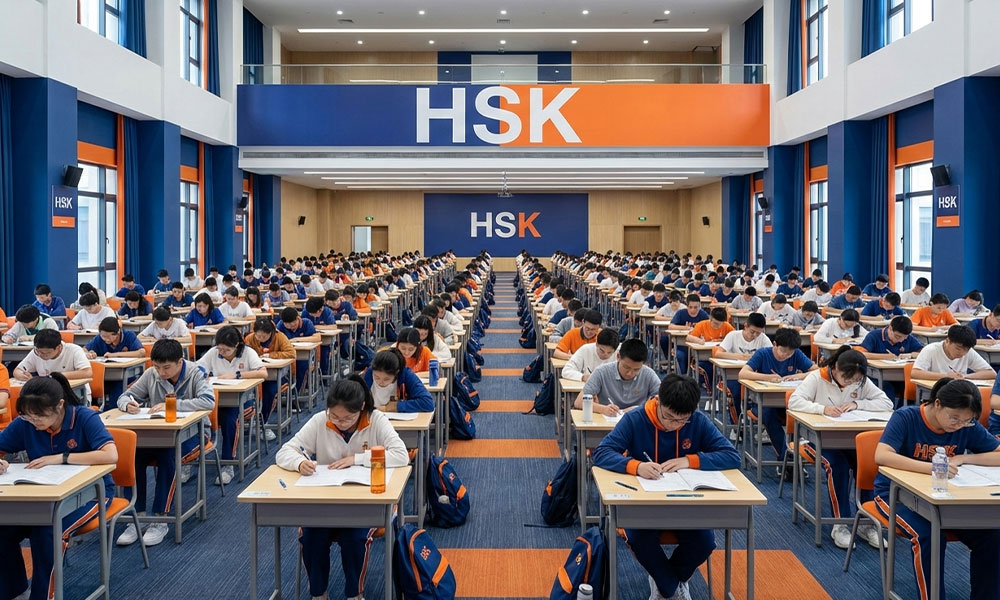
Taking the HSK exam for studying in China is recognized as the most important benchmark for assessing Mandarin language proficiency. In recent years, studying in China has become one of the most serious and attractive options for international students. The rapid academic advancement of Chinese universities, their strong presence in reputable global rankings, relatively affordable tuition fees, and the availability of diverse scholarship programs are among the key advantages of pursuing higher education in this country.
Admission to Chinese universities—particularly in programs taught in Chinese—is not possible without submitting a valid HSK Chinese language certificate. Obtaining this credential is not only a primary requirement for admission to many universities, but it also plays a crucial role in securing scholarships.
If you intend to continue your education through the HSK exam for studying in Chinese, understanding the new structure of this exam in 2026 is of particular importance. In this article by admission institute, we examine the requirements of the HSK exam for studying in China, the required scores, different levels, and the expectations of Chinese universities in this regard.
Introduction to the HSK Exam for Studying in China
The Hanyu Shuiping Kaoshi (HSK), commonly referred to as the HSK exam, is the most authoritative standardized Chinese language proficiency test for non-native speakers. It is administered by the Chinese Language Education Center (CLEC) and holds official recognition worldwide. Within the framework of the HSK exam for study in China, candidates’ listening, reading comprehension, and writing skills are assessed. At certain advanced levels, a speaking component is also included.
Starting in 2026, the new version of the exam, known as HSK 3.0, is being widely implemented. This updated structure consists of three main stages—beginner, intermediate, and advanced—divided into nine detailed levels. This structural revision has resulted in a more precise and academically oriented language assessment standard.
Possessing an HSK Chinese language certificate is mandatory for applicants in fields such as medicine, engineering, management, humanities, and many other disciplines taught in Chinese. In the process of taking the HSK exam for studying in Chinese, the chosen proficiency level must correspond appropriately to the intended academic degree.
Different Levels of the HSK Exam
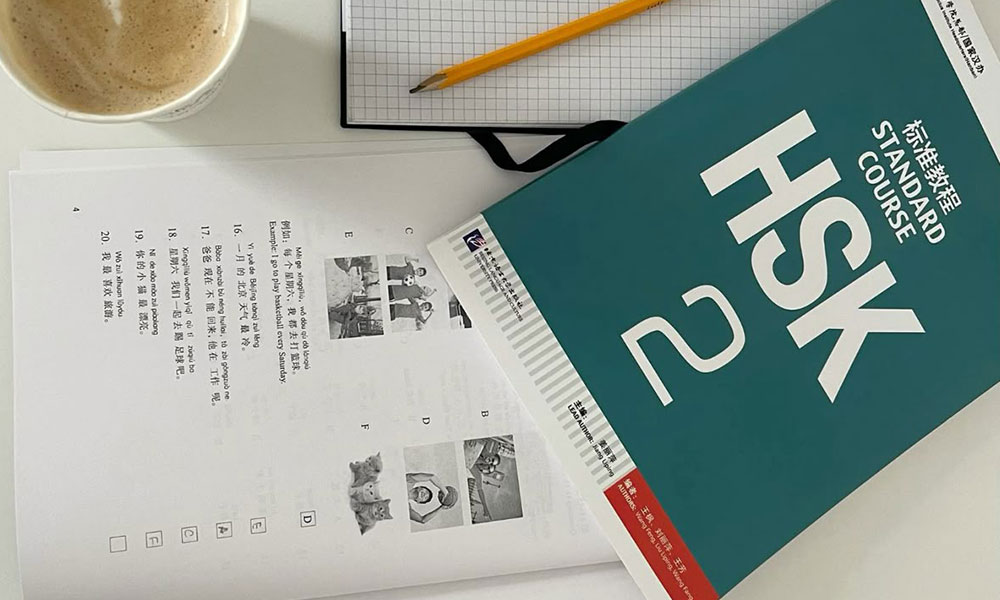
Based on the experience of international students, preparing for HSK 3.0 usually requires at least 6 months. For example, a medical student at Peking University studied for 4 months using official sample exams and achieved HSK Level 5 with a score of 220/300, allowing them to immediately apply for the CSC scholarship. The new HSK structure in 2026 is divided into three broad categories:
- Beginner Level: HSK 1–3
- Intermediate Level: HSK 4–6
- Advanced Level: HSK 7–9
Under the updated HSK exam system for studying in China, both the vocabulary range and the complexity of reading materials have increased significantly. As a result, applicants for the HSK exam in China must follow a more structured and comprehensive preparation plan. The previous version consisted of six levels; however, in version 3.0, universities place greater emphasis on practical and applied language competence.
Holding an HSK Chinese language certificate at higher levels demonstrates the ability to participate in university lectures and produce advanced academic writing. For individuals applying through the HSK exam for studying in Chinese, familiarity with the revised level classification is essential, as some universities no longer consider the former Level 6 equivalent to the new intermediate classification.
Required HSK Score for Studying in China
The minimum passing score for the HSK exam for studying at Chinese universities depends on several factors, including the field of study, the university, and the academic degree. For instance, admission to top institutions such as Tsinghua University and Peking University requires higher HSK scores.
In general, the required HSK levels for studying in China are as follows:
- Bachelor’s degree: Level 4 or 5
- Master’s degree: Level 5 or 6
- Doctoral degree: Level 6 or the new advanced levels
In many cases, submitting an HSK Chinese language certificate with a minimum score of 180 out of 300 at the relevant level is mandatory. In the pathway of the HSK exam for studying in Chinese, certain specialized fields such as medicine and law may require even higher scores.
Typical minimum scores are:
- Level 4: At least 180
- Level 5: Between 180 and 210
- Level 6: At least 200
It should be noted that these scores represent minimum requirements. For competitive admission to prestigious universities, higher scores are strongly recommended. A higher HSK Chinese language certificate score significantly increases scholarship opportunities. Within the HSK exam process for studying in China, universities prioritize the ability to comprehend specialized and academic texts.
Required HSK Level for Chinese Scholarships
To obtain the Chinese Government Scholarship (CSC), applicants must hold an HSK certificate. For master’s and doctoral applicants, Level 5 or 6 is typically required. If candidates aim for a full scholarship, it is advisable to achieve at least one level above the university’s stated minimum.
During the scholarship evaluation process, presenting a valid and up-to-date HSK Chinese language certificate is one of the principal requirements. Applicants pursuing admission through the HSK exam for studying in Chinese must submit their certificate at the time of scholarship registration.

HSK Exam Registration for Studying in China
Applicants who intend to register for the HSK exam for studying in China must do so through the official website: ChineseTest.cn. The exam is offered in both computer-based and paper-based formats.
The registration steps include:
- Creating a user account
- Selecting the test city and date
- Paying the examination fee
- Receiving the admission ticket
Upon passing the exam, the HSK certificate is issued, and it is generally valid for two years. Candidates should carefully coordinate the timing of their HSK exam for studying in Chinese with university application deadlines. In 2026, the exam will be held multiple times throughout the year, and it is advisable to take the test at least six months before applying.
Admission Requirements for Studying in China
Applicants wishing to study in China must first obtain an admission letter from their chosen university. This requires visiting the university’s official website and completing the application form. The form must be submitted along with scanned academic transcripts, identification documents, a valid passport, and the HSK language certificate.
After reviewing the documents, the university will send a response via email. In addition, participation in the Chiana CSCA exam is another significant pathway for studying in China. Without submitting an HSK certificate for studying in China, applications for Chinese-taught programs will not be reviewed. In the context of the HSK exam for studying in Chinese, universities evaluate language proficiency according to the intended academic level.
Fields and Degrees Requiring an HSK Certificate
Academic programs in China are offered in both English and Chinese, although Chinese remains the primary language of instruction. Tuition fees for Chinese-taught programs are generally lower than those taught in English, making possession of an HSK Chinese language certificate a considerable advantage.
In certain disciplines, particularly medical sciences, even students enrolled in English-medium programs benefit from learning Chinese. During internships and clinical training, students must interact effectively with patients and clients, which requires proficiency in Mandarin.
Programs requiring an HSK certificate include:
- General Medicine
- Dentistry
- Engineering disciplines
- Management and MBA
- Economics
- Humanities
- Art and Architecture
At the bachelor’s, master’s, and doctoral levels where instruction is conducted in Chinese, participation in the HSK exam for studying in Chinese is mandatory.
New Changes to the HSK Exam in 2026
As Chinese universities have strengthened their international standing and welcomed more foreign students, the Chinese language proficiency assessment system required comprehensive reform. Although the previous HSK version was considered standardized, over time a gap emerged between the exam content and the actual linguistic demands of academic environments. Consequently, the new HSK 3.0 structure was designed to evaluate candidates’ language skills in a deeper, more practical, and academically aligned manner.
The 2026 updates are not merely minor revisions; they represent a redefinition of the HSK exam standard for studying in China. The new version aims to authentically assess the linguistic competencies required for attending specialized lectures, conducting research, and producing academic writing.
1. Revised Level Structure
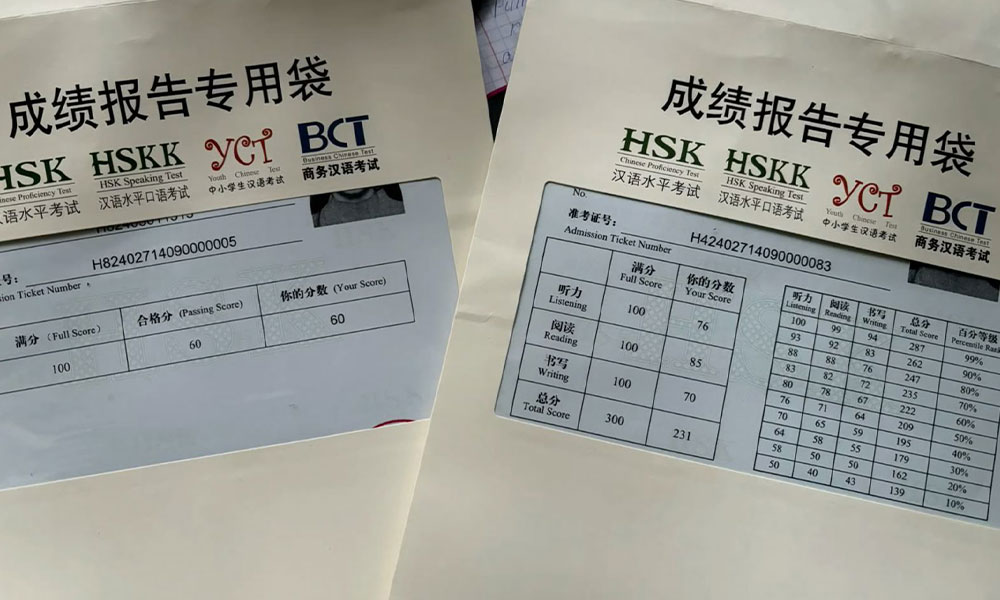
The previous version included six levels. The new structure introduces three overarching stages and nine detailed levels (HSK 1–9). Levels 7–9 are specifically designed for postgraduate and research applicants.
This means doctoral candidates must demonstrate proficiency beyond the former Level 6. Obtaining an advanced HSK Chinese language certificate now signifies the ability to analyze specialized texts and produce scholarly writing—not merely command general vocabulary.
2. Expanded Vocabulary and Text Complexity
A major change in the HSK exam for studying in China involves vocabulary requirements:
- Advanced-level vocabulary now exceeds 11,000 words.
- Greater emphasis is placed on academic and technical terminology.
- Reading passages are longer and conceptually more demanding.
Students must be able to comprehend research articles and academic sources independently. Superficial vocabulary knowledge is no longer sufficient; conceptual understanding is essential.
3. Emphasis on Academic Writing Skills
The writing section has been significantly strengthened. Candidates must be able to:
- Compose analytical paragraphs
- Present structured arguments
- Use formal and academic vocabulary
- Maintain logical coherence
The HSK exam for studying in China now evaluates genuine academic readiness. Writing short essays or analytical responses to scholarly topics has become part of the new standard.
4. Integrated Skills Assessment
Another new feature is integrated skills evaluation, such as:
- Listening to a passage and producing a written response
- Reading a short article and delivering an oral analysis
This format resembles international exams like IELTS and TOEFL, aiming to assess authentic communicative competence.
5. Alignment with CEFR
HSK 3.0 seeks greater alignment with the Common European Framework of Reference for Languages (CEFR). This enhances the comparability and international credibility of the HSK Chinese language certificate and provides clearer admission benchmarks for Chinese universities.
Impact of the 2026 Changes on Applicants
Candidates applying in 2026 should:
- Allocate more preparation time
- Focus on analytical and writing skills
- Use resources aligned with HSK 3.0
Failure to prepare according to the new structure increases the risk of low scores. Universities will pay particular attention to proficiency levels under the updated system.
Strategy for Passing the HSK Exam
Success in the HSK exam for studying in Chinese requires structured preparation. Memorizing vocabulary alone is insufficient.
Suggested study plan:
- First 3 months: Strengthen core vocabulary and grammar
- Next 2 months: Practice standardized sample questions
- Final month: Complete full mock exams
Special attention should be given to reading long texts and continuous listening practice.

Role of the HSK Certificate in Obtaining a Student Visa
An often overlooked aspect is the direct impact of the HSK exam for studying in China on student visa issuance. In some cases, embassies assess applicants’ language proficiency. Possessing a valid HSK Chinese language certificate facilitates and accelerates the review process. If admission was granted through the HSK pathway, presenting the certificate during the visa application is essential.
HSK Exam Fees in 2026
The cost of the HSK exam for studying in China varies by level:
- Lower levels: Approximately $20–$40
- Intermediate levels: $50–$70
- Advanced levels: $80–$120
Considering its importance in university admission, the cost of the HSK Chinese language certificate is justified relative to its value.
Conclusion
In recent years, China has evolved from a regional study destination into one of the world’s leading higher education hubs. With strengthened academic rankings, advanced research infrastructure, and extensive scholarship offerings, Chinese universities have attracted growing numbers of international students. Entering this educational system without genuine Mandarin proficiency is nearly impossible.
The HSK exam for studying in China remains the most critical benchmark for assessing Mandarin skills and plays a decisive role in university admission, scholarship awards, and even student visa issuance.
Applicants pursuing admission through the HSK exam for studying in Chinese must set clear objectives from the outset and select the appropriate level based on their intended university and academic program. Attention to the certificate’s two-year validity, registration timing, university deadlines, and preparation using HSK 3.0 resources is essential.
Systematic planning, focus on analytical competence, and strengthening practical language skills are the primary success factors in this pathway.
Admission Institute, with its strong track record in educational migration to China, is recognized as a reputable academic consulting center that assists international students in navigating the Chinese application process with a structured and reliable plan. With in-depth knowledge of China’s education system, university admission criteria, and language certificate requirements—including the HSK Chinese language certificate—the experts at Admission Institute help applicants make informed decisions and significantly increase their chances of success in the HSK exam for studying in Chinese and securing admission. For further information and to connect with consultants, please visit the . Contact us section.
Frequently Asked Questions:
1. What is the minimum HSK level required for studying in China in 2026?
The required level depends on the degree and university. Typically, Level 4 or 5 is required for bachelor’s programs, Level 5 or 6 for master’s programs, and Level 6 or advanced 3.0 levels for doctoral studies. Top universities often require higher scores.
2. Can I study in China without an HSK certificate?
For programs taught in Chinese, submitting an HSK certificate is mandatory. For English-taught programs, IELTS or TOEFL may be accepted instead; however, holding an HSK certificate remains an advantage.
3. How does the 2026 HSK structure differ from the previous version?
HSK 3.0 includes nine levels and places greater emphasis on analytical skills, academic writing, and comprehension of specialized texts. Vocabulary memorization alone is no longer sufficient.
4. How long is the HSK certificate valid, and when should I take the exam?
The certificate is generally valid for two years. It is recommended to take the exam at least six months before university application deadlines.
5. Which fields require an HSK certificate?
Fields taught in Chinese—such as medicine, dentistry, engineering, management, economics, humanities, art, and architecture—require an HSK certificate at all academic levels.



No comment