
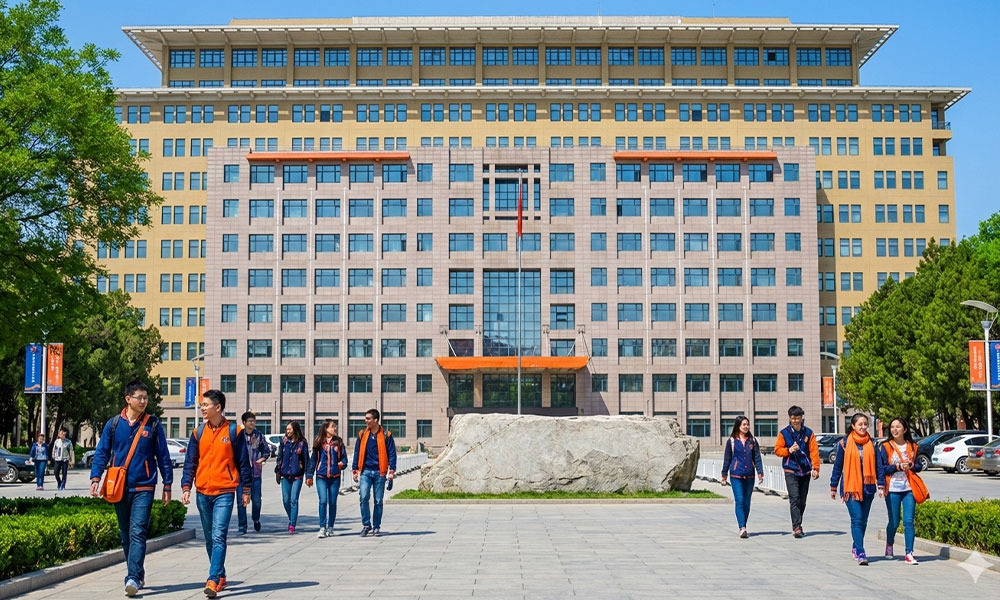
Beijing Language and Culture University (BLCU) is a specialized institution focused on Chinese language education and international student training.Established in 1962, BLCU has grown to become a top-ranked institution that focuses on teaching Chinese to international students while promoting multicultural exchange. Commonly known as the “Mini-United Nations” for its multicultural student population from more than 140 countries, the university welcomes close to 10,000 international students each year.
This article from Admission Institute will delve into the essential details of BLCU, including popular courses and scholarship opportunities, as well as practical information such as living expenses and application procedures.
Beijing Language and Culture University 2026: Key Admission and Cost Overview
The table below summarizes the key admission requirements, tuition fees, and living costs for international students applying to Beijing Language and Culture University in 2026.
| Category | Details |
| University Name | Beijing Language and Culture University |
| Location | Beijing, China |
| Application Deadlines | Spring: January 12, 2026, Fall: June 30, 2026 |
| Tuition Fees (Undergraduate) | 25,800 – 39,000 RMB per year |
| Tuition Fees (Master’s) | 30,000 – 49,000 RMB per year |
| Tuition Fees (PhD) | Around 32,500 RMB per year |
| Living Costs | 3,500 – 4,500 RMB per month |
| Scholarship Coverage | Tuition, accommodation, monthly stipend (up to 3,500 RMB/month) |
| Minimum HSK Requirement | HSK Level 4 (180+) |
| English Requirement | IELTS 5.5 or TOEFL 80 |
| Application Fee | 800 RMB |
| Admission Processing Time | 4–8 weeks after submission |
Last updated: 2/14/2026
Popular Majors at Beijing Language and Culture University
Academically, BLCU is strongly focused on language and culture studies. BLCU is known as one of the bests to study in Beijing universities.
1. Chinese Language and Literature
The most popular course among these is Chinese Language and Literature, which trains students in advanced Chinese language skills while exploring classical and modern Chinese literature. This course is especially in high demand among international students who want to become translators, teachers, or cultural diplomats. Another very popular course is Teaching Chinese as a Second Language, intended for students interested in teaching Chinese abroad.
2. International Economics and Trade
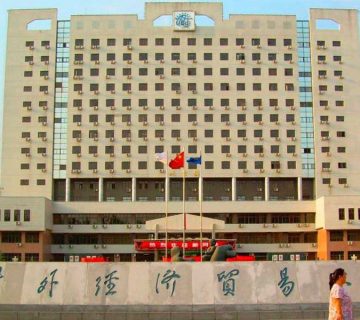
In addition to language-related majors, BLCU has also ventured into other interdisciplinary areas. International Economics and Trade is highly recommended for students with business interests, as it combines economic knowledge with insights into China’s position in international trade.
3. Translation and Computer Science
Translation majors, such as English-Chinese or Korean-Chinese translation, are also popular, as they are geared toward students seeking to work in international organizations where multiple languages are spoken. Computer Science, which combines language processing and AI, is also a major for tech-savvy students, as the university has adjusted to meet contemporary needs.
4. Other Popular Majors
Other popular majors include English Language and Literature, French Language and Literature, and International Business, which appeal to students seeking bilingual or trilingual proficiency. According to recent statistics, other majors, such as Chinese Culture & Global Communication, are becoming increasingly popular due to their English-taught curricula, which enable non-native speakers to delve into China’s culture without the initial language constraints of Mandarin Chinese.
BLCU has over 50 undergraduate programs, most of which are bilingual in Chinese and English, making them more accessible to a wider range of students.

Language and Culture University Scholarships
Financial aid is an essential consideration for many international students, and Beijing Language and Culture University stands out for providing a range of scholarships that appeal to language and culture lovers.
1. CSC Scholarships
The Chinese Government Scholarship-Bilateral Program (CSC) is one of the most inclusive scholarships available to 2026 applicants. This full scholarship provides tuition, housing, and a monthly allowance, and is intended for students from countries with bilateral relations with China.
Eligibility requirements include being in good health, having an excellent academic record, and, in some cases, being recommended by the dispatching authorities in the applicant’s home country. The application process requires completing the forms on the CSC and Beijing Language and Culture University websites, with deadlines set for early 2026.
2. the International Chinese Language Teachers Scholarship
Another popular option is the International Chinese Language Teachers Scholarship “Chinese +” Undergraduate Program, which is jointly administered by the Center for Language Education and Cooperation (CLEC) and BLCU.
This scholarship is designed for students who want to study a combination of Chinese and other subjects, such as business or technology, and it covers all expenses, including medical insurance. The application requires a copy of the CSCA score report and must be submitted through the scholarship website by May 2026. This is a great opportunity for students who want to become certified Chinese language teachers or international communication experts.
3.Confucius Institute Scholarship
BLCU is also involved in other programs such as the Confucius Institute Scholarship and university-specific awards. For example, the Beijing Government Scholarship provides partial tuition support, while private scholarships such as the CSC Scholarship at BLCU provide up to 3500 RMB per month for PhD candidates, with a gradual reduction for undergraduates. These scholarships give priority to applicants with high HSK scores or language experience.
Apart from providing financial support, these scholarships also involve cultural outings and networking activities, adding value to the experience. Scholarships not only provide support but also demonstrate BLCU’s commitment to developing global talent.
Cost of Living as a Student at Chinese Language and Culture University
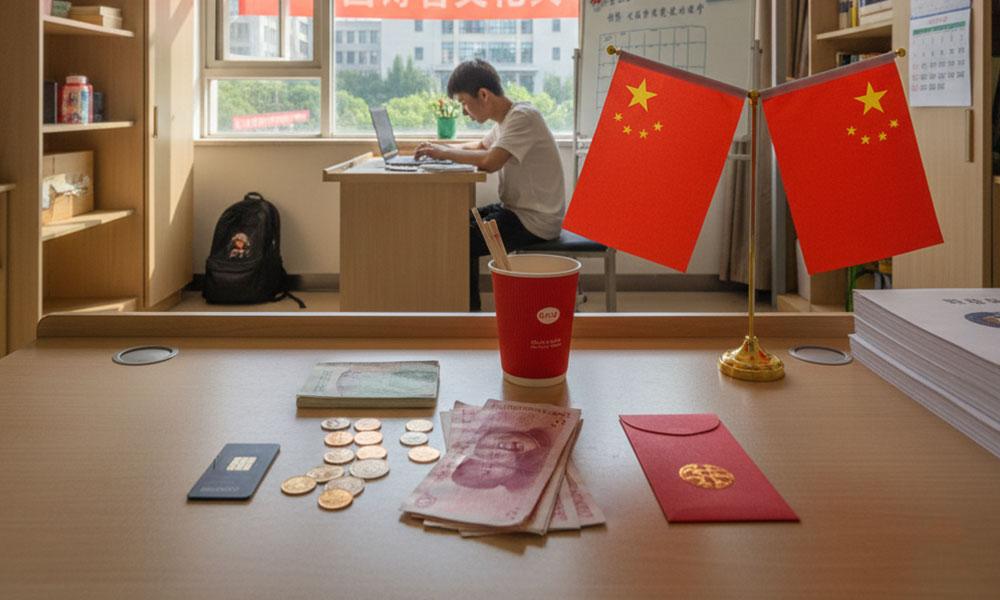
Living costs in Beijing are generally lower than in many Western capital cities. For 2026, the average monthly cost for an international student hovers around 3,500 to 4,500 RMB (about 500-650 USD), excluding tuition. This includes rent, food, transportation, and miscellaneous expenses.The most economical option for on-campus dorms is 1,200-2,000 RMB per year for shared rooms, providing a vibrant community atmosphere close to classes.
1.Campus life
Food is a strong point, with campus dining facilities providing meals for 20-30 RMB per day. Street food and markets also help keep grocery costs low at 600-800 RMB per month. Beijing’s public transportation system is very efficient and affordable, with a monthly subway pass costing around 200 RMB, making it very easy to get around the city. The cost of utilities and internet access is another 200-300 RMB, while mandatory health insurance for international students costs 800 RMB per year.
2. off-campus life
Living off-campus in the Haidian District may cost 2,000-3,000 RMB per month for a shared apartment, but it also offers greater privacy. Entertainment activities such as visiting the Forbidden City or going out at night may incur an additional 400-600 RMB per month. Compared to Shanghai or Paris, Beijing is relatively inexpensive, with estimated costs for a single person at 4,061 RMB per month, excluding rent. Scholarships can help defray the cost of living in China, including rent, so that students can enjoy Beijing’s unique mix of ancient and modern culture without worrying about money.
Tuition Fees
The tuition fee at BLCU in 2026 is competitive, as it is known for providing accessible education. For undergraduate courses, tuition fees range from 25,800 to 39,000 RMB per year (approximately 3,600-5,500 USD). For popular majors such as Chinese Language and International Economics and Trade, the tuition fee is on the lower side, which is approximately 24,900 RMB per year. For graduate courses, tuition is slightly higher: 30,000-49,000 RMB per year for master’s programs and 32,500 RMB per year for doctoral programs.
The fees for non-degree Chinese language studies differ depending on the duration of study in China, with a one-year course costing 23,200 RMB, while the short course (12 weeks) will set you back 8,300 RMB. The application fee is relatively low at 800 RMB, while online studies begin at 1,680 RMB for a group class. Tuition fees at BLCU are comparable to other public universities in China. Other expenses, such as textbooks (500 RMB per year) and insurance, should also be considered.
Admission Requirements of Beijing Language and Culture University
To be accepted into BLCU for 2026, one must meet simple yet specific requirements. These include having a high school diploma or equivalent, being between 18 and 55 years old (with parental consent for those below 18), and possessing a non-Chinese passport. Language ability is the most important criterion. For Chinese-language courses, HSK Level 4 with a score of 180+ is usually required, while English-language courses require IELTS 5.5 or TOEFL 80.
One of the biggest differences for 2026 is that all undergraduate applicants must take the CSCA exam, which tests skills in Chinese, math, and other subjects based on the major. Supporting documents include passports, transcripts, letters of recommendation, and health certificates. Online applications are available on BLCU’s website, with deadlines such as January 12 for spring admission and June 30 for fall admission. Interviews may also be necessary for more popular majors. BLCU’s application process is highly holistic, giving equal weight to cultural interests and academic performance.
Application Insight from Recent Applicants
Recent international applicants to Beijing Language and Culture University have noted that submitting a complete application early significantly improves admission chances. Many successful students had HSK scores above the minimum requirement and prepared their documents, including transcripts and medical forms, several weeks in advance.
Some applicants also reported receiving admission decisions within four to eight weeks after submission. This highlights that strong language preparation and early application can play an important role in improving acceptance success at BLCU.
BLCU Rankings
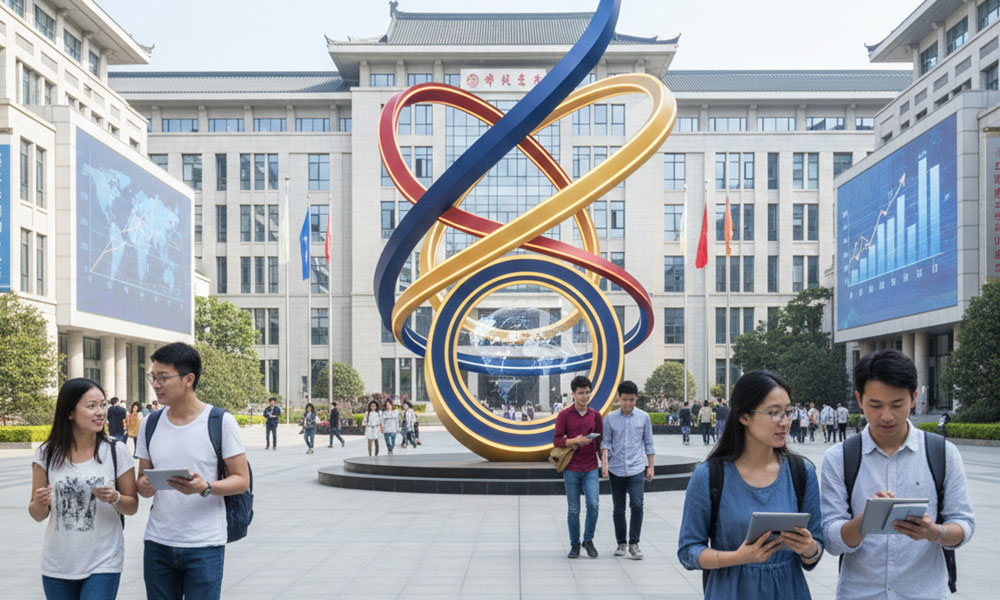
The international ranking of BLCU reflects its superiority in language education. In the QS World University Rankings by Subject 2025, BLCU is ranked 301-350 in Modern Languages, demonstrating its language capabilities. In China, BLCU is one of the best language universities and frequently ranks among the top universities for international students. In global rankings, BLCU is ranked in the 3000-4000 group, and its specialties include liberal arts and social sciences.
According to SCImago, BLCU ranks 6913th overall, but it has strong innovation and societal impact. In 2026, BLCU is again recognized as a “Most Welcoming University for International Students.”
Student Facilities of Beijing Language and Culture University
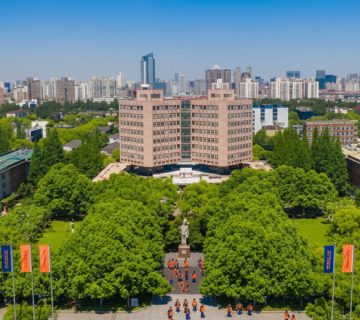
BLCU’s campus is set up to facilitate multicultural student life. The classrooms are equipped with multimedia systems, language labs, and interpretation rooms, all of which are air-conditioned and equipped with projectors. The Yifu Stadium provides facilities for indoor swimming, gyms, and basketball and tennis courts.
Hostels offer budget-friendly options: single rooms for 200-300 RMB/day and double rooms for 90-120 RMB/bed, with facilities such as Wi-Fi and kitchen access. Other supporting facilities include cafeterias, postal services, and banks.
Csca Exam
The CSCA (China Scholastic Competency Assessment) is a new national exam that will be compulsory for all 2026 undergraduate applicants at BLCU and other key universities in China. It tests students’ aptitude for higher education in China, including Chinese language proficiency, mathematics, and discipline-related subjects such as physics or English. Each test takes 60 minutes and consists of multiple-choice questions in either Chinese or English.
For BLCU majors, the humanities paths include Chinese and mathematics, while the science paths include physics and chemistry. HSK certificate holders are exempt from the Chinese test. The first test date is December 21, 2025, and the results will be valid for the application.
conclusion
As of February 2026, Beijing Language and Culture University remains one of the top choices for international students eager to learn Chinese language and culture. With its flagship programs in Chinese Language and Literature, Teaching Chinese as a Second Language, and interdisciplinary studies in International Economics and Trade, BLCU continues to welcome a diverse international student community from around the world.
Scholarships are also bountiful, including the Chinese Government Scholarship-Bilateral Program, International Chinese Language Teachers Scholarship “Chinese +” Undergraduate Program, and Beijing Government Scholarship awards, making it easier than ever for students to join the BLCU family, with some scholarships even covering tuition, housing, and living expenses. Although the requirement for all 2026 undergraduate applicants to take the CSCA exam adds a new twist to the admissions process, it also helps to ensure that students are adequately prepared for academic success.
Tuition fees are also relatively low at 25,800-39,000 RMB per year, and living costs are low in Beijing’s Haidian District. Start preparing your documents, tackle the CSCA, and apply. Contact us for additional information and expert advice.
1. What scholarships are available for international students at BLCU in 2026, and what do they typically cover?
BLCU offers several attractive scholarships for 2026, including the Chinese Government Scholarship-Bilateral Program (Type A), which is fully funded and covers tuition, accommodation, a monthly living stipend, and comprehensive medical insurance. The International Chinese Language Teachers Scholarship “Chinese +” Undergraduate Program provides similar full coverage for students combining Chinese language with other fields, like business. Partial options, such as the Beijing Government Scholarship, often waive a portion of tuition fees. These prioritize strong academic records, language proficiency (e.g., HSK scores), and, for undergraduates, a valid CSCA score report. Applications are competitive, with deadlines varying by program (often early 2026).
2. Is the CSCA exam mandatory for admission to BLCU in 2026, and who needs to take it?
Yes, starting in 2026, all international applicants for undergraduate programs at BLCU (including self-funded and scholarship applicants) must take the China Scholastic Competency Assessment (CSCA) and submit a valid score report as a required document. This standardized test evaluates language proficiency, mathematics (compulsory for all), and major-specific subjects like physics or chemistry. Exceptions may apply for certain Chinese language majors if you provide a valid HSK Level 4 score (exempting the Chinese proficiency portion) or if you’ve completed a qualifying preparatory program at designated universities like BLCU itself. The exam is held multiple times a year; early sessions (e.g., January or March 2026) are key for fall intake applications.
3. What are the main admission requirements and tuition costs for undergraduate programs at BLCU in 2026?
To apply, you need a high school diploma (or equivalent), be aged 18–55, hold a non-Chinese passport, and meet language requirements—typically HSK Level 4 (180+) for Chinese-taught programs or IELTS 5.5/ TOEFL 80 for English-taught ones—plus a mandatory CSCA score for undergraduates. Required documents include a passport, transcripts, recommendation letters, a health certificate, and a CSCA report. Tuition ranges from approximately 25,800 to 39,000 RMB per year (about 3,600–5,500 USD), depending on the major, with popular programs like Chinese Language and International Economics and Trade often at the lower end. Scholarships can significantly reduce or eliminate these costs, and Beijing’s student living expenses remain affordable at around 3,500–4,500 RMB monthly.

No comment