

Pharmacy is one of the most attractive fields in medical sciences, and many students choose to study pharmacy in China. The high reputation of Chinese universities, along with standard educational, academic, research, and welfare facilities, are some of the reasons why China is chosen as a study destination. Additionally, the cost of studying pharmacy in China is lower compared to universities in the United States, Canada, and the United Kingdom.
Taking the CSCA exam is one of the requirements for studying pharmacy in China in 2026, and applicants must achieve the minimum score required by the university. In this article, Admission Institute examines the process of studying pharmacy in China.
Top Pharmacy Universities in China for International Students
Chinese universities, aiming to be listed among the top universities in the world, have made extensive developments in all aspects of their institutions. China’s medical universities are also among the best in the world, offering pharmacy programs at the highest level alongside medicine, dentistry, and paramedical courses.
The presence of prominent professors and global-standard academic, research, and educational facilities are among the advantages of studying pharmacy in China. The best pharmacy universities in China include:
- Peking University
- Tongji University
- Zhejiang University
- Shanghai Jiao Tong University
- Nanjing University
- Wuhan University
- Shandong University
- Sichuan University
- Jilin University
- Sun Yat-sen University

Advantages of Studying Pharmacy in China
Studying pharmacy in China is an important and ideal option for many students seeking to study abroad. The high quality of the educational environment, advanced facilities, and modern laboratories are some of the main advantages of study in China. Below is a detailed look at the benefits of studying pharmacy in China:
1. Reputable Universities
In recent decades, China has significantly increased the reputation of its universities through investment in higher education. Universities such as Peking, Wuhan, Sichuan, and Shanghai Jiao Tong rank among the top universities in China and the world. These universities employ a collection of leading international professors.
2. International Research Programs
Another advantage of studying in China is the participation of top universities in international research programs. These universities collaborate with leading global universities and reputable research centers, providing students with unique opportunities to strengthen their academic resumes by participating in research projects. This advantage allows students to enter reputable international job markets after graduation.
3. Affordable Tuition Fees
Another benefit of studying pharmacy in China is the reasonable cost of education. Like other programs, pharmacy tuition depends on factors such as degree level, university, and language of instruction. The average annual tuition fees for pharmacy in China are:
- Bachelor’s degree: $2,700–$3,600
- Master’s degree: $3,600–$4,600
- Doctorate (PhD): $5,200
4. Studying Pharmacy in English
In addition to Chinese, it is also possible to study pharmacy in China in English. Due to the difficulty of the Chinese language, many international students choose English-medium programs. This opportunity is a significant advantage, allowing graduates to prepare for global job markets more easily.
5. Scholarships for Pharmacy Studies in China 2026
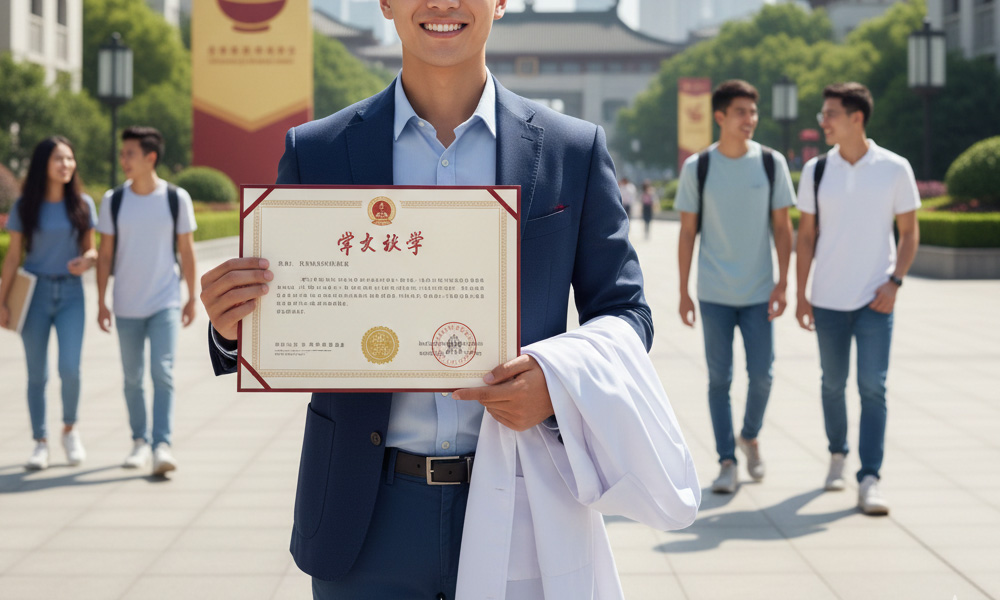
Students with strong academic records, such as high CSCA scores or high GPAs, can benefit from scholarship. Additionally, students with excellent academic performance at university can also apply for scholarships. University scholarships, the Chinese Government Scholarship (CSC), and scholarships from organizations and non-profit institutions are among the available options. Some scholarships, like the CSC scholarship, cover all tuition, living expenses, and accommodation, while others cover part of the tuition fees.
Scholarship eligibility requirements include:
- The student must not be a Chinese citizen
- The student must be in good health
- The student must have an excellent academic and research record
- The student must have an English or Chinese language certificate
- Age and GPA requirements are very important
6. Internship and Clinical Experience Opportunities
Pharmacy students in China can complete internships in hospitals, pharmacies, and reputable research centers. This practical experience alongside theoretical education increases the chances of employment in China or other countries. Some universities, through special agreements with international pharmaceutical companies, provide summer internships and practical research projects for students.
Conditions for Studying Pharmacy in China and Admission Process
Applicants for studying pharmacy in China must first obtain admission from a reputable university. To do this, they should visit the university’s website, obtain the admission form, and complete it according to the instructions. Next, scanned copies of identification documents, academic records, proof of financial support, and a valid passport must be submitted along with the completed form. Admission results are sent via email.
Other required documents and conditions during registration include:
- Submission of officially translated identification documents
- Submission of officially translated academic documents
- Submission of a valid passport
- Proof of financial support
- Medical certificates
- Obtaining a student visa
- Submission of a criminal background certificate
- Participation in the CSCA exam
- Submission of an English or Chinese language certificate
Admission requirements and tuition fees may vary by university and academic year.

CSCA Exam for Pharmacy Students (2026)
CSCA (Chinese Subject Competency Assessment) is an academic evaluation exam required by some Chinese universities for international students applying to medical-related programs, including pharmacy. The exam is designed to assess whether applicants have the scientific background and academic readiness necessary to study pharmacy at Chinese universities. The main goal of the CSCA exam is to ensure that international pharmacy applicants meet the minimum academic standards required for success in a rigorous medical science program. Universities use CSCA results to evaluate students’ foundational knowledge before issuing final admission offers.
Is it Possible to Work After Studying Pharmacy in China?
Considering China’s large population and the number of domestic graduates, entering the job market can be challenging for international students, but it is not impossible. Certain requirements must be met:
- Work permit: Obtaining a work permit is essential for entering the job market. After submitting all required documents and completing the process, applicants can receive the permit. The work permit is issued only if the applicant has a contract with a hospital, clinic, or a reputable pharmaceutical organization.
- Visa conversion: In addition to obtaining a work permit, graduates must change their student visa to a work visa.
Pharmacy in China: English or Chinese?
As mentioned, pharmacy programs in China are offered in both Chinese and English. However, some courses may still be taught in Chinese. Learning Chinese provides significant benefits even for students studying in English, including better interaction with patients and enhanced understanding of their field. Therefore, it is recommended that students studying pharmacy in English also learn Chinese. Some universities require a valid language certificate, while others are more flexible, sometimes offering English or Chinese courses for applicants. Providing a recognized language certificate can increase admission chances.
Comparing Pharmacy Studies in China with Other Countries in 2026
Studying pharmacy in China has attracted many students due to important advantages such as affordable tuition. Compared to top universities in the USA, Canada, and the UK, tuition in China is much more reasonable, while educational, research, and international standards are comparable. Students seeking a moderately priced education in an international academic environment often consider China an ideal destination.
Who Should NOT Study Pharmacy in China?
Although studying pharmacy in China offers many advantages, it is not the ideal option for everyone. Understanding whether China is the right destination depends on personal goals, academic background, and long-term career plans. The following groups of students may want to reconsider studying pharmacy in China:

1. Students Unwilling to Learn Chinese
Even in English-taught pharmacy programs, basic knowledge of the Chinese language is essential, especially during internships, clinical training, and daily life. Students who are completely unwilling to learn Chinese may face communication difficulties in hospitals, pharmacies, and research environments.
2. Students Seeking Automatic Employment After Graduation
China does not guarantee automatic employment for international pharmacy graduates. Those who expect a direct and effortless transition into the Chinese job market may find the process challenging due to work permit requirements, visa conversion, and employer regulations.
3. Applicants Without a Strong Science Background
Pharmacy programs in China are academically demanding, with a strong focus on chemistry, biology, and laboratory work. Students without a solid foundation in science-related subjects may struggle, particularly in universities that require the CSCA exam.
4. Students Looking Only for Short-Term or Low-Effort Study Options
Pharmacy education in China requires discipline, academic commitment, and continuous assessment. Applicants seeking an easy degree or minimal academic pressure may find these programs unsuitable.
5. Students Who Prefer Fully Western Educational Systems
While Chinese universities meet international standards, the educational culture, teaching methods, and academic regulations may differ from those in the US, Canada, or Europe. Students who are uncomfortable adapting to different academic systems may experience adjustment challenges.
6. Students With No Interest in Research or Practical Training
Pharmacy education in China strongly emphasizes research participation and practical experience. Students who are not interested in laboratory work, internships, or clinical exposure may not benefit fully from the academic structure.
Modern Specializations in Pharmacy
Chinese universities collaborate with global research centers and universities, leading to significant advancements in modern pharmacy. In addition to general pharmacy, students can pursue specialized fields in graduate programs. Current specialized and modern pharmacy fields in China include:
- Clinical Pharmacy
- Nanopharmacy
- Traditional Chinese Medicine (TCM) Pharmacy
- Pharmaceutical Biotechnology
Due to global demand for these modern pharmacy specializations, studying in these fields can secure students’ professional futures.

Overview of Tuition, Duration, and Scholarships
| Degree | Duration | Tuition (USD/year) | Scholarships | Language of Instruction |
| Bachelor’s | 4 years | 2,700–3,600 | University scholarship, CSC | Chinese/English |
| Master’s | 2–3 years | 3,600–4,600 | University scholarship, CSC | Chinese/English |
| PhD | 3–5 years | 5,200 | Research/CSC | Chinese/English |
Important note: Most undergraduate pharmacy programs are offered in Chinese, with fewer universities offering English. Therefore, students should carefully consider the language of instruction when selecting a university. Providing a valid language certificate increases admission and scholarship chances.
Conclusion
Studying pharmacy in China in 2026 is an attractive option for international students. With globally recognized universities, advanced educational and research facilities, and collaboration with reputable scientific centers, China provides an ideal environment for pharmacy education.
Key features, such as affordable tuition, the possibility to study in China in English, participation in international research programs, and various scholarships, make China a popular choice for pharmacy students.
Submitting valid academic and identification documents, taking the CSCA exam, providing language certificates, and completing other requirements are essential conditions for studying pharmacy in China. Additionally, students can gain practical experience through internships in hospitals, pharmacies, and research centers, increasing their chances of entering the global job market.
Modern pharmacy specializations, including clinical pharmacy, nanopharmacy, TCM, and pharmaceutical biotechnology, are offered in Chinese universities. Students can pursue these fields for advanced education and career opportunities. Tuition fees in China are more affordable than in top universities in the USA and Canada while maintaining comparable academic quality.
Studying pharmacy in China combines high academic standards, reasonable costs, scholarships, and practical experience, making it a cost-effective and suitable option for international students. Submitting complete documents and having language proficiency smooths the path to admission in China’s top universities. This article is prepared by the academic consulting team of Admission Institute, specializing in international education and student migration to China. Admission Institute is a professional team that reviews applicants’ profiles and introduces the most suitable options for studying in China. For more information and consultancy services, contact us.
FAQs:
1. Is it possible to study pharmacy in English in China?
Yes, many Chinese universities offer pharmacy programs in English. However, some courses are still taught in Chinese. Learning Chinese provides notable benefits, including better interaction with patients and effective participation in internships and research projects.
2. How much does it cost to study pharmacy in China?
Costs vary by degree and university:
Bachelor’s: $2,700–3,600/year
Master’s: $3,600–4,600/year
PhD: around $5,200/year
Some scholarships, like CSC, can cover all or part of the costs.
3. What documents are required for pharmacy admission in China?
Main documents include:
Completed university admission form
Officially translated academic and ID documents
Valid passport and proof of financial support
Medical and criminal background certificates
English or Chinese language certificate
Participation in the CSCA exam
4. Can graduates work in China after studying pharmacy?
Yes, but they must obtain a work permit and change their student visa to a work visa. The work permit is usually issued only if the student has a contract with a hospital, clinic, or recognized pharmaceutical company.
5. Which pharmacy specializations can be studied in China?
In addition to general pharmacy, students can study modern and popular specializations, including:
Clinical Pharmacy
Nanopharmacy
Traditional Chinese Medicine (TCM) Pharmacy
Pharmaceutical Biotechnology
Studying these fields increases employment opportunities and international career prospects.

No comment