

Given its dynamically developing economy, top-ranked universities worldwide, as well as a rich cultural heritage that stretches over thousands of years, China has become a kind of “hub” for worldwide education. For a number of students, study undergrad degree in China is simpler not only because of cheaper tuition and easy entry requirements but because of the system created specifically for foreign nationals.
A decade ago, the country of China opened its doors to foreign students by the hundreds of thousands, and the numbers kept rising every year. Institutions like Tsinghua University and Peking University are now household brands around the world, competing with the best Ivy League schools in the world rankings and costing a fraction of the price.
Through this article from admission institute, we will delve into the reasons why admission requirements for undergraduate degree in China could be the brightest decision you will ever make, tackling every aspect from the challenges of entry to cost of study in China. Whether you hail from the shores of Asia, Africa, Europe, or the Americas, the doors of China are open wider than you think.
Undergraduate Study in China: Key Facts at a Glance
| Factor | Details (Based on This Article) |
| Admission Difficulty | Relatively easy for international students; no SAT, ACT, or Gaokao required |
| Academic Requirement | High school diploma and academic transcripts |
| Age Limit | Typically 18–25 years old |
| Language Requirements | HSK 4+ for Chinese-taught programs; IELTS ~6.0 or TOEFL ~80 for English-taught programs |
| Application Timeline | October to June for Fall intake |
| Application Platforms | CUCAS, China Admissions, university portals |
| Tuition Fees | 20,000–60,000 RMB per year, depending on university and major |
| Living Costs | Approximately 2,000–4,000 RMB per month |
| Accommodation | On-campus dorms often under 1,000 RMB per month |
| Scholarships | Chinese Government Scholarship (CSC), university scholarships |
| English-Taught Programs | Available at top universities (e.g., Tsinghua, PKU, XJTLU) |
| Student Visa Type | X1 visa (converted to residence permit after arrival) |
| Work Rights | Part-time work up to 24 hours/week after the first year |
Last updated: 2026
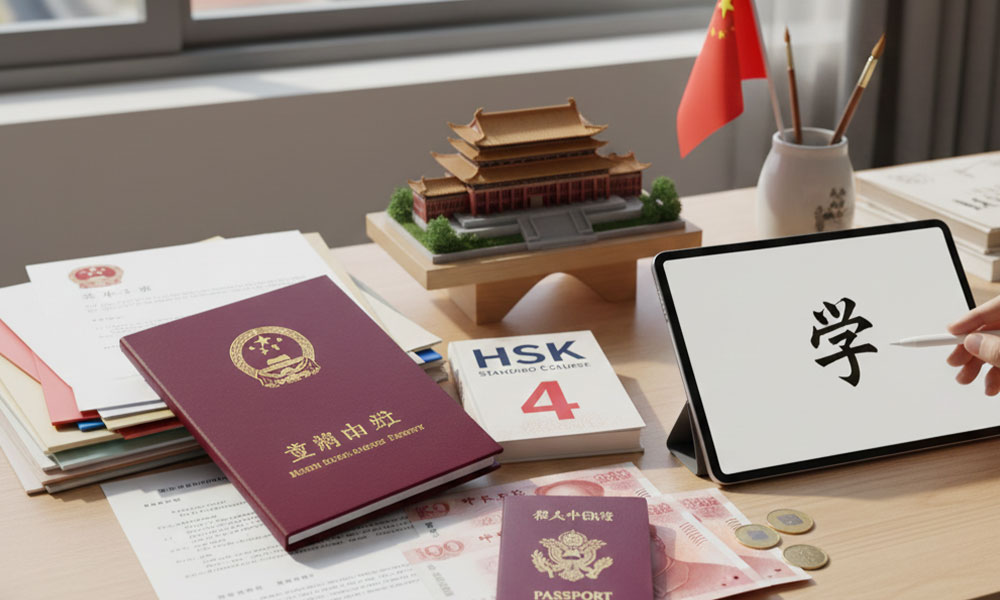
Chinese Universities Entrance Requirements for an Undergraduate Degree
Entry into a Chinese university for an undergraduate degree isn’t as challenging as it may initially appear. Unlike Western institutions that require exceptionally high scores on entrance exams and/or writing lengthy personal statements, China’s requirements lie in basic qualifications and paperwork.
1. Overall Requirements
Most crucially, you must be an individual from outside China, be in sound health, and possess a valid high school diploma. As far as an applicant’s age is concerned, you would be expected to be between 18 and 25 years old.
2. Academic Requirements
Let’s take Tsinghua University Beijing, which is one of the best Chinese universities. Their requirements say that foreigners must show China goodwill and hold a high school diploma. There are no requirements to submit the SAT or ACT scores, and they may ask for an entrance exam/interview, depending on what one wants to pursue. To give you a better idea of what most institutions require, they ask for an academic transcript, a copy of your passport, and language proficiency proof.
3. Language Proficiency
Another requirement if one wants to study Chinese courses is an HSK (Chinese language proficiency test) certificate if one is an undergraduate, level 4 and above. Institutions such as Peking University (PKU) have preparatory programs in place for students who require a foot in the door, and successfully completing the final exam will give you straight entry. For English-medium programs, the IELTS or TOEFL test scores are typical, requiring a minimum score of 6.0 or 80, respectively.
4. Other Requirements
Health-related examinations are a requirement, where you must provide a medical certificate to prove your fitness to study. Some institutions, such as the University of Science and Technology of China (USTC), will accept students who are “mentally and physically healthy” and have “no criminal record.”
5. Application Process
When it comes to the timing, the application period usually ranges between October and June for an intake in the fall semester, and websites such as CUCAS or China Admissions make everything easy online. Some additional requirements may include recommendation letters, a study plan which explains why China and why that particular course are your choices, and sometimes portfolios for arts courses.
Compared to the US system where applications are holistic and place so much emphasis on extracurricular activities, Chinese institutions are more concerned with school performance and your potential anyway. This is good for students coming from all over the world, especially developing countries where you might struggle to find preparation resources for such tests. One thing you could do is apply early since translation and certification may take time.
One of our international applicants was admitted to an English-taught undergraduate program atUSTC without SAT or ACT scores. The student received the Admission Notice and JW202 within six weeks, with average monthly living costs of around 2,500 RMB. According to the student, the simple admission process and affordable costs made studying in China easier than expected.

Cost of Study in China
China is known to “One of the main attractions for international students considering an undergraduate degree in China is that it’s affordable,” says one student. And affordable is definitely the operative word when you consider the tuition bills in the US or Australia, for example. China is very reasonable, so you get a top-notch education without breaking the bank.
1. Tuition Fees
The average cost of study undergraduate degree in China ranges from 20,000 to 60,000 RMB per year ($2,800 to $8,500 USD), and this depends on the institution and the course you want to pursue. China’s top institutions such as Tsinghua charge up to 40,000 RMB for arts courses or up to 50,000 RMB for science or medical courses.
2. Living Expenses
Cost of living in China add another layer, but they’re manageable. In big cities like Beijing or Shanghai, you might spend 2,000-4,000 RMB monthly on accommodation, food, and transport. Dorm rooms on campus are cheap—often under 1,000 RMB per month—while off-campus apartments go for 3,000-5,000 RMB in urban areas. Food is a steal; street eats or canteen meals cost pennies compared to Western prices. Add in health insurance (mandatory, around 800 RMB/year) and books (500-1,000 RMB), and your total annual cost could be as low as $5,000-10,000 USD for everything.
3. Scholarships
Scholarships in China further sweeten the pot. The Chinese Government Scholarship (CSC) Scheme takes care of tuition fees, living costs, and even plane tickets for most students. The University of Nottingham Ningbo’s fee structure for internationals is 110,008 RMB (though there are scholarships available), but this is already lower compared to the 5,000 to 6,000 fees for public universities for Chinese nationals. Internationals pay more, but not as much as in their home countries, where costs can range from 10,000 to 60,000 for the same undergrad degree.
There are no hidden costs other than visa application fees (which are only 100-200 dollars) and the occasional plane ticket. Plus, internationals on a student visa can already have part-time jobs up to 24 hours a week after the first year. Thus, when the time comes for the next chapter in your life after graduation, your wallet will not have any loans to speak of.

English Studies at the Undergraduate Level in China
The days of attending college in China and being required to speak the language are now a thing of the past. Today, there are now several hundred English-taught bachelor’s degrees, making it simple for international students to gain access. To appeal to the highest number of international students, institutions have increased the number of classes offered in English, including more than 500 classes offered at Tsinghua University. These are mostly offered in the fields of business, engineering, computer science, and international relations.
English Taught universities
Peking University takes the lead with a vast range of English-conducted undergraduate courses. Then come institutions that offer dual degrees, such as Xi’an Jiaotong-Liverpool University (XJTLU) which allows students to receive a Chinese degree and a UK degree from the University of Liverpool simultaneously, all conducted in English. Shanghai International Studies University (SISU) concentrates on linguistics and international relations.
There is a high level of quality; these courses are known to have international lecturers as well as up-to-date learning environments. The class sizes are smaller compared to the Chinese-taught programs, allowing for easy interaction. Moreover, there are options to learn the Chinese language if one wishes to integrate well. The requirements are the same as for other programs, though the key aspect would be their proficiency in English.
The tuition rates are similar to other costs; however, the cost of certain premium programs may have a slight incline. For those students that fear the challenges that come with the cultural aspects of the country, this system enables China to feel like home yet exotic. It is a gateway to the future of Asia without the learning costs.
Comparison of Studying in China with Other Countries
How does study undergraduate degree in China stack up against giants like the US, UK, or Australia? Let’s break it down. With regard to cost, China wins by a landslide. While tuition in the US can reach upwards of $50,000/year, not including living expenses, the average tuition in China ranges from $3,000-8,000 for a similar quality at top unis. The UK and Australia range from $20,000-40,000 annually, making China a very budget-friendly alternative.
Admissions in China are less competitive for internationals, with no Gaokao exam to take, like local’s face. The US requires SATs and essays; the UK requires A-levels; Australia requires ATAR scores—the list goes on and on. China? For the most part, just transcripts and an interview. Job prospects after graduation: an excellent, booming market for tech and finance, with globally recognized degrees. On the other hand, alumni networks in the US or UK might pip this for Western jobs.
Lifestyle is varied, with safe campuses and reasonable living costs in China, or Australia’s beach lifestyle and UK’s historical sites, although environmental degradation in megacities is a drawback. Visa convenience: Chinese student visas are simpler, although US F-1 visas involve a lottery system in some cases. For immersions and bang for your buck, China is the best choice, especially if your interest is in watching the growth of Asia.
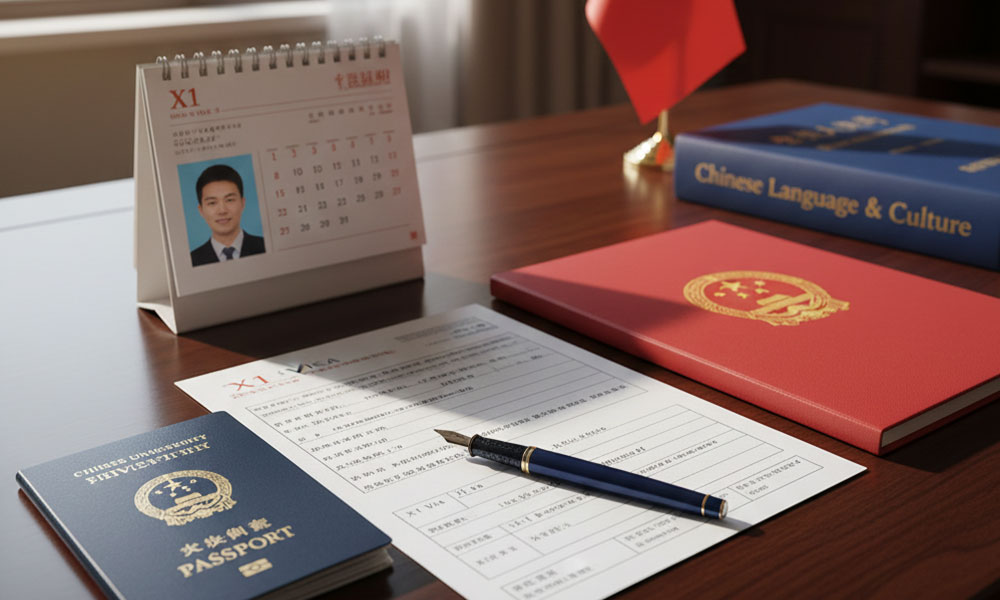
Chinese Visa for Undergraduate Students
Compared with some countries, securing a student visa for China is relatively straightforward, without the bureaucratic mazes one has to navigate. For undergraduate studies longer than six months, you will be required to get an X1 visa, which is extendable into a residence permit after arrival. First of all, you will need an Admission Notice and a JW202 form from the university that is accepting you; think of these as golden tickets.
Apply through the Chinese embassy or consulate with your passport valid six months beyond stay, photos, health form, and proof of funds. Processing takes 4-6 weeks with a cost of $140-200 USD. Then travel to China and report to the local Exit-Entry Bureau within 30 days to get your residence permit for your entire duration of study.
For shorter programs, an X2 visa will do. Tips: Make sure to double-check all the documents, and depending on which countries you come from, some extra forms may apply. Universities like Fudan or HIT will guide you through all this, which is quite efficient and with a very high passage rate for genuine students.
Conclusion
study undergraduate degree in China offers international students an exceptionally accessible, high-value pathway to world-class education. With straightforward admission processes, affordable cost of study in China, a growing number of high-quality English-taught programs, and the opportunity to immerse yourself in one of the world’s most dynamic economies and cultures, China stands out as a smart and forward-looking choice. Compared to traditional study destinations, it delivers comparable academic excellence at a fraction of the price, while equipping graduates with unique cross-cultural skills and strong career prospects in Asia and beyond.
Whether your goal is academic excellence, professional growth, or personal adventure, studying in China opens doors that are both practical and inspiring. As the country continues to rise on the global stage, now is an ideal time to take this rewarding step. Embrace the opportunity — your future in China could be the beginning of something truly extraordinary. For additional information about Admission Requirements for undergraduate degree in Chinese universities, contact us.
FAQS:
1. Can I study an undergraduate degree in China entirely in English, and what language proof is required?
Yes, many top Chinese universities now offer a wide range of English-taught bachelor’s programs, especially in fields like business, engineering, computer science, international relations, and more. Institutions such as Tsinghua University, Peking University, and joint-venture universities like Xi’an Jiao tong-Liverpool University provide high-quality options with international faculty. For admission to these programs, you typically need to prove English proficiency with tests like IELTS (minimum around 6.0), TOEFL (around 80), or Duolingo English Test. Native English speakers or those with prior education in English may be exempt. This makes China accessible even without knowing Mandarin, though optional Chinese language courses are often available to help you integrate.
2. What are the typical admission requirements and costs for international undergraduate students in China?
Admission is relatively straightforward compared to many Western countries. Key requirements include a valid high school diploma (or equivalent), being 18–25 years old, good health (with a medical report), no criminal record, and academic transcripts. English-taught programs require language proof, while Chinese-taught ones usually need an HSK certificate (level 4+). No standardized tests like SAT are mandatory for most international applicants. Tuition ranges from about 20,000–60,000 RMB ($2,800–$8,500 USD) per year, with living expenses (including dorms, food, and transport) around 20,000–50,000 RMB annually in major cities. Scholarships in China like the Chinese Government Scholarship can cover tuition, accommodation, and stipends, making it very affordable overall.
3. How do I apply for a Chinese student visa for an undergraduate program?
For programs longer than 6 months (most bachelor’s degrees), you’ll need an X1 visa, which converts to a residence permit after arrival. After receiving your university admission letter and JW202 form (visa application document), apply at your nearest Chinese embassy or consulate with your passport, photos, health form, proof of funds (if required), and the JW202. Processing usually takes 4–6 weeks, with fees around $140–200 USD. Once in China, register with the local Exit-Entry Bureau within 30 days to get your residence permit (valid for the duration of your studies). Universities often provide detailed guidance, and approval rates are high for genuine applicants with complete documents.



No comment