

Many applicants who intend to study in China choose to pursue a Masters degree in China a wide range of academic fields. Numerous Chinese universities enjoy not only national and regional recognition, but also a strong global reputation, offering a high standard of education. The academic, educational, research, and welfare infrastructures of Chinese universities meet international standards.
Applicants who meet the admission requirements for master’s programs in China can secure a promising academic and professional future. The cost of pursuing a masters degree in China varies depending on the field of study and the chosen university. In this article, prepared by Admission Institute, we examine master’s studies in China and their various aspects in detail.
Advantages of Pursuing a Masters Degree in China
Today, Chinese universities rank among the top institutions in Asia and enjoy considerable international recognition. Owing to their standardized academic and educational structures, these universities are well positioned to admit international students. In addition, they offer extensive and reputable reference libraries, as well as well-equipped laboratories and research centers. Many Chinese universities maintain academic and research collaborations with leading research institutions worldwide. This presents an excellent opportunity for applicants seeking a masters degree in China to strengthen their academic résumé and build a solid scientific and professional future.
Another significant advantage of studying in China at the master’s level is the affordable cost of education compared to Western countries. Furthermore, one of the notable benefits of pursuing a masters degree in China is the possibility of studying in English in addition to Chinese. This option provides a valuable opportunity for students who do not have full proficiency in the Chinese language.

Admission Requirements for Master’s Programs in Chinese Universities
Applicants wishing to pursue a masters degree in China must meet certain admission criteria. Based on recent admission data from Chinese universities the most important requirements include:
- Holding a valid bachelor’s degree
- Possessing a passport with the required minimum validity
- Being in good physical and mental health
- Obtaining a Chinese student visa
- Providing proof of financial capability to cover study expenses in China
- Proficiency in Chinese or English, depending on the language of instruction
- Submission of a valid language certificate (TOEFL/IELTS for English programs and HSK for Chinese programs)
- Submission of an academic résumé (CV) and a statement of purpose
- Recommendation letters from one or more qualified professors
- Meeting the age requirement (generally under 35 years old)
- Meeting the minimum GPA requirement
Obtaining Admission to a Master’s Program in China
Applicants seeking admission to a master’s program in China must visit the official website of their chosen university, obtain the application form, and complete it according to the provided instructions. The completed form, along with scanned copies of academic documents, identification documents, passport, and other required materials, must then be uploaded. After review, the admission decision will be communicated to the applicant via email. Candidates who meet specific admission criteria—such as age limits, GPA requirements, and possession of a bachelor’s degree—will receive an official letter of admission.
For enrollment, applicants are required to submit the following documents to the university:
- Identification documents with official translations
- Academic certificates with official translations
- A passport with the required minimum validity
- Two passport-sized photographs
- Any additional documents listed under the master’s admission requirements
Regulations regarding admission requirements, tuition fees, scholarships, visas, and residency policies in China may change over time. The information provided in this article is based on current publicly available sources and professional consulting experience and should not be considered as official legal or immigration advice. Applicants are advised to verify details with official university websites or relevant Chinese authorities.
Most Popular Master’s Fields of Study in China
Due to the high academic standing of Chinese universities and the affordability of education, pursuing a masters degree in China has attracted many applicants. Among various disciplines, some fields are more popular than others. The most sought-after master’s programs in China include:
- Engineering disciplines
- Economics and finance
- Business administration (MBA)
- Linguistics and foreign languages
- Information technology and computer science
- International relations and international management

Top Universities for Master’s Studies in China
Master’s education differs significantly from undergraduate studies, as students at this level often engage in research activities alongside coursework. Participation in national and international research projects offers valuable opportunities for applicants pursuing a masters degree in China. Chinese universities provide a wide range of master’s programs with high academic quality. Although admission requirements may vary slightly among universities, they are generally less stringent than those of many Western institutions.
In addition to theoretical instruction, Chinese universities place strong emphasis on practical and research-based training. Large and well-equipped libraries, advanced research laboratories, and extensive cultural, sports, and welfare facilities have all contributed to the growing demand for master’s studies in China. Some of the most prominent Chinese universities offering master’s programs—many of which are also approved by Iran’s Ministry of Science and Ministry of Health—include:
- Peking University
- Zhejiang University
- Tsinghua University
- Fudan University
- Wuhan University
- Shanghai Jiao Tong University
- Nanjing University
- Sichuan University
- Sun Yat-sen University
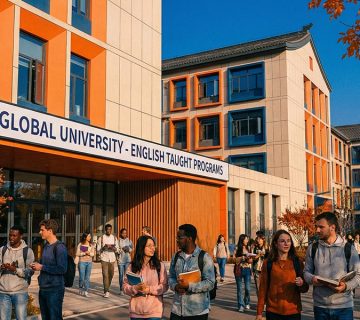
Master’s Programs Taught in English in China
One of the major advantages of pursuing a masters degree in China is the availability of programs taught in both English and Chinese. Given the complexity of the Chinese language, many international students prefer English-taught programs. Fields such as engineering, MBA, pharmacy, dentistry, medicine, data science, artificial intelligence, and international law are among the master’s programs offered in English.
It should be noted that tuition fees for English-taught programs are generally higher than those for Chinese-taught programs. Universities such as Tsinghua, Peking, Zhejiang, Fudan, and Xi’an Jiao Tong offer master’s programs in English.
Cost of Studying in China
For applicants and students pursuing a masters degree in China, tuition fees are a key consideration. Overall, the cost of master’s studies in China is relatively affordable, although it varies by university. The table below presents the average annual tuition fees (in RMB) for master’s programs at some leading Chinese universities:
- Sichuan University: 35,000
- HUST (Huazhong University of Science and Technology): 39,000
- Jiangsu University: 25,000
- Tsinghua University: 43,000
- Peking University: 60,000
- Shanghai Jiao Tong University: 29,000
- Fudan University: 37,000
- Zhejiang University: 28,000
- Xi’an Jiao Tong University: 76,000
- Nanjing University: 35,000
Considering both tuition fees and cost of living in China, it regarded as one of the most cost-effective destinations for pursuing a master’s degree.

Scholarships for Master’s Studies in China
Compared to undergraduate programs, In most cases, scholarship opportunities for master’s students in China are more accessible compared to undergraduate programs, particularly for research-oriented and academically strong applicants. Some scholarships are merit-based, while others are research-oriented and awarded to active students. The most important scholarships for master’s studies in China include:
- Chinese Government Scholarship (CSC): Covers full tuition fees, accommodation costs, a monthly stipend, and health insurance.
- University Scholarships: Offered by individual universities to eligible students, covering part of the tuition fees.
- Provincial Scholarships: Local scholarships provided by certain cities or provinces to international students studying in those regions.
- Specialized Scholarships: Awarded for specific academic fields or research projects to master’s and doctoral students.
Chinese Student Visa for Master’s Programs
One of the essential requirements for admission to Chinese universities is obtaining a student visa. After receiving an admission letter, applicants must apply for a Chinese student visa. Chinese visas include short-term visas (for stays of less than 180 days) and long-term visas. Master’s students are required to obtain a long-term student visa.
Experiences of Iranian Students
Is a masters degree in China worth it for Iranian studentsMany Iranian students who have pursued a master’s degree in China consider affordable costs, high educational quality, and reasonable living expenses among the main advantages of studying in this country. However, challenges such as adapting to a new culture and acquiring basic proficiency in the Chinese language should also be taken into account, although these challenges can be managed over time.
Who Is Not Suitable for Master’s Studies in China?
Despite the generally favorable conditions for studying in China, applicants must be patient, as learning Chinese is essential even for those enrolled in English-taught programs. Cultural adaptation can also be challenging for some students. Therefore, China may not be a suitable destination for individuals who:
- Seek rapid permanent residency
- Are unwilling to adapt to a different culture
- Prefer exclusively English-speaking academic environments
Working While Studying for a Master’s Degree in China
Master’s students in China may enter the job market in fields related to their studies while enrolled. To work legally during their studies, students must obtain the required permits and comply with the officially approved working hours, ensuring that their academic progress is not affected.

Comparison of Studying in China with Other Countries
Over the past decades, China has emerged as one of the world’s leading political and economic powers, making significant efforts to advance scientific development. In line with this objective, the country has invested heavily in its universities and implemented extensive structural reforms across all dimensions of higher education. Today, many Chinese universities rank among the world’s top institutions and attract considerable interest not only for master’s programs, but also for other academic levels.
In terms of academic reputation, Chinese universities compete with many prestigious institutions in the United States and Europe, offering excellent educational, scientific, and research facilities. From a financial perspective, the cost of studying in China is significantly more affordable than in Western countries.
Post-Graduation Residence in China
After completing a masters degree in China, graduates who wish to remain in the country must secure employment related to their field of study. With a valid job offer from an employer, graduates can apply for a Chinese work visa. To obtain this visa, they must visit the Chinese immigration authorities and convert their student visa into a work visa. After three years of residence and work experience in China, applicants may become eligible to apply for permanent residency
Conclusion
Studying in China has become an attractive and practical academic option in recent years, drawing the attention of many international students. Chinese universities enjoy strong global recognition and offer a wide range of programs at the bachelor’s, master’s, and doctoral levels. Pursuing a masters degree in China is one of the most appealing academic pathways, attracting numerous applicants each year.
Age limits, GPA requirements, possession of a valid student visa, and a valid passport are among the main admission criteria for master’s programs in China. The cost of studying at the master’s level depends on the university and field of study, but remains affordable compared to Western institutions. Engineering, artificial intelligence, information technology, and business administration are among the most in-demand master’s fields.
Admission Institute aims to facilitate the academic migration process by providing comprehensive information about studying in China and guiding applicants through safe and legal pathways. If you wish to pursue a master’s degree in China with confidence and full awareness, the consultants at Admission Institute are ready to assist you. For further information, please contact us through the “Contact Us” section.
Frequently Asked Questions:
1. What are the advantages of pursuing a master’s degree in China?
Studying for a master’s degree in China offers numerous advantages, including the global reputation of universities, affordable tuition fees, the possibility of studying in English, diverse scholarship opportunities, and international research prospects. Many Chinese universities rank highly in global rankings and provide educational and research infrastructures that meet international standards.
2. What are the admission requirements for master’s programs in China?
Admission requirements typically include holding a recognized bachelor’s degree, meeting age and GPA criteria (usually under 35 years of age), providing proof of language proficiency in English or Chinese, submitting an academic résumé, a statement of purpose, recommendation letters, and proof of financial capability. Specific requirements may vary by university and field of study.
3. How much does it cost to study for a master’s degree in China?
The cost depends on the university, field of study, and language of instruction. On average, annual tuition fees range from 25,000 to 76,000 RMB, which is considerably more affordable than in many European and American countries.
4. Are scholarships available for master’s studies in China?
Yes, a wide range of scholarships is available. The most prominent is the Chinese Government Scholarship (CSC), which covers tuition fees, accommodation, health insurance, and a monthly stipend. University, provincial, and research-based scholarships are also offered to eligible students.
5. Is it possible to study for a master’s degree in China in English?
Yes, many reputable Chinese universities offer master’s programs taught in English. Popular English-taught fields include engineering, MBA, information technology, data science, artificial intelligence, medicine, and international law. Tuition fees for English-taught programs are generally slightly higher than those for Chinese-taught programs.



No comment