
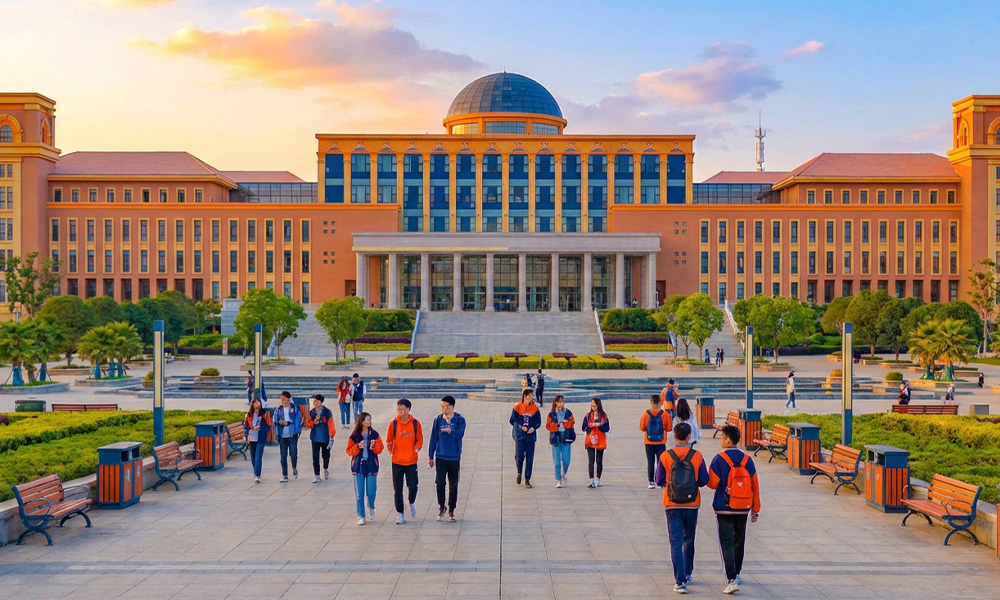
Nestled in the vibrant city of Kunming, often called the “Spring City” for its mild year-round climate, Yunnan University known as one of the bests in higher education in Southwest China. From its founding in 1922, it has grown from a provincial school into a national powerhouse, mixing in the rich traditions with modern innovation. As one of China’s earliest comprehensive universities, it has played a key role in the nation’s intellectual landscape and nurtured talents that would go on to contribute to everything from ecology to international relations.
To international students with eyes on opportunities in the world’s second-biggest economy, Yunnan University of China tuition fees offer a compelling mix of rigorous academics, diverse programs, and immersive experiences. But what draws so many global learners here? It’s the promise of affordable education, strategic location along the Belt and Road Initiative corridor, and a supportive environment that turns challenges into lifelong memories. In this article from admission institute, we will discuss in detail Yunnan University of China admission requirements. Keep reading.
A Quick Look at Yunnan University
| Category | Details |
| Popular Majors | Chinese Language, Economics, Computer Science, Clinical Medicine |
| Tuition Fees (Annual, RMB) | Undergrad: 20.000-25.000 Masters: 20.000-30.000 PhD: 30.000 – 52.000 |
| Living Costs (Monthly, RMB) | Accommodation; 800-1.200, Food; 1.000-1.500, transport and entertainment: 500 – 800 |
| Admission Requirements | Highschool diploma (undergrad), HSK /TOEFL /IELTS, transcript, recommendation letters, passport, Study plan |
| Scholarships | Chinese Government Scholarships, Yunnan University Scholarships (Full coverage) |
| World Rankings (2025) | QS: 501 (Asia) /Times Higher Education: 501 – 600,ARWU: 301-400 |
| Updated 11/29/2025 |
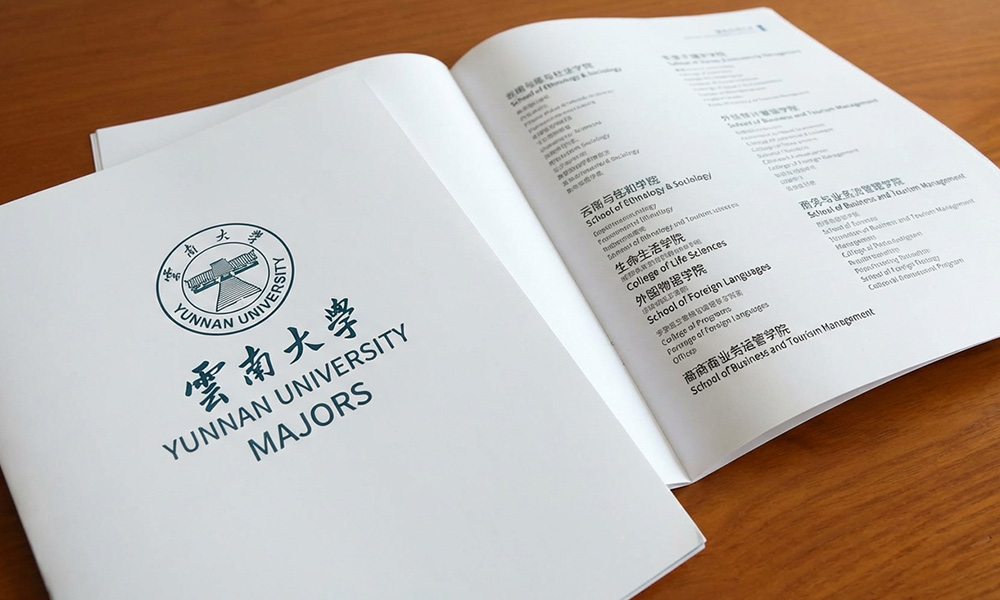
Yunnan University Majors
Diving deep into the academic hub of Yunnan University, one finds a tapestry of programs designed to equip students with both depth and breadth. With over 94 undergraduate specialties and a robust lineup of graduate offerings, the university appeals to a wide array of interests, emphasizing interdisciplinary approaches that reflect the unique biodiversity and multicultural fabric of Yunnan.
You will find standout majors at the undergraduate level in ethnology, which examines the 25 ethnic minorities of the province, and ecology, drawing on the proximity to rainforests and high plateaus. These are not merely theoretical pursuits but involve hands-on fieldwork in the diverse ecosystems of Yunnan, bringing into real life those classroom concepts-be it mapping biodiversity hotspots or analyzing cultural preservation strategies.
1. Undergraduate Programs
For those science-inclined, chemistry and microbiology are also positioned as national first-class undergraduate majors, with state-of-the-art laboratory equipment through which groundbreaking research has been made in the study of tropical diseases and sustainable materials. Students interested in engineering will have their options in communication engineering or software engineering; these programs involve collaborations with industry giants like Huawei, effectively integrating real-world projects into the learning process. Not to be outdone, its School of Business Administration and Tourism Management offers specializations in tourism management that draw on the UNESCO heritage sites in Yunnan, readying graduates for the booming sectors of eco-tourism and hospitality.
2. Graduate Programs
Graduate programs notch this even higher, with master’s and doctoral tracks in the fields of information and communication engineering, with PhDs capable of drawing in international collaborators. The International School is designed for global exchange, offering four undergraduate majors designed for students who are non-Chinese speakers. Programs include international economics and Chinese language education, while graduate studies options in cross-cultural studies are likewise available. And last but not least, there is the innovative Yunnan University-University of Malaya Joint College launching in 2025 with dual-degree programs in artificial intelligence, materials science, and chemical engineering-the perfect option for students seeking a Sino-Malaysian perspective on high technology.
But what really makes these majors special is how they align with global challenges.
3. Comprehensive Education
Take the ecology program, for example: students frequently go on expeditions to the Xishuangbanna Tropical Botanical Garden and participate in the conservation effort to cope with climate change. Or take journalism, where aspiring journalists cover Belt and Road partnerships in multilingual media. A total of 17 national first-class undergraduate majors, including law, history, and computer science, guarantee that you are not only getting a degree but also equipping yourself with variable tools in service of an interdependent world.
The enrollment in these majors is not too big; small classes allow more mentorship, while English-taught programs make it easier for foreigners to adjust. If you are thinking of making a switch from a familiar path to a braver one, majors at Yunnan remind you: education here is about discovery just as much as the diploma.

Cost of Study in China
Study in China adventure very often turns out wallet-friendly, especially if compared with the Western counterpart. For most international students, the total package of tuition, housing, and daily life could hover in the area of 30,000 to 80,000 RMB (approximately 4,200 to 11,200 USD) per year, depending on your city and lifestyle. Kunming, home to Yunnan University, keeps things refreshingly affordable: living costs are around 20-30% lower than Beijing or Shanghai. Visualize this: a monthly budget of 4,000-6,000 RMB could take you from street-side noodle stalls to weekend hikes at Stone Forest and even leave room for spontaneous trips to ethnic villages.
1. Tuition Fees
Tuition fees for Yunnan University vary by program but remain competitive: undergraduates in standard majors are about 20,000-25,000 RMB annually, while specialized English-taught tracks or joint programs, such as the Malaya collaboration, reach up to 65,000 RMB in return for premium resources and sometimes dual credentials. Graduate fees follow suit, with master’s degrees in the humanities reaching 22,000 RMB and STEM doctorates reaching from 30,000 to 52,000 RMB, often inclusive of lab access and fieldwork stipends. These rates haven’t spiked in recent years, due in part to government subsidies that prioritize accessibility.
2. Accommodation Fees
Aside from tuition, accommodation is a steal. On-campus dorms at Yunnan’s Chenggong Campus offer shared rooms for 800-1,200 RMB yearly; think air-conditioned quads, communal kitchens, and misty hills outside your window. Off-campus apartments in Kunming run 1,500-3,000 RMB monthly for a cozy one-bedroom, utilities included. And the food? A feast for frugal palates. Campus cafeterias dish out balanced meals for 10-20 RMB, while local markets brim with fresh mangoes and grilled skewers available at half the price of imported groceries. Public transit, whether efficient buses or high-speed Didi rides, costs less than 50 RMB per month with a student pass.
3. Additional Expenses
Don’t forget to factor in extras like health insurance-a mandatory 800 RMB per year-or visa extensions, around 400-500 RMB. But for the value, it really pales in comparison: the public health in China is top-notch and very affordable, with routine check-ups costing 50 RMB. For comparison, a year in Kunming might cost upwards of 40,000 RMB all-in, whereas in Sydney, it would double, and in New York, it would triple. Scholarships-more on those in a moment-can cut this down further still, making “study abroad” less a luxury and more of a smart investment.
As one alumnus mentioned on a university forum, “I budgeted tight but lived rich-Kunming’s markets and mountains became my free classroom.” In a world where the costs only seem to rise, studying in China, especially at Yunnan University, redefines value without sacrificing quality.
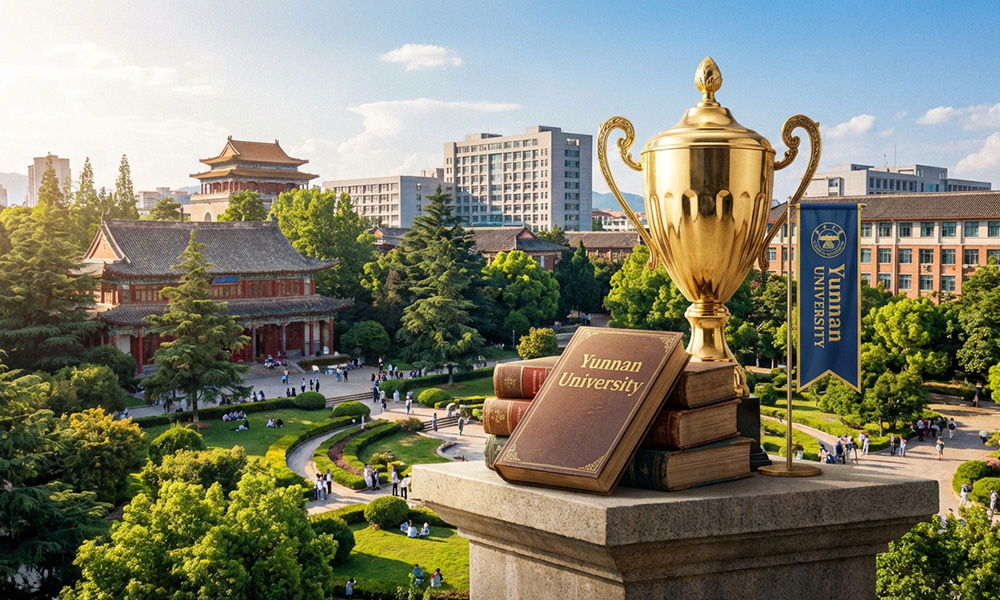
Yunnan University Rankings
The ascent of Yunnan University in the ever-competitive arena of global higher education is nothing short of an inspiration. It now ranks a solid 10th in the Best Chinese Universities ranking provided by Shanghai Ranking’s as of 2025, with a score of 120.7 out of 150 regarding its blend of research output, faculty quality, and international impact.
The gem now rubs shoulders with national elites, courtesy of its “Double First-Class” status, a government nod to building world-class disciplines in ecology, ethnology, and specialized history.
1. Global Rankings
Globally, THE World University Rankings rank Yunnan in the 501-600 band, proof of its rise in teaching and industry links. What powers this ascent? Strengths in life sciences and social sciences, where Yunnan’s unique position as a biodiversity hotspot yields publications in top journals like Nature Ecology & Evolution. QS rankings echo this, touting the university’s 17 national first-class majors and partnerships with more than 200 institutions worldwide, including the ASEAN-China University Network it leads.
2. Local Rankings
Locally, Yunnan is supreme: the best university in the province, ahead of others in research funding and graduate employability. The 2025 Shanghai Ranking underlines its lead in regional studies, ranking ethnology as among the top five in China. Detractors might say it is not a Tsinghua-level giant yet, but the outcomes of graduates are very different-90% find work within six months, including in UN agencies and green tech companies. For internationals, this set of rankings is a harbinger of reliability-a degree here holds water in the Asia-Pacific job markets, where Belt and Road projects need Yunnan’s clout in Southeast Asia.
Skeptics would point to the urban-rural divide in Chinese rankings, but the trajectory of Yunnan-from Project 211 in the ’90s to world-class bids today-shows resilience. As one 2025 THE report noted, its internationalization score jumped 15%, driven by student exchanges and joint labs. In essence, choosing Yunnan isn’t about chasing prestige; it’s a bet on an upward trajectory that mirrors China’s own rise.
Benefits of Studying in Yunnan University
Why choose Yunnan University out of more than 3,000 universities in China?
It is the alchemy of intellect, nature, and community that makes a degree a transformative chapter.
1. Cultural Immersion
Take for instance the cultural mosaic: with China’s largest number of ethnic groups, festivals like the Torch Festival create dazzling sights on campus, as students don traditional garb and swap stories over rice wine. This isn’t superficial diversity-ethnology majors co-lead community projects with Dai and Naxi elders, fostering empathy that global employers crave.
2. Academic Excellence
Academically, the perks abound. Small seminar groups in ecology mean you’re not a number but a collaborator on real research, like monitoring Yangtze River dolphins. The university’s S&SE Asian University Network opens doors to exchanges in Laos or Thailand, enriching resumes with cross-border insights. Graduates rave about employability: a Vietnamese alum, now at Beijing Foreign Studies, credits Yunnan’s scholarships and networks for her pivot to diplomacy. “It wasn’t just classes,” she reflected; “it was building bridges in a room full of future leaders.”
3. Unique Weather
Kunming’s allure amplifies this. Mild weather invites study breaks at Green Lake Park, where herons glide amid teahouses. Affordable living lets you splurge on adventures-Dali’s ancient towns or Shangri-La’s monasteries-without building up debt. Health benefits? Fresh air and Yunnan cuisine-think wild mushrooms and pu’er tea-keep wellness high, with on-campus clinics for support.
4. Social Opportunities
Socially, it’s a cocoon for internationals: orientation weeks pair you with buddies, smoothing out language hurdles with HSK prep. Debate to dragon boat racing clubs forge bonds that outlast visas. As one Pakistani student said, “Yunnan taught me resilience—navigating monsoons mirrored tackling theses.” Environmentally aware? The campus fires up solar initiatives and zero-waste drives, aligning studies with planetary good.
Critics might say it’s off the beaten path, but that is the charm: fewer distractions, deeper focus. In a 2025 survey of alumni, 85% cited “holistic growth” as the top gain. Studying here is not just about credentialing; it is the fostering of a world view where mountains meet minds and every lecture instills curiosity.
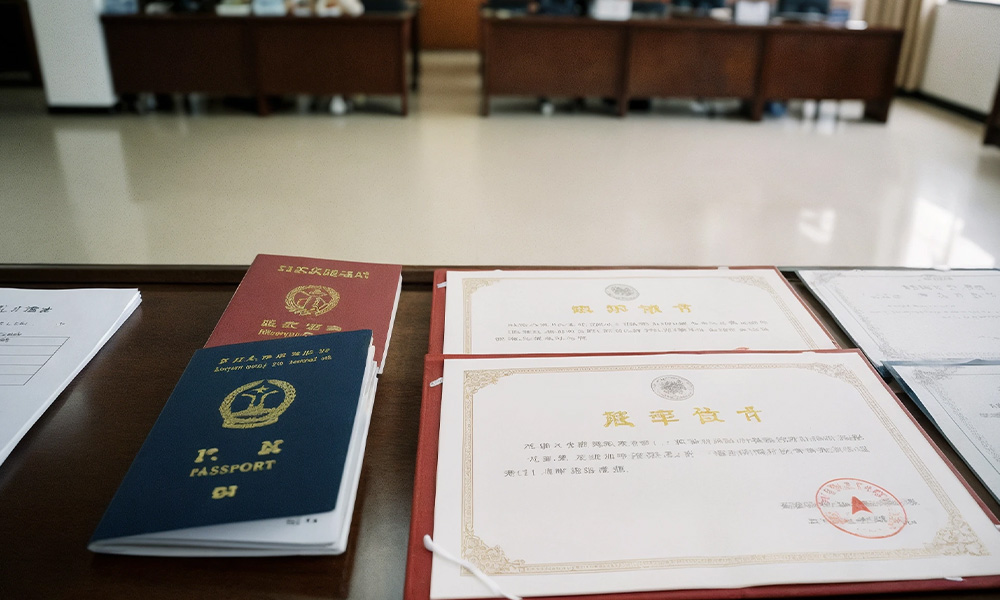
Admission Requirements of Yunnan University
Admission to Yunnan University of China requires preparation, but the process is relatively simple and friendly to internationals. Eligibility includes the following: high school graduation with good grades for undergraduates, with a GPA of 3.0 out of 4.0 or above; a bachelor’s degree in an appropriate field for master’s applicants; and for PhD students, a master’s degree with a research proposal attached. Maximum age limits are roughly around 25 for undergraduates and 35 for graduates, though there may be many exceptions for exceptional talent.
Language proficiency is key. Chinese language programs require HSK Level 4-5 (210+ score), while English options include business or AI, which accept IELTS 6.0 and TOEFL 80. No HSK? The university’s prep year bridges the gap. Applications go online via the Yunnan University International Service System, ynu.at0086.cn, where notarized transcripts, passport copies, and a study plan-outlining your goals in 500-800 words-are uploaded.
Deadlines vary: CSC scholarships in china close on February 20, provincial ones on April 7th, and self-funded spots on May 30 for a fall intake. Also, expect an application fee of 400 RMB (non-refundable). After receiving applications, experts review the provided materials, possibly followed by interviews or written tests; think essay prompts on cultural adaptation or math in STEM fields. It usually takes 4-6 weeks to get a pre-admission letter for successful candidates, which is then followed by the JW202 form and X1 visa.
Health checks are a must: A Foreigner Physical Examination Form, valid for six months, includes chest X-rays and bloodwork, which costs abroad 300-500 RMB. Upon arrival, register for residence permit within 30 days. Any pro tips? Tailor your study plan according to the strengths of Yunnan-for example, linking your background with ethnic studies. As one admits in 2024 shared, “The interview felt like a chat, not a grill-they valued my story.”
For the Joint College, English benchmarks include IELTS 5.5+ and nationwide exam scores for Chinese applicants. Overall, it is merit-driven, with 70% academics, 20% potential, and 10% fit. The acceptance rate is around 40% for internationals, so persistence pays off as many reapply stronger.
Conclusion
Yunnan University of China is not just an educational establishment but a launchpad for dreamers at the ready to weave their future into the vibrant narrative of Asia. From the eclectic majors that reflect the kaleidoscope of cultures and ecosystems found in this province, to the prudent costs that make world-class education within reach, this Kunming cornerstone truly delivers on all fronts. Meanwhile, it’s evident rising star status is cemented within rankings while the tangible benefits-whether lifelong networks or soul-stirring landscapes-mean your time here echoes well past graduation.
Navigating admission requirements of Yunnan University of China may seem scary at first, but it is the passport to scholarships that help to lighten your financial load and programs that stoke passion. As China takes strides towards the future, so does Yunnan University-inviting you inside to be part of an innovation-meets-heritage community. Answer the call of affordability, adventure, and academic rigor; apply today because your story in the Spring City awaits. And who knows? The next breakthrough in sustainable tourism or cross-border diplomacy could bear your name. for additional information about Yunnan University of China tuition fees, contact our expertise consultants.
FAQs:
1. Are all courses at Yunnan University of China taught in English?
No, most undergraduate and most graduate programs are conducted in Chinese and require HSK 4–5. Still, several bachelor’s programs-for example, International Economics & Trade, Tourism Management-and many master’s/PhD programs are fully provided in English. There is also a new Yunnan University–University of Malaya Joint College starting in 2025, offering English-taught degrees in AI, Materials Science, and Chemical Engineering.
2. What is the 2025–2026 tuition and living cost for international students?
The tuition varies from 20,000-30,000 RMB/year for regular programs to up to 65,000 RMB/year for premium English or joint programs. The total annual cost of tuition, dorm, food, and insurance in Kunming is around 40,000-80,000 RMB (≈ US$5,600–11,200), compared to much higher costs in Beijing or Shanghai.
3. What are the main scholarships and application deadlines?
Chinese Government Scholarship: Generally, around late February; Yunnan Provincial Government Scholarship: On or around 7th April; Yunnan University President Scholarship: Between May and June
Application for all should be made via the university’s online system: ynu.at0086.cn. Full scholarships can cover tuition, accommodation, stipend 2,500–3,500 RMB/month, and insurance.


No comment